

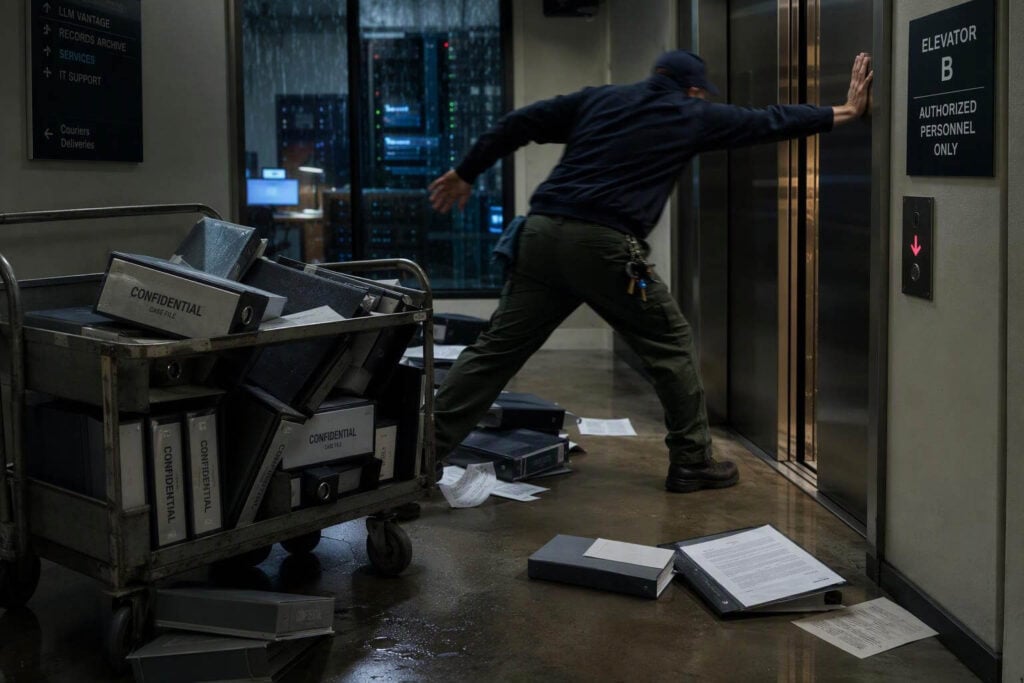



A cyber incident response plan is a documented, tested sequence of roles, decisions and actions that restores services after an attack. In the UK, a cyber incident response plan should name war room attendees, deputies and decision authorities to preserve human continuity, a point emphasised by the National Cyber Security Centre (NCSC) guidance in 2025 (NCSC, 2025). We focus on people, clear delegations and simple playbooks. Cyber incident response plan is a key part of that picture.
- What it is: A cyber incident response plan documents who does what, when and how, with named deputies to keep the war room working.
- War room roles: Include an Incident Manager, a CISO or Director of IT, legal, communications and trained technical leads for continuity.
- Human continuity: Test deputies and maintain contact rotas so decisions continue if key people are unavailable during an incident.
- Practical steps: Build playbooks for common scenarios, link to IT Disaster Recovery and run tabletop exercises regularly.
Table of Contents
🧑 What is an incident response unit and who should sit in the war room?
An incident response unit is a defined group responsible for managing a security incident, and the war room is the physical or virtual space where that group coordinates actions. Core attendees are the Incident Manager, the CISO or Director of IT, legal counsel, HR, communications, and senior technical responders.
In the UK, a cyber incident response plan should name who will join the war room, their decision authority and substitute delegates so human continuity is preserved when people are unavailable.
Permanent team versus ad hoc attendees
Permanent roles include an Incident Manager, technical leads and a communications lead who are trained and exercised regularly. Ad hoc attendees should be invited as required: An Information Governance Officer for UK GDPR issues, a Head of Operations for service-impact decisions, or a Finance Director for ransom or insurance queries. National guidance such as the National Cyber Security Centre (NCSC, 2025) expects clarity on roles and escalation paths.
What each role must deliver
The Incident Manager controls the war room, tracks actions and records decisions. The CISO or Director of IT provides technical prioritisation and resource allocation. Legal handles reporting obligations under UK GDPR and liaises with the Information Commissioner’s Office (ICO, 2025). Communications prepares external and internal statements. Technical responders perform containment, eradication and recovery following NIST guidance (NIST SP 800-61 r3, 2025).
At CyPro, we recommend documenting deputy roles, a contact rota, and a simple decision matrix in your incident playbooks. Our Cyber Incident Response service helps teams run tabletop exercises and implement practical war room checklists.
Clear role definitions, tested substitutes and legal and comms representation mean the war room can keep operating even when key people are absent, which reduces confusion and speeds recovery.
🧭 How to build a cyber incident response plan step by step

Build a cyber incident response plan by defining scope, assigning incident commanders and deputies, documenting detection and escalation routes, and mapping containment, eradication, recovery and a post-incident review.
Who does what, and when
At CyPro, we put decision rights and continuity of human roles at the centre of the plan: Named incident lead, deputies authorised to act, an Executive escalation trigger, and a communications lead for regulators, customers and staff. Map the Information Commissioners Office (ICO) notification thresholds and the National Cyber Security Centre (NCSC) reporting routes into your decision matrix so regulatory actions are not left to ad hoc judgement.
Practical playbooks and triggers
Document clear triggers that move an event from normal ops to war room, for example suspected data exfiltration, ransomware encryption or a confirmed service outage. Use simple checklists for triage, evidence preservation and containment, and link recovery tasks to your IT Disaster Recovery Plan (IT Disaster Recovery Plan).
War room formats compared
| Format | When to use | Pros | Cons |
|---|---|---|---|
| Physical war room | Severe incidents with cross-team co-ordination | Faster verbal decisions, focused team | Requires travel, space and contact backup |
| Virtual war room | Distributed teams, partial outages | Immediate attendance, recordable actions | Can suffer comms overload without facilitation |
| No war room | Minor incidents resolved by local teams | Low overhead | Slow escalation, unclear decision owners |
Testing, evidence and learning
Run tabletop exercises at least annually and test deputies under stress. The UK Cyber Security Breaches Survey 2025 shows phishing and staff-reported incidents remain common, so practise those playbooks (GOV.UK, 2025). ENISA’s threat environment 2025 highlights the value of documented containment and recovery steps for faster restoration, so keep recovery tasks tied to measurable Recovery Time Objectives and your restoration runbooks (ENISA, 2025).
Finish each incident with a formal post-incident review that assigns actions into your cyber security roadmap and, where relevant, into our Cyber Incident Response service (Cyber Incident Response).

How to set up the physical and digital war room for an incident
The war room should be a single coordinated space, physical, virtual or hybrid, with clear leadership, deputy roles and a simple decision matrix so teams can act continuously when key people are absent.
Choose the format that preserves human continuity: A physical room for in-person decision making, a secure virtual room for distributed teams, or a hybrid setup that gives priority to whoever can keep making decisions. Our cyber incident response plan name deputies and a contact rota so decisions are never blocked by one person being unavailable.
Seats, roles and the simple decision matrix
Assign fixed seats or virtual roles: Incident Lead, Technical Lead, Legal Counsel, Communications Lead and Business Continuity Lead. Each role needs a documented deputy and escalation tree so the incident continues without pause if someone is unreachable. For every role record contact numbers, alternate contacts, and authority limits. Store this in an incident playbook that is accessible offline and in a locked cloud folder.
Secure comms and collaboration tools
Pick tools that preserve chain of custody and support secure comms: An enterprise messaging channel with message retention, a video link archived separately and a shared evidence repository with strict access control. Use secure email only for external notifications and switch to encrypted voice or approved collaboration platforms for internal decision making. Test these tools in tabletop exercises and the organisation’s incident playbooks.
Evidence collection, logging and forensic handover
Define who collects logs, how evidence is labelled and where forensic copies live. Use standard naming conventions that reference Common Vulnerabilities and Exposures (CVE) identifiers and MITRE ATT&CK tactics when classifying activity. Keep a chain of custody record for every artefact handed to forensic teams so legal and regulator obligations under UK GDPR are supported if notification is needed.
Operational teams should also plan three escalation scenarios: Contain and restore, contain and monitor, and isolate and rebuild, each with prepriced vendor support and a recovery timeline tied to business priorities.
Practical references: IBM Report: UK Sees Drop in Breach Costs as AI Speeds Detection and the 2025 Data Breach Investigations Report – Verizon provide useful incident detection and response benchmarks for planning.
At CyPro, we recommend keeping the war room checklist short: Seats and backups, secure comms, evidence chain, quick decision triggers and pre-agreed vendor engagement rules. Train the deputies and run the playbook annually so the war room works under pressure.
How to maintain human continuity and keep key people working under pressure

Human continuity means keeping the right people making the right decisions during an incident, with clear delegation, rotas and low cognitive load so operations can continue. A cyber incident response plan should prioritise staff availability above technical fixes.
Role pairing, rotas and delegation
Define core roles and always pair them, so no single person holds a decision-making bottleneck. Create simple rotas with primary, deputy and escalation contacts for each role, and set maximum shift lengths to avoid decision fatigue. Use pre-defined decision thresholds so deputies can act without constant sign-off, and store role checklists in the war room runbook. At the start of any incident, redistribute non-essential tasks to reduce interruptions for responders.
How HR, legal and comms support responders
HR must approve emergency leave rules, wellbeing checks and rapid role reassignment. Legal should prepare data breach notification templates and regulatory timelines aligned to UK GDPR and the Information Commissioner’s Office (ICO) expectations. Communications teams should lock down external statements and maintain a single spokesperson to protect evidence chains and regulator relationships. Have legal and comms on-call early so responders focus on containment not wording.
 Case Study, UK mid-market legal firm, maintained operations during ransomware containment
A UK legal firm of ~220 staff faced a ransomware event that threatened client service continuity and regulatory reporting, with partners at risk of burnout from long decision cycles.
We established paired leadership rotas, drafted delegated authority limits and ran a condensed tabletop to confirm decision thresholds; our Cyber Incident Response service https://cypro.co.uk/service/cyber-incident-response/ and Cyber Security Consultants team https://cypro.co.uk/service/cyber-security-consultants/ supported operational handovers and comms templates.
Within 72 hours the firm restored essential client systems and avoided a planned court deadline breach, while responder overtime fell by 45 percent over the first week due to structured rotas and deputy empowerment.
Training, rehearsals and fatigue management
Run short, focused rehearsals for deputies and use fatigue monitoring rules in the playbook. Train HR on post-incident support and build quick-reference guides for common incident types. Review rota effectiveness after each post-incident review and measure responder hours to spot chronic overload. For evidence and learning, map decisions to ISO 27001 controls and include regulatory timelines for UK GDPR and the ICO in after-action reports.
Operational continuity is not a byproduct of technical recovery; it is a sequence of human decisions made under pressure. Prioritise people in your cyber incident response plan so the organisation can keep serving customers while technical teams remediate.
For practical templates and role-matrix examples, consider our Cyber Security Consultants and Cyber Security Strategy and Roadmap services for tailored war room playbooks.
Sources: IBM’s 2025 Cost of a Data Breach and Mandiant reports informed our recommendations on responder fatigue and automation in 2025.
🧰 What technology and tools should the incident response plan rely on?
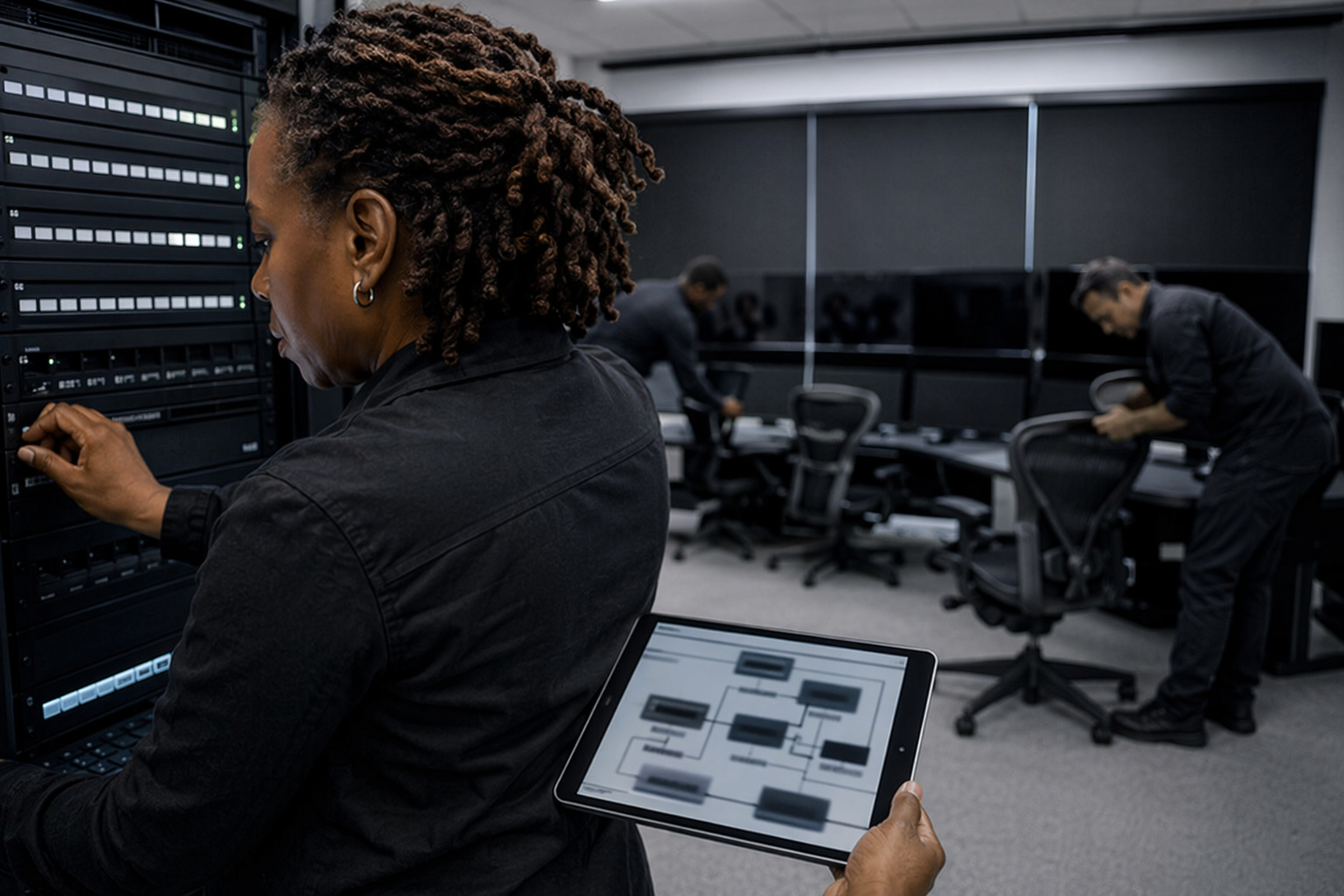
Use Endpoint Detection and Response (EDR), Security Information and Event Management (SIEM), secure remote access and reliable backups as the core tools, and add forensics and secure comms for evidence capture and regulatory reporting. A strong cyber incident response plan must list who operates each tool and when.
Core detection and containment tools
Endpoint Detection and Response (EDR) gives rapid host-level detection and containment, while a SIEM centralises logs and timestamps for triage and timeline building. Use EDR to isolate infected endpoints, and SIEM to correlate events and prioritise alerts for human review. Consider XDR or Managed Detection and Response (MDR) if you lack 24×7 coverage.
Forensics, evidence capture and chain of custody
Forensic imaging tools and write-blockers preserve volatile data and file system images for investigations under UK GDPR and ICO scrutiny. Keep a documented chain of custody and use timestamped, hashed evidence files. Store forensic copies on immutable media and record every action in an evidence log for potential ICO or Information Commissioner’s Office enquiries.
Secure communications, decision tools and backups
Secure comms matter: Encrypted voice and chat channels, plus a war room document repository, keep decision threads intact. Provide an offline contact list and failover conference bridge. Backups must be isolated, tested and have defined Recovery Time Objective (RTO) and Recovery Point Objective (RPO) targets, linked to your business continuity plan.
When to use a Managed SOC or MDR
Use a Managed Security Operations Centre (SOC) or MDR when you need continuous monitoring, expert triage or forensic escalation you cannot staff internally. Managed services reduce mean time to detect and mean time to respond, and they provide evidence handling processes aligned to regulatory expectations such as NCSC guidance and NIST SP 800‑61 principles.
Practical procurement checkpoints: Ask vendors for runbooks, evidence-handling procedures, SLA response times, and priced escalation scenarios. For templates and role matrices, see our Cyber Strategy and Roadmap and Cyber Risk Assessment services.

🕒 How much does a cyber incident response plan cost in the UK and what timeline should you expect?
This timeline shows typical stages, budgets and milestones for a UK cyber incident response plan, from scoping to retained response, with realistic timescales and who does what.
- , Scope and governance workshop: Senior stakeholders meet, define incident objectives, RTOs and RPOs, and assign an incident lead. Expect one to two days of executive time and a small governance budget.
- , Risk review and tooling audit: IT and security map EDR, SIEM, backups and comms. This phase usually requires three to five person-days and informs the procurement budget for forensics tools.
- , Plan drafting and playbook writes: Draft operational runbooks, communications scripts and evidence handling procedures, a two to four week task with 10 to 30 consultant days depending on complexity.
- , Tabletop exercise and revisions: Simulated incident with execs and tech teams, then immediate plan updates. Allow one full-day table-top then one week to capture lessons.
- , Technical dry run and tooling tests: Patch, backup restore and forensics playbooks verified. NIST guidance on incident response practice informs test scope, and teams typically budget two to five operational days. NIST, 2025
- , Staff training and handover: Training for on-call teams and duty rosters, often half-day sessions per team and an annual refresh. Smaller organisations may prefer a retained provider instead of hiring full-time staff.
- , Retained response contract starts: Organisations choose retained incident response or incident days. Typical UK retained models range from 10 to 60 days per year; budgets vary with size and sector. ENISA findings on incident frequency inform sizing decisions. ENISA, 2025
- , Continuous improvement cycle: Quarterly reviews, tabletop updates and metrics tracking. Expect a recurring annual budget for exercises, tooling and retained days to keep the plan current.
Costs in the UK typically break down into one-off professional fees for plan creation, modest tooling and training budgets, plus an annual retained cost for response days; consider Cyber Essentials Plus if certification or basic controls are gaps before a full plan.
🔧 How to test the incident response plan and measure readiness over time

Run a mix of tabletop, simulation and full-scale rehearsals, then track detection, containment and recovery times to measure readiness. A cyber incident response plan should map roles, escalation thresholds and recovery targets, and be exercised at least twice a year.
 Key Takeaway
Exercises must be scenario-led, measure time-to-detect and time-to-contain, and produce a single action log that feeds plan updates and board reporting.
Types of tests and when to use them
Tabletop exercises are discussion-based and cost-effective, useful for senior decision makers and board members to validate roles and communications. Simulation exercises use scripted incidents against live systems to test tooling and playbooks. Full-fire drills recreate business-impacting outages and validate recovery steps, including backups and failover. Purple team exercises combine blue team defence with red team offensive techniques mapped to MITRE ATT&CK (MITRE ATT&CK is an industry matrix used for adversary emulation). We recommend at least one tabletop and one simulation per year, with a full-fire drill every 12 to 24 months depending on criticality.
Metrics that actually show readiness
Measure time-to-detect (TTD), time-to-contain (TTC) and time-to-recover (TTR), plus mean time to acknowledge (MTTA) for SOC teams. Track the percentage of incidents detected internally versus externally, and the proportion of playbooks executed successfully. Use NIST Special Publication 800-61 guidance to shape incident categories and timelines, and map metrics to business Recovery Time Objectives (RTO) and Recovery Point Objectives (RPO). The NIST guidance is a practical reference for measurement design (NIST, 2025).
Post-incident review: Turn findings into change
Run a single post-incident review that captures timeline, decisions, root cause, and an action log with owners and deadlines. Link the action log to your cyber incident response plan and to business continuity records. Share a concise summary to the board and include any personal data impact for reporting to the Information Commissioner’s Office (ICO) where required. The ICO publishes data security incident trends that help set reporting expectations (ICO, 2025).
At CyPro, we prioritise human continuity during exercises: Who can make decisions when senior staff are unavailable, who owns comms, and who signs off on recovery. That focus reduces confusion during real incidents and shortens TTC and TTR in follow-up drills.
❓ Frequently asked questions
What is incident response unit
The incident response unit is the group accountable for detecting, containing and resolving cyber incidents. Typical membership includes an Incident Manager, Chief Information Security Officer (CISO), Director of IT, forensic analysts, legal counsel and communications. An incident response unit is a standing team with responsibilities and training, which differs from a temporary war room roster convened only during a live incident.
Who should lead the incident response war room?
The Incident Manager should lead the incident response war room, with clear authority and decision rights backed by the Chief Information Security Officer (CISO) or Director of IT. The Incident Manager must escalate to the board and to legal counsel for obligations under the Information Commissioner’s Office (ICO) and UK General Data Protection Regulation (UK GDPR) when breach reporting or regulatory notification is required.
How often should you run incident response tabletop exercises?
Run incident response tabletop exercises at least annually, and more frequently after major IT changes or if you operate in high-risk sectors. The National Cyber Security Centre (NCSC) and the Financial Conduct Authority (FCA) expect regular testing, with firms in regulated sectors typically exercising quarterly or after notable programme changes to validate their cyber incident response plan and human continuity arrangements.
Do you need a retained incident response provider?
A retained incident response provider gives rapid containment, specialist forensic tools and continuity of experienced responders during complex incidents. Retainers are cost effective for organisations with limited internal forensic capacity, high breach impact, or regulatory reporting duties. Building internal capability can make sense for large teams with regular incident volume and investment in tooling and training.
What role does HR play during a cyber incident?
Human Resources (HR) manages staff welfare, practical communications, disciplinary issues and resource redeployment during a cyber incident. HR works directly with legal counsel, communications and the Incident Manager to support continuity, ensure lawful handling of personnel data, and coordinate return-to-work plans and wellbeing checks for affected staff.
Contact Us