


Table of Contents
Crime Scene: Your Office Router
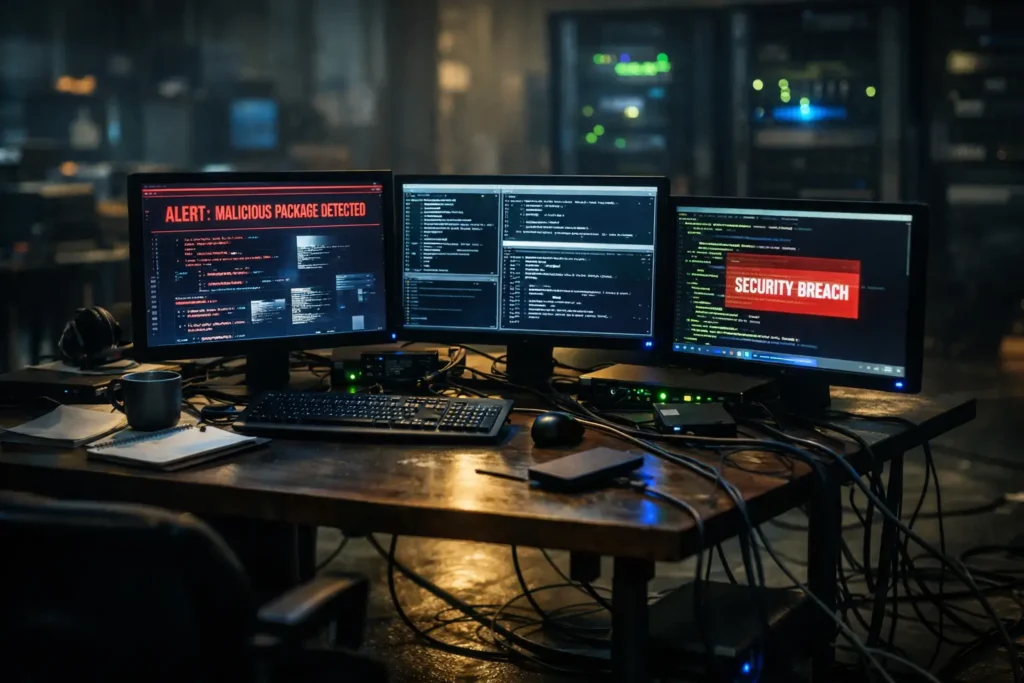
It’s a typical Monday morning. Your small but growing business is back online. Your team logs in, emails fly, invoices queue up… but something feels off.
- Your junior account manager can’t open key client files.
- The operations dashboard hangs for 30 seconds, then 60.
- And in your inbox, a message appears: “Your files are encrypted. Pay £8,000 in Bitcoin within 48 hours or lose everything.”
For a moment, you don’t know where to start. Do you power everything down? Call the police? Pay the ransom? The truth is, without a plan, most small and medium-sized businesses (SMBs) make snap decisions that harm recovery, especially when digital evidence is fragile and time sensitive.

This is where digital forensics investigations come in. Think of them as the modern-day equivalent of a detective arriving at a crime scene. Only instead of dusting for fingerprints, they’re imaging hard drives, capturing network logs and interviewing your IT team before memories fade.
Why SMBs Are Prime Targets
While large enterprises dominate the headlines, SMBs are the workhorses of the UK economy and cyber criminals know it. According to IBM’s X-Force Threat Intelligence Index, SMBs in the UK are significantly more likely to be targeted than large corporations, with the UK accounting for 27% of cyberattacks in Europe.
So why are attackers increasingly focusing their efforts on smaller organisations?
- Fewer security resources: Most SMBs lack dedicated security teams and enterprise-grade monitoring tools, relying instead on outsourced IT providers who may prioritise uptime and functionality over proactive threat detection. This creates exploitable blind spots in networks, endpoints, and cloud environments.
- Less forensic readiness: Smaller businesses often lack clear incident response playbooks, structured evidence handling processes, or digital forensics capabilities. This makes attacks harder to investigate and easier for criminals to hide their tracks.
 Key Takeaway
UK SMBs are the number one target for cyber criminals. Without forensic readiness, you’re not just at risk of attack, but you’re also at risk of never knowing what happened.
- Higher likelihood of paying: The financial and operational impact of downtime is often far more severe for SMBs than for large enterprises. With smaller cash reserves and tighter margins, many feel they have no choice but to pay ransoms promptly to restore operations, especially when critical services such as payroll, invoicing, or customer portals are disrupted.
- More reliance on third parties: Many SMBs depend heavily on managed service providers (MSPs), outsourced IT teams and cloud-based tools to run their businesses. While cost-effective, this increases the attack surface and if one vendor is compromised, attackers can gain access to multiple clients in one hit.
What Is Digital Forensics (And Why It Matters for SMBs)

Digital forensics is the science and art of collecting, preserving and analysing electronic evidence to understand how a breach occurred, who was behind it and what data was affected.
If you’ve ever watched CSI or Silent Witness, you’ve seen investigators reconstruct a crime scene. In digital forensics investigations, the “crime scene” might be:
- An employee’s laptop infected with ransomware.
- A compromised cloud account used to steal sensitive files.
- A company server hosting malicious code planted by an intruder.
Typical SMB scenarios include:
- Phishing attacks that lead to CEO fraud or payroll redirection.
- Ransomware encrypting client files on shared drives.
- Employee sabotage, such as wiping customer records before resigning.
Where incident response focuses on containment and recovery, digital forensics digs deeper to answer questions such as how it happened, what exactly was taken and whether we can prove it. The two disciplines work hand-in-hand but they serve different purposes:
| Incident Response | Digital Forensics |
|---|---|
| Stops the attack and limits further damage | Investigates how the attack happened |
| Focuses on rapid recovery and getting systems back online | Focuses on gathering and analysing evidence for legal, regulatory, and insurance purposes |
| Patches vulnerabilities and restores services | Reconstructs the attack timeline and identifies root causes |
| Answers: “How do we get back to normal?” | Answers: “What exactly happened and how do we prove it?” |
The two disciplines complement each other and understanding what happened is just as important as fixing it. Once the immediate crisis is contained, the ability to prove events through digital forensics can make a major difference to your business on several fronts:
- Customer trust: Demonstrating that you understand how the incident occurred and showing that you’ve resolved it is essential for rebuilding confidence and maintaining client relationships.
- Regulatory compliance: Forensic evidence is often required to meet legal obligations under both the UK Data Protection Act (DPA) and the EU General Data Protection Regulation (GDPR). Providing admissible digital evidence during investigations can significantly reduce regulatory risk and potential fines.
- Insurance claims: Many cyber insurance providers now require proof of log retention, incident documentation and forensic readiness before processing or paying out a claim. Even a valid claim may be delayed or rejected without a clear evidence trail.
 Case Study – Zaha Hadid Architects
In 2020, world-renowned design firm Zaha Hadid Architects was hit with a ransomware attack when criminals encrypted sensitive internal files and demanded payment. Rather than giving in, the company engaged forensic specialists to investigate how the attack had occurred, determine what systems were affected and assess the full scope of the damage.
This detailed forensic analysis gave the leadership team the confidence to refuse the ransom demand because they understood the nature of the breach, the extent of data exposure and the recovery options available. They might have felt pressured to pay without that evidence-based insight, risking financial loss and encouraging further attacks.
The lesson for SMBs is clear: even with limited resources, digital forensics can provide the clarity and assurance needed to make informed decisions during a crisis.
Evidence Handling 101 for SMBs

When a cyber attack strikes, your first move can make or break an investigation. Mishandling digital devices in those crucial first hours can permanently destroy critical electronic evidence.
To protect that evidence and ensure it remains admissible, following some fundamental best practices is essential.
Four Rules for Preserving Evidence
1. Preserve the Scene
Do not power off affected systems unless instructed to do so by a forensic specialist. Live memory often contains active malicious code, encryption keys, and network connections that may be critical to tracing the cyber threat.
Equally important is maintaining a strong chain of custody, a documented record of who collected, handled and accessed the evidence from the moment it was identified. This ensures the integrity of the evidence and demonstrates that it has not been tampered with. A clear chain of custody is essential if the case ever involves law enforcement, regulators, or legal proceedings.
2. Avoid Tinkering
Opening suspicious files or running antivirus scans without guidance can overwrite logs and metadata, potentially compromising the system’s integrity. Even viewing a folder can alter its “last accessed” timestamp, making it more challenging to accurately reconstruct the forensic timeline.

3. Isolate, Don’t Erase
Disconnect compromised machines from the network (physically unplug cables or disable Wi-Fi). Do not wipe, reformat, or restore from backup until forensic evidence imaging is complete.
4. Record Everything
Keep a running log of observations, including times of unusual activity, error messages, emails received and user actions. The smallest detail can help forensic investigators reconstruct the sequence of events and piece together how the attack unfolded.
Ultimately, you should approach every incident as if it were a crime scene. Preserving systems in their original state, maintaining a verifiable chain of custody, and documenting every action you take will ensure that critical digital evidence remains intact and that your business is positioned to investigate and respond effectively.
Case Study – Charities Supply Chain Hack
In 2023, several well-known UK charities, including the RSPCA and Dogs Trust, were affected by a major supply chain attack when a third-party data provider was compromised. Supporter data was exposed and the charities had to reassure donors while investigating the impact.
Digital forensics played a crucial role in the investigation. Specialists analysed access logs and data transfer records to pinpoint how the attackers entered, which systems were affected, and what information was accessed. These findings helped the organisations meet their legal notification duties under the UK DPA and EU GDPR, and provide clear, evidence-based updates to regulators and donors.
Even if the breach isn’t directly in your own systems, your ability to preserve digital evidence and collaborate with investigators is critical.
Why SMBs Should Think Like Investigators

Cyber resilience is more than firewalls and antivirus software. It’s about understanding what happened and why.
Shifting your mindset from “putting out fires” to “conducting investigations” brings long-term benefits:
- Root cause analysis prevents repeat incidents.
- Cross-department collaboration ensures no lead is missed. HR, IT and leadership each hold a piece of the puzzle.
- Post-incident reviews create living case files, building a playbook for faster and more effective future incident response.
Case Study – HMRC Phishing Scam
In 2025, cyber criminals compromised over 100,000 taxpayer accounts in an attempted £47 million fraud against HMRC. While individuals weren’t directly defrauded, the attack exposed how phishing remains one of the most effective cyber threats.
HMRC’s ability to investigate at scale relied on digital forensics, which involved combing through millions of logins, transactions, and access attempts. For SMBs, the scale may be smaller, but the principle is the same: without forensic investigation, you may never know the full scope of a phishing attack.
When SMBs adopt investigative thinking, they stop being easy prey for the next cyber threat. By analysing each incident with curiosity and discipline, they uncover patterns, weaknesses, and lessons that strengthen their defences over time. The businesses that take the time to ask “why did this happen?” after every event are the ones that build true resilience and ultimately, prevent the next one.
Forensics Readiness on an SMB Budget

Even the best incident response plan is only as effective as the preparation behind it. Without the right foundations, from log retention to evidence handling, even the most capable investigators will struggle to piece together what happened after a breach.
The good news? Building digital forensics readiness doesn’t require enterprise budgets or in-house expertise. It’s about taking achievable steps now and gradually maturing your capabilities over time. Here’s how to do it:
🥇Phase 1: Foundational Actions (Start Here)
These are the high-impact actions most SMBs can implement quickly, often within weeks, that will significantly improve your ability to investigate and respond to an incident.
- Implement Basic Logging and Retention
- Extend log retention on cloud platforms (such as Microsoft 365, Google Workspace, or AWS) from 30 days to 90 days or ideally 180 days. This ensures critical evidence isn’t lost before you realise an incident has occurred.
- If the budget allows, use a centralised log management tool to correlate activity.
- Create an Incident Response Playbook
- Document who is responsible for what in the event of a cyber threat.
- Include key steps for preserving evidence, escalation contacts, and legal notification procedures.
- Keep it short and practical, with one page of clear actions, which is far more effective than a 50-page policy that nobody reads.
- Establish Relationships Before the Crisis
- Partner with a digital forensics provider, such as CyPro, before an incident happens.
- Define service-level agreements (SLAs) that ensure experts can begin imaging and analysing electronic evidence within hours, not days.
- Building a relationship early means they’ll already understand your environment, saving valuable time when every second counts.
🥈Phase 2: Building Long-Term Maturity
Once you’ve nailed the fundamentals, you can focus on deeper capabilities that will strengthen your investigation process and future-proof your business.
- Train Staff to Preserve Evidence
- Evidence handling should not be left to untrained employees. While basic awareness training is valuable for all staff, detailed forensic procedures should be taught to IT, security, or operations professionals.
- If you want to develop internal expertise, consider enrolling key team members on industry-recognised certification programmes, such as:
- 🛠️ SANS FOR500: Windows Forensic Analysis
- 📜 CREST Registered Intrusion Analyst (CRIA)
- 🎓 Magnet AXIOM Certified Forensic Examiner (MCFE)
- These accreditations provide a foundational knowledge of chain of custody, evidence preservation, and investigative methodology, even if you still rely on external experts for advanced analysis.
- Leverage Fractional or On-Demand Services
- Hiring full-time forensic analysts is rarely feasible for SMBs, but retainer models offer a powerful alternative.
- With a retainer, you pay a fixed annual fee (price depends on business size and complexity) for priority access to a digital forensics team.
- This ensures rapid response times, regular readiness reviews, evidence-handling workshops, and sometimes even discounted investigation hours. More importantly, it guarantees that experienced specialists are just a phone call away when you need them most.
By approaching forensic readiness as a journey, starting with foundational steps and gradually building maturity, SMBs can dramatically reduce the cost, complexity, and impact of a cyber incident.
Key Takeaway
Readiness is more than just good practice; it’s the difference between recovering with confidence and being paralysed by uncertainty when the inevitable breach occurs.
If You Can’t Investigate, You Can’t Recover
In today’s threat landscape, digital forensics isn’t a luxury but a core component of business resilience. For UK SMBs, the question is no longer if a cyber incident will happen, but when. And when it does, your ability to preserve evidence, investigate effectively, and learn from the event will determine whether you recover stronger or remain vulnerable to future attacks.
Taking proactive steps now pays dividends in the long run. By building forensic readiness, partnering with the right experts, and ensuring your team knows how to respond, you’re not just protecting your systems; you’re protecting your reputation, your clients, and your bottom line.
Three actions to take this week:
- Review your evidence handling procedures and ensure at least one team member is trained in first-response basics.
- Enable or extend log retention across all digital devices, cloud platforms and key infrastructure.
- Shortlist or sign a retainer agreement with a digital forensics investigations provider, like CyPro, so you have immediate support when you need it most.
Be proactive. Partner with specialists. Build your evidence trail.
Because in cyber crime, the most resilient SMBs aren’t just defending, they’re investigating.