





Managed SOC as a service is an outsourced team and platform that delivers continuous detection, triage, response and reporting across your IT estate, giving UK organisations SOC skills without hiring a full in-house team.
The National Cyber Security Centre (NCSC) guidance from 2025 highlights incident response service levels as a procurement requirement, government research on the managed service providers market outlines provider segmentation and capability checks, and the European Union Agency for Cybersecurity (ENISA) describes market patterns for managed security services. At CyPro, we recommend demanding telemetry access, documented playbooks and regular maturity reviews when buying a managed SOC as a service.
- Key: A managed SOC as a service combines people, Security Information and Event Management (SIEM) and Endpoint Detection and Response (EDR) to provide continuous detection, triage and response for UK firms.
- Cost trade-off: Outsourcing removes hiring and rota overheads but requires clear Service Level Agreements (SLA), telemetry access and playbooks to retain control, as set out in the NCSC MSP guidance (NCSC, 2025).
- What to ask for: Request incident response SLAs, regular reporting, access to raw logs and documented escalation playbooks; GOV.UK research recommends checking provider segmentation and capability (GOV.UK, 2025).
- When to choose it: Ideal for mid-market and enterprise organisations that lack SOC headcount or want predictable capability at scale, reflecting trends described in ENISA’s managed security services analysis (ENISA, 2025.)
Table of Contents
🔒 What is Managed SOC as a Service?
Managed Security Operations Centre (SOC) as a service is an outsourced team that provides continuous detection, triage, response, and reporting on security events for your IT estate. The phrase “managed SOC as a service” encompasses both the people and the tooling involved.
Managed SOC as a service typically includes 24/7 monitoring, SIEM ingestion, alert triage, incident response coordination and regular reporting to simplify security operations for organisations without a full in-house SOC.
 Key Takeaway
A managed SOC provides continuous monitoring and hands-on response capability so UK organisations can access SOC skills, tooling and assurance without recruiting a large in-house team.
Core components
The core components are: Log collection and SIEM, threat detection rules and analytics, an analyst-led triage queue, playbook-driven response actions, and stakeholder reporting. Security Operations Centre (SOC) tooling commonly integrates with endpoint detection and response (EDR), cloud logs, identity providers and network telemetry to give analysts context.
How it differs from MDR and in-house SOCs
Managed SOC overlaps heavily with Managed Detection and Response (MDR) but usually emphasises the full SOC function: Continuous monitoring plus SOC processes and reporting, rather than focused threat hunting or containment alone. An in-house SOC requires recruiting analysts, procuring SIEM and building 24/7 rotas; a managed SOC as a service outsources those costs and management overhead.
Market research from the UK Government shows growth in managed service adoption and helps explain why buyers increasingly prefer outsourced SOC models for predictable costs and access to specialist expertise (MANAGED SERVICE PROVIDERS MARKET STUDY – GOV.UK, 2025).
The National Cyber Security Centre (NCSC) recommends clear selection criteria for managed providers, including incident response SLAs and evidence of SOC processes, which organisations should use when procuring a managed SOC as a service (NCSC, 2025).
At CyPro, we advise treating a managed SOC as a long-term capability partner rather than a short-term supplier: require transparent telemetry access, documented playbooks, and regular maturity reviews to maintain high assurance.
🔧 How does Managed SOC as a Service work?
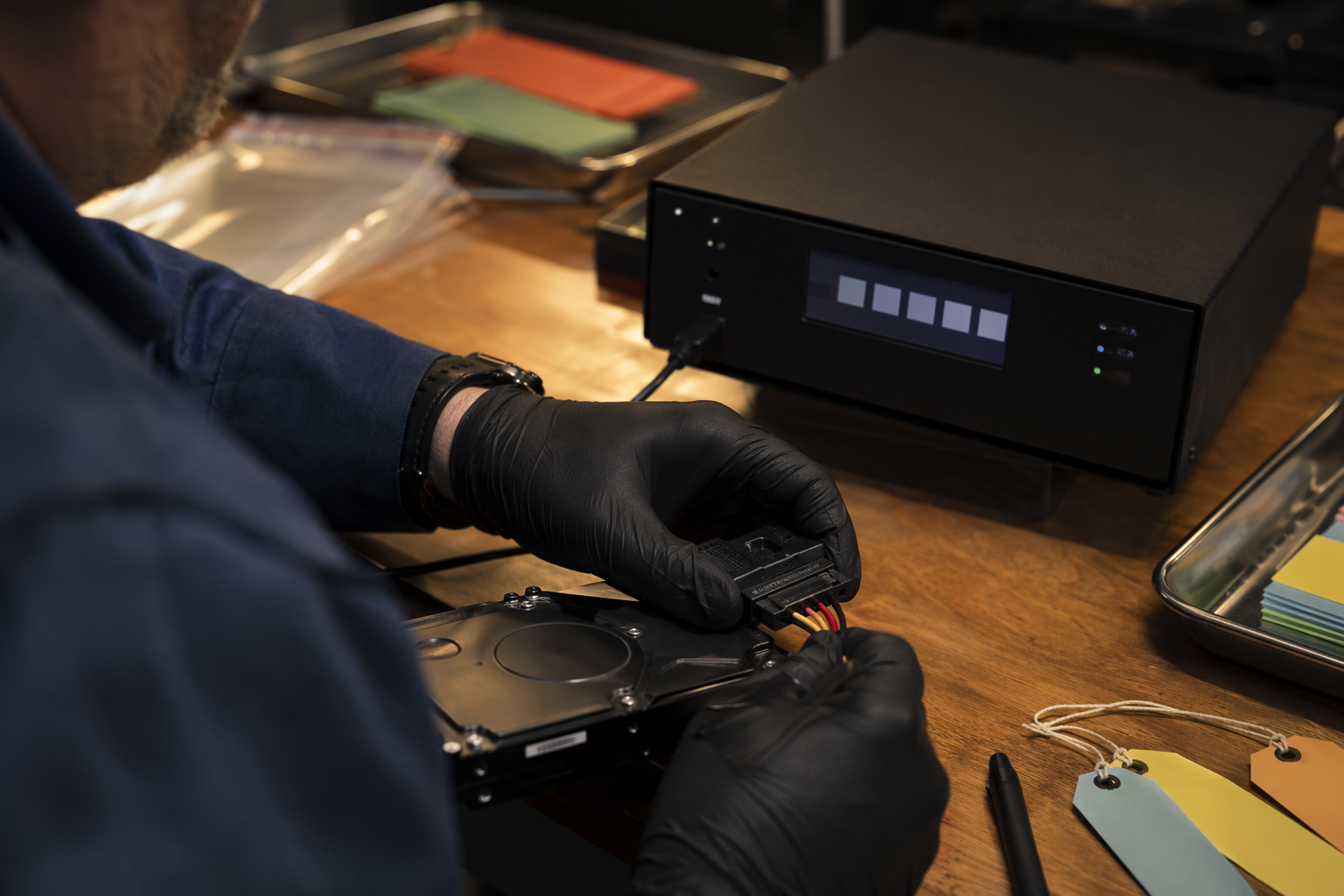
Managed SOC as a service works by combining continuous machine detection with human triage and response, so providers detect suspicious activity, validate alerts, and coordinate containment and recovery on your behalf.
Core data flows and technology
Telemetry from endpoints, cloud tenants, identity platforms and network devices is collected, normalised and correlated in a central detection platform such as a SIEM or an Extended Detection and Response (XDR) system. Endpoint Detection and Response (EDR) tools give host-level visibility, while analytics and rule engines prioritise what needs human review. ENISA’s 2025 market analysis explains why providers commonly bundle SIEM, EDR and analytics to deliver detection at scale (ENISA, 2025).
Human roles and the operational workflow
Tiered analysts run the service: Tier 1 for alert triage, Tier 2 for investigation, and Tier 3 for threat hunting and complex response. Incident responders take over confirmed incidents to coordinate containment, forensic capture and stakeholder briefings. Service managers oversee service levels and escalations, and a documented runbook defines who does what and when.
Integrations, handover and contracts
Integrations usually include cloud platforms, Microsoft Sentinel or other SIEMs, major EDR products and identity providers. Providers must give customers clear telemetry access, exportable logs and defined handover points so internal security teams or third-party incident response retain control when needed. UK guidance on choosing a managed provider highlights these operational controls as procurement priorities (NCSC, 2025).
Metrics, SLAs and compliance
Buyers track mean time to detect and mean time to respond, plus false positive rates and escalation times written into the Service Level Agreement (SLA). Data residency and UK General Data Protection Regulation (UK GDPR) compliance should be explicit in contracts, as should retention periods and evidence export for audits. The UK Government’s 2025 managed service providers study shows growing regulatory focus on these contract terms (GOV.UK, 2025).
Practical implications for buyers
Expect a mix of automated detection and human validation, clear escalation paths, and the need to confirm telemetry, data exports and compliance. At CyPro, we require runbooks, data retention policies and exportable logs before contracts are signed, and we assess a provider’s fit against your risk tolerance, IT estate and incident response plans. See our managed detection offering for how we run monitoring and response in UK environments (Managed Detection and Response (MDR)) and our 24/7 monitoring service for continuous coverage options (24/7 Cyber Security Monitoring).

Who needs Managed SOC as a Service?
Organisations without a mature in-house Security Operations Centre, limited security headcount or clear 24/7 detection needs should consider managed SOC as a service. This typically includes mid-market and enterprise UK firms in financial services, legal, technology and regulated industries, and organisations subject to NIS2 or FCA rules.
Operational signals
Frequent alerts you cannot triage, a growing backlog of unremediated vulnerabilities, or slow mean time to detect are strong signals to buy. The 2025 Verizon Data Breach Investigations Report shows many breaches start from straightforward compromises that faster detection would limit. The analyst view in Gartner’s 2025 prediction also argues that many organisations are better off outsourcing detection than operating an autonomous SOC.
Sectors and compliance drivers
Financial services firms face high threat volumes and regulatory scrutiny from the Financial Conduct Authority, so they often need a managed SOC for evidence and continuous monitoring. Legal firms and technology vendors use managed SOC to satisfy customer assurance requests such as Service Organisation Control 2 (SOC 2). Organisations preparing for UK GDPR incident reporting benefit because a managed SOC reduces detection time and improves forensic readiness.
How a managed SOC fits teams
Small security teams can use a managed SOC to provide 24/7 monitoring while keeping incident response in-house, or to deliver a handover to a retained incident responder. At CyPro, we help clients pair managed SOC with vulnerability scanning and project management to embed runbooks, exportable telemetry and supplier assurance early in contracts. That combination lowers risk and speeds procurement evidence for customers.
🧭 What is the difference between Managed SOC as a Service and adjacent capabilities?

Managed SOC as a service centralises continuous monitoring, alert triage and incident coordination by an external Security Operations Centre team; Managed Detection and Response (MDR) focuses on threat detection and containment, while an in-house SOC is run and staffed by your organisation.
At the top level, a managed SOC monitors telemetry, escalates confirmed incidents to your responders and often provides playbooks and forensic logs export; an MDR provider typically delivers targeted endpoint detection and rapid containment; an in-house SOC owns all staffing, tooling and retention of operational control.
| Dimension | Managed SOC as a Service | Managed Detection and Response (MDR) | In-house SOC |
|---|---|---|---|
| Scope | 24/7 monitoring, alert triage, coordination, runbooks, exportable telemetry | Detection, investigation, containment (often EDR-first) | Full control over monitoring, response, threat hunting |
| Pricing (UK) | £6k-£45k per month depending on coverage and SLAs | £8-£20 per endpoint per month depending on tooling and service level | High upfront recruitment and tooling costs; ongoing salaries and training |
| UK support & compliance | Supplier provides UK-facing runbooks and regulatory evidence | Good for endpoint-heavy estates, variable UK local support | Direct ownership, easier evidence for auditors but bigger internal burden |
| Integrations | SIEM, EDR, identity, cloud telemetry with exportable logs | Usually EDR-first, some SIEM tie-ins | Can integrate everything but requires resource to operate |
| Time-to-value | Weeks to months with prebuilt playbooks | Days to weeks for EDR deployment, weeks for tuning | 6-12 months to recruit and tune |
| Suitable for | Mid-market to enterprise lacking 24/7 staff or seeking assurance | Organisations needing fast endpoint containment with limited ops | Large organisations with mature security ops and hiring capacity |
Operational handover and responsibilities
Managed SOC as a service usually defines clear handover points: Alert severity, containment authority and forensic evidence export. ENISA’s 2025 market analysis describes how providers differentiate by handover models, incident boundaries and forensic depth (ENISA, 2025).
For threat intelligence and incident playbooks, many organisations reference external industry findings and conference material, for example Mandiant’s 2025 conference notes on SOC orchestration and vendor roles (Mandiant, 2025).
At CyPro, we recommend choosing a managed SOC when you need continuous coverage, exportable telemetry and clear runbooks without the capital and hiring cycle of an in-house SOC; choose MDR where fast endpoint containment is the priority and you have complementary monitoring elsewhere.
Linking into procurement, consider vendor evidence such as playbooks, SLAs and data export terms early. For help mapping which model fits your estate, our Due Diligence as a Service can speed procurement, and our Secure AI Adoption team can advise on integrating detection around AI systems.
💷 How much does Managed SOC as a Service cost in the UK?

Expect UK pricing in 2026 to range from about £3,000 to £8,000 per month for a small/mid sized SOC bundle, £12,000 to £60,000 per month for enterprise tiers, or £8 to £20 per endpoint per month for per-endpoint models.
These headline numbers for managed SOC as a service vary because suppliers price on telemetry, integrations, 24/7 coverage and retained incident response. Smaller organisations pay for a packaged bundle with a defined telemetry cap, mid-market buyers often combine a tiered retainer with per-gigabyte log charges, and large estates pay for capacity and bespoke playbook work.
What drives the price
Telemetry volume is usually the largest cost driver: Log volume and storage, endpoint telemetry and cloud ingest all add up quickly. Integration work such as connecting legacy on-prem SIEMs, cloud platforms and identity systems creates one-off professional services that can equal several months of subscription cost. Coverage level matters: A 24/7 Security Operations Centre (SOC) rota is more expensive than business-hours-only monitoring, and proactive threat hunting or purple-team exercises sit at the top of the price ladder.
Typical pricing bands and what you get
Use this pricing table to compare typical UK options in 2026. These ranges reflect market reports and buyer conversations in 2024 to 2026 and assume normal enterprise licence and SLA terms.
| Tier | Monthly price (2026) | Typical inclusions |
|---|---|---|
| Small / Starter | £3,000 to £8,000 | 8×5 monitoring, basic alerting, weekly reports, limited telemetry allowance |
| Mid-market | £8,000 to £20,000 | 24/7 monitoring, SOC analysts, playbooks, 24/7 escalation, mid telemetry cap |
| Enterprise | £12,000 to £60,000+ | Dedicated SOC team, threat hunting, IR retainer, custom integrations, high telemetry |
Market studies and incident reports show demand and scale matter. The National Cyber Security Centre’s 2025 annual review highlights growing reliance on managed providers in the UK NCSC, 2025. The Verizon 2025 Data Breach Investigations Report underlines why organisations invest in outsourced detection and response to shorten dwell time Verizon, 2025.
At CyPro, we recommend buyers model three priced scenarios during procurement: (1) business-hours monitoring with incident handover, (2) 24/7 monitoring plus an IR retainer, and (3) full enterprise SOC with proactive threat hunting. That approach exposes cost drivers and helps compare like-for-like quotes. See our Vulnerability Scanning service page for how combining scanning with a managed SOC reduces false positives and lowers detection cost over time: Vulnerability Scanning.

🔍 When should you adopt Managed SOC as a Service?
Adopt a managed Security Operations Centre (SOC) as a service when you need continuous threat detection, 24/7 incident response and telemetry export without hiring a full in-house SOC. This is especially true after repeated incidents, during fast cloud migration or ahead of regulatory deadlines such as NIS2 and UK GDPR obligations.
Common decision triggers
Organisations commonly choose a managed SOC after three triggers: Repeated security incidents, gaps found in audits or supplier due diligence, and growth in cloud footprint that outstrips internal monitoring capacity. The UK Government’s 2025 managed service providers study shows market demand rising as firms outsource specialised monitoring (GOV.UK, 2025).
The National Cyber Security Centre’s guidance on selecting managed providers stresses operational controls, data access and playbooks as procurement priorities (NCSC, 2025). These documents mean buyer teams should treat a managed SOC as both a technical and contractual purchase.
When timing favours a staged roll-out
Choose a pilot-first approach when you have mature logging but limited analyst capacity: Run a 3 month pilot covering essential systems, then expand. Choose a hybrid model when you already have some 24/7 monitoring in place and need threat hunting, playbooks and faster containment. Full replacement suits organisations facing SOC 2 procurement asks or needing consolidated telemetry for incident response and regulatory reporting.
 Case Study, UK legal firm reduced mean time to detect by 68% with a staged managed SOC
A UK legal firm, ~200 staff, suffered several ransomware near-misses because logging was fragmented and analyst headcount was low. They needed continuous coverage and clear playbooks quickly.
We ran a three month pilot, connected central logs and deployed our managed detection and response processes, then transitioned to a hybrid managed SOC. The engagement used our Managed Detection and Response (MDR) and Cyber Security Project Management services to coordinate stakeholders and deliver playbooks.
Within 90 days mean time to detect fell 68% and the firm closed procurement gaps ahead of a client SOC 2 audit, reducing insurance premium uplift within six months.
Adopting a managed SOC as a service often saves hiring time and gives access to specialist analysts. Use a pilot to validate telemetry coverage, insist on clear playbooks and contract terms for data export and SLAs before scaling.
How to choose a Managed SOC as a Service provider

Answer: Choose a provider by scoring detection capability, tooling and playbooks, UK-based support and data residency, threat intelligence quality, and verifiable compliance evidence such as ISO 27001 or SOC 2 reports. Prioritise measurable SLAs and clear handover on incidents.
Key Takeaway
Score providers on detection, UK support, integration work, and evidence of operational maturity; ask for three priced scenarios to reveal true cost drivers.
Core selection criteria
Detection capability must be demonstrable, not marketing. Ask for recent metrics on mean time to detect and mean time to respond, and demand examples of threats they detect regularly. The European Union Agency for Cybersecurity (ENISA, 2025) separates simple monitoring from managed SOCs that provide triage and response, so confirm which you are buying.
Tooling and telemetry matter. Ensure the provider supports your cloud platform, endpoint protection and identity logs, and can ingest third-party telemetry without expensive rework. For regulated firms, check data residency and retention policies and whether the provider will sign a Data Processing Agreement under UK GDPR. The UK government research on managed service providers highlights how contract terms and service boundaries affect procurement and total cost of ownership (GOV.UK, 2025).
Practical procurement questions
Ask these 10 questions during shortlisting: 1) Which telemetry do you collect and normalise? 2) What is your MTTD and MTTR by customer tier? 3) Show a recent redacted incident alert and full timeline. 4) Do you offer 24/7 analyst coverage and escalation? 5) What playbooks do you use for ransomware and data exfiltration? 6) Where is customer data stored? 7) What SLAs and credits exist? 8) How do you hand incidents back to our team? 9) What integrations require professional services? 10) Provide SOC 2 or ISO 27001 evidence.
At CyPro, we recommend asking for three priced scenarios: Business-hours monitoring with handover, 24/7 monitoring plus an IR retainer, and a full enterprise SOC with proactive hunting. Comparing like-for-like prices reveals hidden costs such as onboarding, log ingestion fees, and hunt hours. Also check whether the provider can support adjacent needs such as SOC 2 evidence or vulnerability scanning; those add value and reduce vendor count.
❓ Frequently asked questions
Do I need Managed SOC if I already have Managed Detection and Response (MDR)?
Key fact: MDR and Managed SOC as a Service overlap but are not identical. MDR typically focuses on endpoint detection and response, while a Managed Security Operations Centre (SOC) ingests broader telemetry across cloud, network and identity and coordinates incident orchestration. MDR can be sufficient for endpoint-led threats. A UK legal firm, for example, often needs a Managed SOC to centralise logs from cloud services, firewalls and endpoints for compliance and cross-system hunting.
How long does it take to implement Managed SOC as a Service?
Key fact: Typical timelines vary from 6 weeks to 6 months depending on scope. A pilot with core integrations often runs 6 to 12 weeks, while full rollouts take 3 to 6 months. Major phases are scoping, integrations, tuning and handover to 24/7 operations. Longer timelines arise from legacy systems, bespoke APIs, long data retention needs and complex identity or OT integrations.
Can Managed SOC handle incident response for ransomware in the UK?
Key fact: Managed SOC as a Service can handle ransomware if the contract includes an incident response retainer and playbooks. Containment and initial forensic triage are standard, while deep forensic analysis, legal advice and insurance liaison are usually separate services. Under UK General Data Protection Regulation (UK GDPR) and NCSC guidance, organisations may need to report data breaches to the Information Commissioner’s Office (ICO) and follow published incident reporting guidance.
Will Managed SOC help with SOC 2 or ISO 27001 audits?
Key fact: Managed SOC as a Service supplies evidence and controls that support SOC 2 and ISO 27001 audits. Common deliverables are collected logs, incident reports, Service Level Agreements (SLA) and runbooks, which auditors expect to see. To align outputs with auditor expectations, map provider outputs to the relevant ISO 27001 Annex A controls or SOC 2 Trust Service Criteria and request packaged evidence for each control.
What are the hidden costs of Managed SOC as a Service?
Key fact: Onboarding, tuning and false-positive handling are common hidden costs. Watch for charges for data egress, additional log retention, custom playbooks, agent licensing and emergency incident response days. To keep pricing predictable, ask for a priced onboarding plan, fixed-cost retention tiers, and clear change-control terms in the Service Level Agreement (SLA).
Contact Us