





Table of Contents
🔍 Introduction to MDR Meaning in Cyber Security

When we talk about MDR meaning in cyber security, we’re diving into one of the most effective ways to keep modern organisations protected. Managed Detection and Response (MDR) has become a go-to solution for businesses that need round-the-clock monitoring and expert insight without stretching their internal teams too thin. At CyPro, we see MDR as a crucial bridge between technology and human expertise – offering continuous threat detection, investigation and response across endpoints, networks, and cloud environments.
In this breakdown, we’ll unpack MDR in practical terms, explain why it matters, and outline what good MDR looks like in action. Whether you’re shaping your cyber strategy or assessing current defences, this guide will help you understand how MDR fits into the bigger picture. By the end, you’ll have a clear grasp of MDR and why investing in it can make a real difference to your organisation’s resilience.
📖 What Is MDR in Cyber Security?

To understand mdr meaning in cyber security, think of it as having a team of expert detectives watching over your digital world 24/7. Managed Detection and Response (MDR) is a service that combines advanced monitoring tools with skilled analysts who spot suspicious activity, investigate it, and take action before it causes damage. Instead of relying on reactive measures, MDR focuses on identifying threats early and responding quickly.
Imagine your IT environment as a busy airport. There are passengers (data), staff (users), and planes (systems) constantly moving. MDR acts like air traffic control – keeping watch from above, tracking every movement, and stepping in when something looks off. That visibility means organisations don’t just find out about attacks once something breaks; they get alerts in real time and experts ready to respond immediately.
At CyPro, we view MDR as a crucial layer within a wider security strategy. It connects technology, people, and process, giving organisations access to skilled analysts and automated tools that enhance threat detection and response. It’s not about replacing your team; it’s about extending their reach and capability. With MDR, businesses can stay ahead of evolving threats without needing to build large in-house security operations.
 Key Takeaway
 The MDR meaning centres on proactive threat detection and expert-led response – giving organisations peace of mind that their digital environment is monitored and protected around the clock.
Ultimately, MDR transforms cyber defence from passive monitoring into active protection, helping teams focus on running the business while experts handle the unseen battles.
⚡ Why It Matters

Understanding the meaning of MDR isn’t just about knowing what Managed Detection and Response does; it’s about recognising why it’s become a must-have for modern organisations. With constant pressure to meet customer expectations, comply with data protection laws, and keep costs under control, MDR offers a practical way to tackle those challenges head-on. It helps decision-makers reduce risk, strengthen trust, and prove they’re taking cyber seriously.
 Case Study – Boosting Resilience for a Mid-Sized Financial Services Firm
 We worked with a mid-sized FS firm that struggled with slow incident detection and rising compliance costs. By implementing an MDR service, we integrated automated monitoring with our analyst support team.
Within three months, the client reduced false positives by 70% and cut average response time from hours to minutes. They also improved audit readiness under ISO 27001, showing clear evidence of active threat management.
The result was fewer business disruptions and increased confidence from both regulators and customers – a direct reflection of how understanding MDR translates into measurable business resilience.
Here’s why MDR matters for business leaders:
- Business value: MDR boosts efficiency by automating detection and response, freeing up internal teams to focus on strategic work.
- Risk reduction: Early detection and expert triage mean threats are contained before they escalate into full-blown incidents.
- Regulatory confidence: Meeting expectations under frameworks like GDPR and ISO 27001 is easier when you can demonstrate proactive monitoring and response.
- Reputation and trust: Customers and partners increasingly expect visible, continuous protection – MDR helps deliver exactly that.
Key Takeaway Getting the MDR meaning right can help organisations reduce risk, meet compliance demands, and build lasting trust – all while keeping costs and complexity in check.
🧩 Key Components of MDR

To fully grasp MDR meaning in cyber security, it helps to break down the building blocks that make Managed Detection and Response work. MDR isn’t just one tool or process – it’s a coordinated mix of people, technology, and actions that together provide continuous detection, investigation, and response. At CyPro, we see these components as the heart of an effective MDR setup.
🔁 Processes: The Operational Backbone
The processes behind MDR define how it functions day to day. They ensure consistent monitoring, swift investigation, and structured response to threats.
- Continuous monitoring: Round-the-clock visibility across endpoints, networks, and cloud environments helps spot anomalies quickly.
- Threat hunting: As highlighted by SentinelOne, proactive threat hunting is one of MDR’s core components, helping analysts uncover hidden or emerging threats before they cause damage.
- Alert triage and validation: MDR providers act as an extension of internal teams, filtering and validating alerts to avoid noise and focus on genuine risks.
- Incident response procedures: When threats are confirmed, predefined playbooks guide containment and recovery actions efficiently.
🛡️ Controls: The Defensive Layer
Strong controls underpin MDR’s effectiveness. They define how data is protected and how systems react to suspicious behaviour.
- Access control and authentication: Ensures only authorised users can interact with sensitive systems or data.
- Endpoint detection and response (EDR): According to industry insights, EDR is a fundamental part of MDR, monitoring device-level activity and blocking malicious actions automatically.
- Extended detection and response (XDR): Expands visibility beyond endpoints to include network, cloud, and identity data.
- Data integrity and audit trails: Captures detailed logs for forensic investigation and compliance reporting.
⚙️ Tools and Technology: The Enablers
The tech behind MDR makes the processes and controls possible. It fuses automation with expert judgement to deliver real-time protection.
- SIEM and analytics platforms: Aggregate data from across the IT environment for pattern detection and trend analysis.
- Machine learning models: Combining human expertise with advanced machine learning helps detect and neutralise sophisticated human-led attacks.
- Threat intelligence feeds: Enrich alerts with global context, allowing faster and more accurate decisions.
- Remote response tools: Enable analysts to isolate or remediate compromised systems instantly.
👥 Roles and Responsibilities: The Human Element
Understanding MDR meaning also means recognising the human roles that make it work. MDR blends internal teams and external specialists to deliver seamless protection.
- Analysts and responders: Investigate alerts, correlate threat data, and execute containment actions.
- Threat hunters: Conduct proactive investigations to uncover stealthy or dormant threats.
- Security engineers: Maintain and tune detection technologies, ensuring optimal performance.
- Client stakeholders: Provide organisational context and approve major response actions when needed.
- MDR provider teams: At CyPro, we integrate directly with client operations, acting as an extension of their in-house security function.
Key Takeaway MDR revolves around a balanced mix of process, control, technology, and people. Together, these components create a proactive defence that detects, investigates, and responds to threats before they impact the business.
📈 Maturity Levels: What Good Looks Like

When exploring MDR meaning in cyber security, it’s useful to understand how maturity develops over time. Organisations typically move through stages, from ad hoc detection efforts to fully optimised, managed services. Each level reflects how well processes, technology, and people align to deliver consistent protection. At CyPro, we often use maturity assessments to help clients pinpoint their current capability and prioritise improvement areas.

🔢 Typical MDR Maturity Stages
| Stage | Description | Indicators |
|---|---|---|
| Ad Hoc | Reactive monitoring with limited visibility. | No formal process, reliance on basic tools, unclear responsibilities. |
| Defined | Initial frameworks and detection rules established. | Consistent monitoring but manual response; alerts often missed or delayed. |
| Managed | Structured MDR operations supported by external specialists. | Clear incident workflows, proactive threat hunting, measurable response times. |
| Optimised | Continuous improvement based on data and expert analysis. | Integrated tools, automated triage, and strategic threat intelligence sharing. |
Strong MDR capability is marked by consistent detection, swift response, and actionable insight into emerging threats. Weak setups tend to rely on manual monitoring and reactive fixes. Over time, most organisations evolve from defined to managed maturity levels as they introduce automation, analytics, and partnerships with experienced providers. The most advanced stage, Managed Extended Detection and Response (MXDR), delivers XDR-level protection as a managed service, which CrowdStrike recognises as the highest protection standard available.
Key Takeaway What good looks like in MDR maturity is a shift from reactive monitoring to proactive, data-driven defence. Organisations with managed or optimised MDR setups get faster detection, deeper insight, and measurable resilience – a clear reflection of how understanding MDR meaning leads to stronger protection.
Our team at CyPro often supports this journey through Security Assessments & Audits, helping organisations benchmark current maturity and build structured improvement plans. Understanding MDR’s meaning isn’t just theory; it’s knowing how your detection and response capability can grow stronger over time.
⚠️ Common Mistakes to Avoid When Understanding MDR Meaning

Getting the MDR meaning right in cyber security often comes down to avoiding a few common pitfalls. These mistakes tend to appear when organisations rush into implementing Managed Detection and Response without fully appreciating what it involves. Here are some of the main traps we see and how to steer clear of them.
Case Study – Lessons from a UK-Based Manufacturing Business We worked with a UK-based manufacturing business that had adopted MDR but hadn’t aligned it properly with their internal IT processes. Their alerts were piling up, and response times were inconsistent.
We helped them map out clear responsibilities and refine detection thresholds. Within two months, the false alert rate dropped by 60%, and average incident resolution time improved by 40%.
The project reinforced how understanding the meaning of MDR isn’t just about having the technology but it’s about embedding it effectively into existing operations.
- Assuming MDR is entirely automated: Many believe MDR is just a piece of software that runs itself. In reality, it relies on skilled analysts interpreting alerts and making decisions. Without human oversight, even the best tools can miss subtle indicators of compromise. The fix? Treat MDR as a partnership between technology and expertise.
- Underestimating integration complexity: Plugging MDR into existing IT systems can be tricky. Organisations often overlook how legacy systems, cloud services, and network structures interact. Proper planning and testing help ensure smooth integration and reliable coverage.
- Failing to define response ownership: When incidents occur, unclear roles can delay action. It’s important to decide who handles containment, communication, and recovery before an event happens. Setting clear expectations between internal teams and your MDR provider avoids confusion later.
- Neglecting ongoing tuning: MDR isn’t a “set and forget” solution. Threat patterns evolve, so alert rules and response playbooks need regular updates. Continuous optimisation keeps detection sharp and response times short.
Key Takeaway Understanding mdr meaning goes beyond buying a service. Success depends on clear roles, strong integration, and ongoing optimisation – areas where we at CyPro help clients get it right from day one.
🗺️ Framework Mapping: Connecting MDR Meaning to Standards
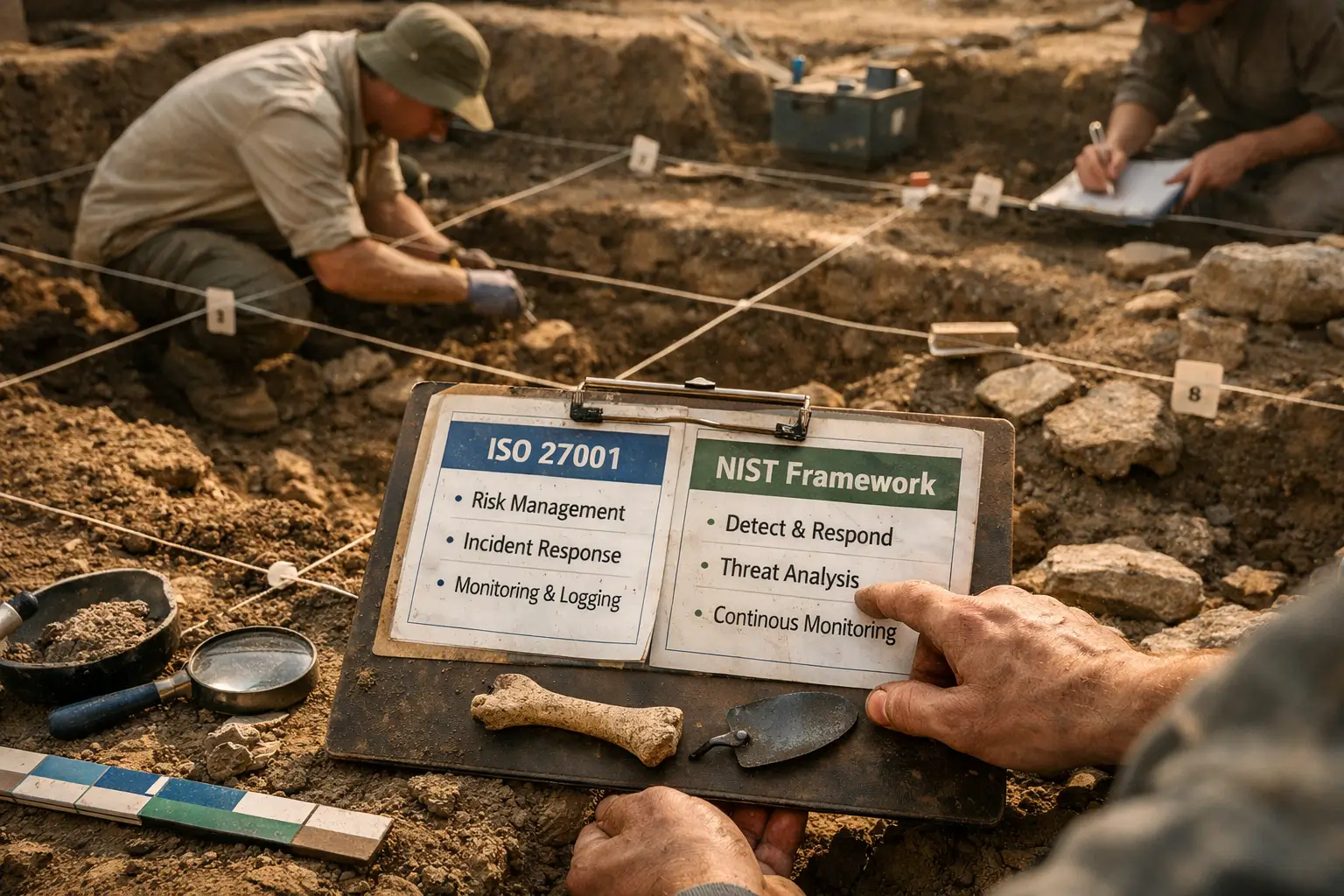
When we talk about MDR meaning in cyber security, it’s not just about technology – it’s about how Managed Detection and Response fits within recognised frameworks that guide good security practice. At CyPro, we help organisations map MDR functions to established standards so they can see where it strengthens compliance and enhances maturity.
Here’s how MDR aligns with common frameworks and principles:
- ISO 27001: Supports clauses on Information Security Incident Management (A.16) and Operations Security (A.12), ensuring prompt detection and response.
- NIST CSF: Closely linked to the Detect and Respond functions, helping organisations identify anomalies and act fast when threats appear.
- CAF (Cyber Assessment Framework): Relates to principles D: Detecting cyber events and E: Minimising impact – both central to MDR capability.
- GDPR: Demonstrates accountability for data breaches and supports Article 32 on security of processing.
- PCI-DSS: Reinforces continuous monitoring and rapid incident handling across cardholder data environments.
Understanding this mapping helps teams see how MDR complements existing controls and compliance efforts. At CyPro, we use these frameworks to show where MDR delivers measurable value and keeps organisations aligned with recognised security standards – a key part of mastering MDR meaning in practice.
✅ What Organisations Should Do Next

Understanding MDR’s meaning is only useful if it leads to action. To make the most of your Managed Detection and Response capability, organisations should focus on tightening controls, improving visibility, and ensuring teams are ready to respond effectively. Here’s where to start:
- Review access controls: Enable multi-factor authentication (MFA) everywhere, especially for remote and admin access. Regularly review privileged accounts and revoke unused credentials.
- Audit legacy systems: Inventory and decommission outdated or unused assets. Keep current systems patched and monitored to minimise exposure.
- Enhance monitoring: Strengthen logging and detection capabilities within your SOC. Use MDR insights to fine-tune alert thresholds and improve response speed.
- Define governance: Clarify roles, responsibilities, and processes for credential management and incident escalation. Good governance ensures consistent action when issues arise.
- Test your response plans: Run tabletop exercises to practise containment and recovery. Verify backups and ensure restoration processes actually work.
- Seek external validation: Consider independent audits, penetration testing, or a security maturity assessment to benchmark progress and identify gaps.
Key Takeaway To act on the MDR effectively, organisations should focus on strong access control, reliable monitoring, and well-rehearsed response plans. These practical steps help teams stay resilient and ready for whatever comes next.
🔚 Wrapping Up: Understanding MDR Meaning in Cyber Security

Getting to grips with mdr meaning gives organisations a clearer view of how to strengthen their defence posture. Managed Detection and Response is all about pairing smart technology with expert insight to spot and stop threats before they cause harm. It’s a proactive approach that helps teams stay focused on business priorities while knowing someone’s always watching their environment.
Key Takeaway MDR centres on prevention, speed, and expertise. With MDR, organisations shift from reacting to incidents to actively managing risk, gaining peace of mind and stronger resilience.
At CyPro, we help organisations turn that understanding into action. Building a mature MDR capability takes effort, but the long-term benefits of reduced risk, faster response and improved confidence are worth it. If you’re reviewing your current cyber posture or exploring how MDR fits into your broader strategy, reach out to us for a chat. We’ll help you assess where you stand and plan the next step towards stronger protection.