




Table of Contents
👋 Introduction to Virtual CISO Responsibilities

Many organisations understand the need for strong cyber leadership but can’t always justify the cost of a full-time Chief Information Security Officer. That’s where a Virtual CISO (vCISO) comes in – an experienced security leader who provides the same strategic guidance on a flexible basis. In this blog, we’ll unpack what a vCISO actually does, outline the key responsibilities of a virtual CISO, and explain how they help organisations strengthen their security posture without the overhead of a permanent hire.
According to ISACA’s State of Cyber Security report, 72% of organisations have a CISO, yet many still face stagnant budgets and growing threats. This gap has made the vCISO model increasingly attractive, especially as over 60% of mid-sized businesses are expected to adopt vCISO services by 2025. At CyPro, we’ve seen this shift first-hand – our Virtual CISO (vCISO) service helps businesses gain expert support when they need it most, without the full-time commitment.
In the next sections, we’ll explain how vCISOs operate, what their day-to-day looks like, and why understanding virtual CISO responsibilities can be crucial for developing a mature cyber strategy. If you’re exploring whether this model fits your organisation, you might also find our guides on What is a vCISO (and should you hire one)? and How to become a Virtual CISO (vCISO) useful.
🔐 What This Capability Is

A Virtual Chief Information Security Officer (vCISO) is essentially an outsourced security leader who provides the same strategic oversight as a full-time CISO, but in a more flexible and affordable way. The core aim of this role is to help organisations that can’t justify or attract a permanent CISO gain access to senior-level expertise. When we talk about virtual CISO responsibilities, we’re referring to the leadership, planning and governance tasks that keep a business’s security direction on track.
Think of a vCISO like a part-time Finance Director, but for security. They analyse where the real risks lie, build a practical roadmap to reduce them, and ensure cyber decisions support business goals. This could include creating policies, managing compliance, or guiding internal teams on how to handle incidents. The vCISO also acts as an objective voice, helping to avoid the common issue of “marking your own homework” when internal IT teams assess their own work.
At CyPro, our vCISO team works alongside your existing staff, tools and partners to strengthen your overall security posture. Whether you’re a growing SME needing to meet client compliance demands or a larger organisation seeking stronger governance, this capability fits seamlessly into your wider IT environment. For a deeper look at how this model supports security growth, see our guides on What is a vCISO (and should you hire one)? and Cyber Security for SMBs Drives Business Growth.
 Key Takeaway
 A Virtual CISO brings senior security leadership to your business without the full-time cost, guiding strategy, compliance and risk reduction as part of your wider team. Understanding virtual CISO responsibilities helps you see how this flexible model supports long-term security maturity.
⚡ Why It Matters

Understanding virtual CISO responsibilities isn’t just about knowing what tasks get done – it’s about why those tasks matter for your organisation’s growth, compliance and reputation. A vCISO can make the difference between treating cyber as a checkbox exercise and embedding it as a business enabler. As client demands, insurer expectations and regulatory pressures rise, having a dedicated security leader ensures your organisation keeps pace without the cost of a full-time hire.
 Case Study – Strengthening Compliance for a Growing FS Firm
 We worked with a mid-sized financial services firm that had strong IT capabilities but lacked clear cyber governance. They were losing tenders because they couldn’t evidence compliance maturity.
Our team stepped in through our Virtual CISO (vCISO) service, defining policy frameworks, conducting risk assessments and aligning their controls to ISO 27001. Within six months, they reduced audit findings by 70% and secured three new enterprise contracts.
The leadership gained from understanding virtual CISO responsibilities gave them confidence to scale operations securely while meeting client expectations.
- Cost efficiency: A virtual CISO costs roughly one-eighth of a full-time CISO, freeing up budget for tech investment or growth initiatives.
- Rapid risk reduction: Within months, a vCISO can cut exposure by improving patching, access control and governance.
- Compliance confidence: Meeting frameworks like ISO 27001 or SOC 2 becomes smoother with structured leadership and reporting.
- Client trust: Demonstrating mature cyber practices helps win and retain larger contracts.
- Scalable support: As your business evolves, your vCISO flexes to meet changing risk profiles.
Key Takeaway Knowing the full scope of virtual CISO responsibilities helps leaders see how expert guidance turns compliance and risk management into real business value. At CyPro, we help you achieve that balance between cost, confidence and growth.
🧩 Key Components

When we talk about virtual CISO responsibilities, we’re referring to how this role brings structure, oversight and direction to an organisation’s security efforts. A strong vCISO service is built around clear processes, effective controls, the right tools and defined roles. Together, these components create a framework that keeps security aligned with business priorities while managing cost and complexity.
Processes That Drive Security Strategy
- Risk management: Identifying, assessing and prioritising risks across your IT environment to focus effort where it matters most.
- Policy development: Creating and maintaining practical security policies that guide employee behaviour and compliance.
- Governance & reporting: Setting up regular reviews, board updates and compliance tracking to maintain visibility.
- Incident response planning: Designing and testing processes to handle breaches effectively and reduce downtime.
- Third-party assurance: Evaluating suppliers and partners to ensure their security standards meet your expectations.
These processes form the backbone of how a vCISO operates, ensuring consistency and accountability across the entire organisation. At CyPro, we focus on embedding these cycles early, so leadership can make informed decisions backed by data and risk insight.
Controls That Strengthen Defence
- Access controls: Managing who can access what within your systems, ensuring least-privilege principles are applied.
- Data protection: Implementing encryption, secure storage and data handling processes that meet regulatory standards.
- Configuration management: Making sure systems are hardened and aligned with best practice baselines.
- Continuous monitoring: Tracking activity to spot anomalies before they turn into incidents.
Defining and maintaining these controls is part of core virtual CISO responsibilities. A good vCISO doesn’t just set the rules – they confirm those rules are measured and enforced, often working with technical teams to review control effectiveness.
Tools and Technology That Support Visibility
- Security Information and Event Management (SIEM): Centralising logs and alerts to detect issues faster.
- Vulnerability management tools: Identifying and tracking weaknesses across servers, devices and cloud services.
- Compliance automation: Streamlining assessments and evidence collection for audits such as ISO 27001 or SOC 2.
- Endpoint detection and response (EDR): Providing early warning and rapid containment when threats arise.
Our team selects and integrates tools that match your maturity level and budget. This ensures you get the insight you need without unnecessary complexity. It’s one reason many organisations turn to our Virtual CISO (vCISO) service to bring structure and clarity to their tech investment.
Roles and Responsibilities
- Strategic advisor: The vCISO shapes long-term security direction, aligning it with business goals.
- Risk owner: They maintain oversight of risk registers and ensure mitigation plans are progressing.
- Compliance coordinator: Liaising with auditors, regulators and internal teams to maintain alignment with frameworks.
- Board communicator: Translating technical risk into business terms for senior stakeholders.
According to ISACA, both virtual CISOs and full-time CISOs “strategise, advise, coordinate and manage information security – but don’t perform hands-on implementation.” That separation ensures focus on leadership and governance rather than day-to-day operations.
At CyPro, we’ve seen how clear role definition makes a huge difference. It keeps accountability simple and ensures the vCISO’s time is focused on what drives measurable improvement. For more on how to build these capabilities into your organisation, see our guide on How to become a Virtual CISO (vCISO).
Key Takeaway The core virtual CISO responsibilities revolve around structured processes, well-defined controls, smart use of tools and clear accountability. Together, these elements deliver the strategic leadership and oversight needed to strengthen your organisation’s security posture efficiently.
📊 Maturity Levels of Virtual CISO Responsibilities
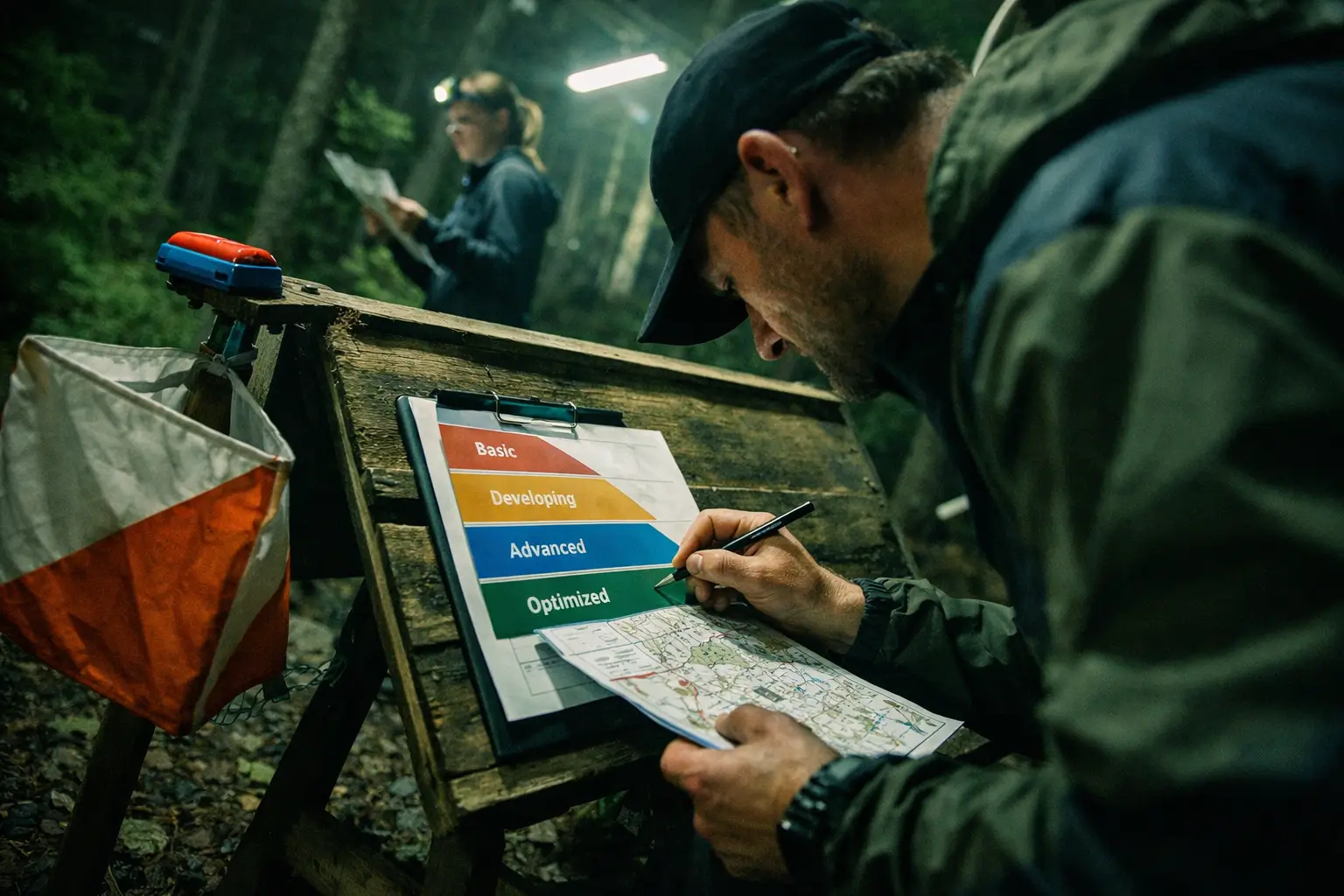
Understanding where your organisation sits on the maturity scale helps you make better decisions around virtual CISO responsibilities and investment. A vCISO’s impact depends heavily on how embedded security leadership is within your business. Most organisations move through four broad stages – from ad hoc to optimised – as their approach evolves.
| Maturity Stage | What It Looks Like | Indicators |
|---|---|---|
| Ad Hoc | Security actions are reactive and inconsistent. No defined leadership or plan. | Policies missing, compliance issues recurring, limited visibility of risk. |
| Defined | Basic governance and reporting in place. Responsibilities are clear but not fully enforced. | Policies exist but aren’t actively measured or reviewed. Awareness improving. |
| Managed | vCISO oversight ensures structured risk management and compliance tracking. | Regular reviews, measurable KPIs, stronger alignment with business goals. |
| Optimised | Security is embedded across all operations. Continuous improvement and proactive strategy. | Security metrics drive decision-making, culture of ownership, seamless integration with IT. |
At CyPro, we often see clients move from “Defined” to “Managed” maturity within months through our Virtual CISO (vCISO) service. Once the fundamentals are in place, our team helps embed risk management and governance processes so that security becomes part of daily operations. For those unsure where they stand, we also offer Security Assessments & Audits to benchmark current capability and identify improvement areas.
Whether you’re just starting to formalise your security direction or already have structured oversight, understanding your maturity helps direct the right next steps.
Key Takeaway Strong virtual CISO responsibilities are about moving from reactive to proactive leadership. “What good looks like” is an embedded, measured and continuously improving security culture that aligns with business objectives and adapts as risks evolve.
⚠️ Common Mistakes to Avoid in Virtual CISO Responsibilities

Even with the best intentions, organisations can stumble when defining or managing virtual CISO responsibilities. These pitfalls often stem from misunderstanding the role, underestimating the scope, or failing to align the vCISO with internal teams. Here are some frequent mistakes we see and how to avoid them.
1. Treating the vCISO as a one-off consultant. Some organisations think a vCISO is just there to “tick the compliance box”. This short-term view means they miss the ongoing strategic value the role brings. The vCISO should be part of long-term planning, not just reactive problem-solving.
2. Overlapping internal roles and independence. It’s common for IT leaders to blur the lines between operational and oversight roles. Letting the same team both implement and audit controls risks bias. Independence matters – a vCISO should remain objective and separate from daily IT operations.
3. Unclear goals and success measures. Without defined KPIs, even experienced leaders can struggle to gauge progress. A vCISO needs clear deliverables tied to business outcomes, such as reduced incident rates or improved compliance scores.
Misunderstanding the vCISO’s remit often leads to wasted effort or missed risk. At CyPro, we help clients set clear expectations from the start, ensuring the right governance and outcomes across all engagements. For more guidance, see our insights on how to become a Virtual CISO and why Cyber Security for SMBs Drives Business Growth.
Key Takeaway Clarity, independence and measurable goals are essential to getting the most from your vCISO. Understanding virtual CISO responsibilities early helps avoid confusion, duplication and wasted investment.
🗺️ Framework Mapping – Connecting Virtual CISO Responsibilities

Understanding how virtual CISO responsibilities align with recognised frameworks helps security leaders see where their current practices fit and where gaps may exist. A vCISO doesn’t just manage risk – they translate these frameworks into practical actions your team can follow. At CyPro, we often help clients align their cyber maturity with standards like ISO 27001, the NIST Cyber Security Framework (CSF) and the UK’s Cyber Assessment Framework (CAF), ensuring each layer of governance is covered.
| Framework | How It Connects to Virtual CISO Responsibilities |
|---|---|
| ISO 27001 | Supports clause 5 (Leadership), clause 6 (Planning) and Annex A controls for risk management, incident response and continual improvement. |
| NIST CSF | Aligns with all six functions – Govern, Identify, Protect, Detect, Respond and Recover – through governance, monitoring and reporting activities. |
| CAF | Maps to principles A (Managing Security Risk) and D (Minimising Impact of Incidents), which are often led by a vCISO in regulated sectors. |
| GDPR & PCI-DSS | Ensures personal data and payment systems are safeguarded through strong policy oversight and compliance monitoring. |
By aligning virtual CISO responsibilities with these frameworks, organisations can demonstrate due diligence and build consistent governance across their operations. If you’re exploring how to strengthen your compliance roadmap, our Virtual CISO (vCISO) service or our guide on How to become a Virtual CISO (vCISO) can help you plan the next step. At CyPro, we make sure your frameworks work together, not in silos, to keep your business secure and compliant.
✅ What Organisations Should Do

Understanding virtual CISO responsibilities is only half the story – the next step is turning that knowledge into action. Whether you already have a vCISO in place or are exploring one, here are practical steps to strengthen your cyber posture and make security part of everyday operations.
- Review access controls: Enable MFA everywhere, especially for remote or admin accounts. Regularly audit user permissions and remove old access.
- Decommission legacy systems: Create an asset inventory, retire unused applications and set up a patching schedule to close known gaps.
- Improve detection and response: Invest in better logging, monitoring and SOC capability so incidents can be spotted and contained early.
- Define governance: Assign clear roles for who owns risk, manages credentials and approves changes to your IT environment.
- Test your response: Run tabletop exercises and check your backup and recovery plans actually work under pressure.
- Seek independent validation: Commission penetration testing, external audits or a maturity assessment to get an objective view of your controls.
Case Study – Strengthening Security Maturity in a UK Manufacturing Business We supported a UK-based manufacturing business with 400 staff that had grown rapidly but outpaced its internal security processes. Through our Virtual CISO (vCISO) service, we helped them map out their environment, enforce MFA across remote sites and introduce regular patching cycles.
We also ran an incident-response simulation to test recovery readiness. Within six months they reduced unpatched systems by 80% and improved detection capability through structured SOC oversight.
This practical application of virtual CISO responsibilities gave them measurable resilience and greater confidence when facing supplier due diligence checks.
Taking these steps doesn’t require massive investment – just focus and consistency. If your business lacks the in-house leadership to drive this, we can help. At CyPro, our vCISO team works alongside your internal staff to align governance, reduce risk and build lasting cyber maturity.
Key Takeaway To get real value from your vCISO, turn virtual CISO responsibilities into daily actions – review access, patch fast, log effectively, test often and validate externally. These simple habits build a stronger, more trusted business foundation.
✔️ Wrapping Up: Understanding Virtual CISO Responsibilities

By now, it’s clear that understanding virtual CISO responsibilities goes far beyond listing tasks. It’s about recognising how strategic cyber leadership, even on a fractional basis, can shape stronger governance, build resilience and maintain trust with clients and regulators. A vCISO gives you access to that expertise without the cost or delay of a permanent hire, helping you act early rather than react later.
Key Takeaway A vCISO brings leadership, structure and direction to your cyber approach. Understanding virtual CISO responsibilities helps you see how this model reduces risk, builds trust and supports long-term business goals.
At CyPro, we’ve seen first-hand how organisations grow in confidence once they have the right guidance in place. Whether you’re just starting to formalise your security strategy or looking to mature existing controls, our Virtual CISO (vCISO) service can help you make that step with clarity and focus. If you’d like to explore how we can support your next phase, take a look at What is a vCISO (and should you hire one)? or How to become a Virtual CISO (vCISO) – or just reach out to us for a chat about where you are in your journey. Understanding virtual CISO responsibilities is the first step to building a stronger, more secure future.