





The Chick-fil-A data breach, caused by credential stuffing attacks, has exposed sensitive customer information and disrupted account security. This event serves as a significant example of the growing threat posed by automated attacks targeting reused passwords on consumer platforms.
Chick-fil-A Data Breach: What Happened and When
In early 2023, Chick-fil-A, a popular US-based fast food chain, publicly confirmed that it suffered a data breach following a series of credential stuffing attacks. The incident was disclosed after the company observed suspicious activity connected to its customer rewards programme accounts, with attackers successfully accessing user data by leveraging stolen credentials from unrelated breaches.
Credential stuffing is a type of cyber attack where malicious actors use large lists of previously compromised username and password pairs—often purchased or found online—to attempt logins on other services. If customers have reused passwords across different platforms, these automated attacks can quickly compromise their accounts.
Chick-fil-A’s investigation revealed that the attack campaign persisted for several months, with abnormal login attempts detected as early as December 2022 and continuing into February 2023. The attackers systematically targeted customer accounts, bypassing simple authentication measures by using automated tools and botnets.
Who Is Affected and What Data Was Exposed
The breach specifically impacted customers enrolled in Chick-fil-A’s rewards programme. Affected individuals had their accounts accessed by unauthorised parties, exposing a range of sensitive personal information. Data at risk included:
- Names and email addresses
- Chick-fil-A One membership numbers
- QR codes associated with the rewards account
- Mobile pay numbers and masked credit/debit card numbers
- Previous order histories and contact information
Importantly, while full payment card details were not exposed due to masking and tokenisation, the leaked information could still facilitate phishing, social engineering or further account takeover attempts.
Chick-fil-A took action to secure accounts, forced password resets for affected users and notified customers whose data may have been accessed. The company also worked to identify fraudulent transactions and reverse them where possible.
How the Credential Stuffing Attack Worked
The attackers behind the Chick-fil-A data breach leveraged credential stuffing, an attack method that exploits weak password hygiene and the common practice of reusing passwords across multiple sites. Here is how the attack unfolded:
- Attackers acquired lists of spilled credentials from previous unrelated data breaches.
- Using automated scripts and bots, they attempted mass logins against Chick-fil-A’s customer rewards login portal.
- Successful logins gave attackers access to account data and the ability to use stored rewards or payment methods.
- Some compromised accounts were then advertised for sale on cybercrime forums, potentially amplifying the impact.
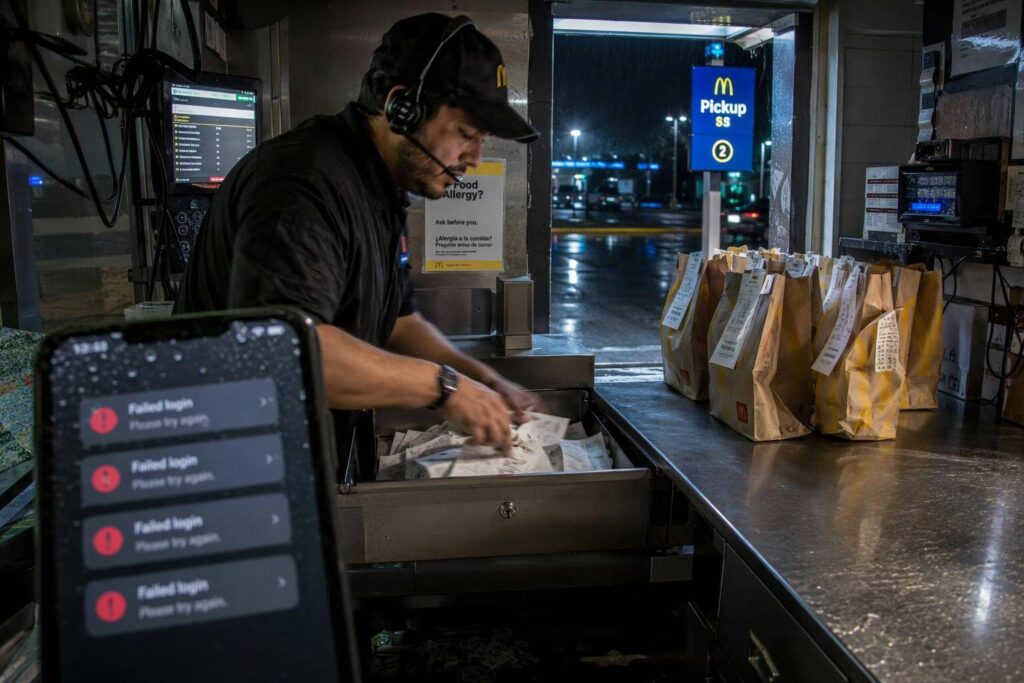
During the attack, Chick-fil-A observed a significant spike in failed login attempts, followed by a smaller number of successful authentications using valid credentials. The company responded by implementing additional bot mitigation controls, rate limiting, and enhanced monitoring to detect abnormal login patterns more quickly.
Timeline and Exploitation Status
The timeline of the Chick-fil-A credential stuffing attack is as follows:
- December 2022: Initial abnormal login activity detected on rewards accounts.
- January 2023: Increased monitoring and discovery of patterns consistent with credential stuffing.
- February 2023: Chick-fil-A confirmed the breach, began notifying affected users, and reset compromised accounts.
- March 2023: Ongoing efforts to remediate and investigate the full scale of the breach.
At the time of disclosure, Chick-fil-A stated that the attack had been contained and additional security measures were in place. However, the inherent risk remains for other organisations where password reuse is common and multi-factor authentication is not enforced.
Why the Chick-fil-A Data Breach Matters
This incident underscores the persistent threat of credential stuffing attacks against companies with large customer bases and loyalty programmes. Even when full payment card data is not exposed, attackers can monetise compromised accounts by selling access or using stored value and rewards. The breach also highlights the importance of layered authentication and rapid detection of unusual login activity.
Next Steps for Organisations
In light of the Chick-fil-A data breach, organisations should:
- Implement multi-factor authentication (MFA) for all customer accounts where possible
- Deploy advanced bot mitigation and rate limiting on login endpoints
- Monitor for signs of credential abuse using automated tooling
- Proactively notify and protect customers when credential stuffing is detected
Focusing on these targeted measures can help reduce the risk of similar attacks and limit the impact of compromised credentials.
Originally reported by BleepingComputer.


