






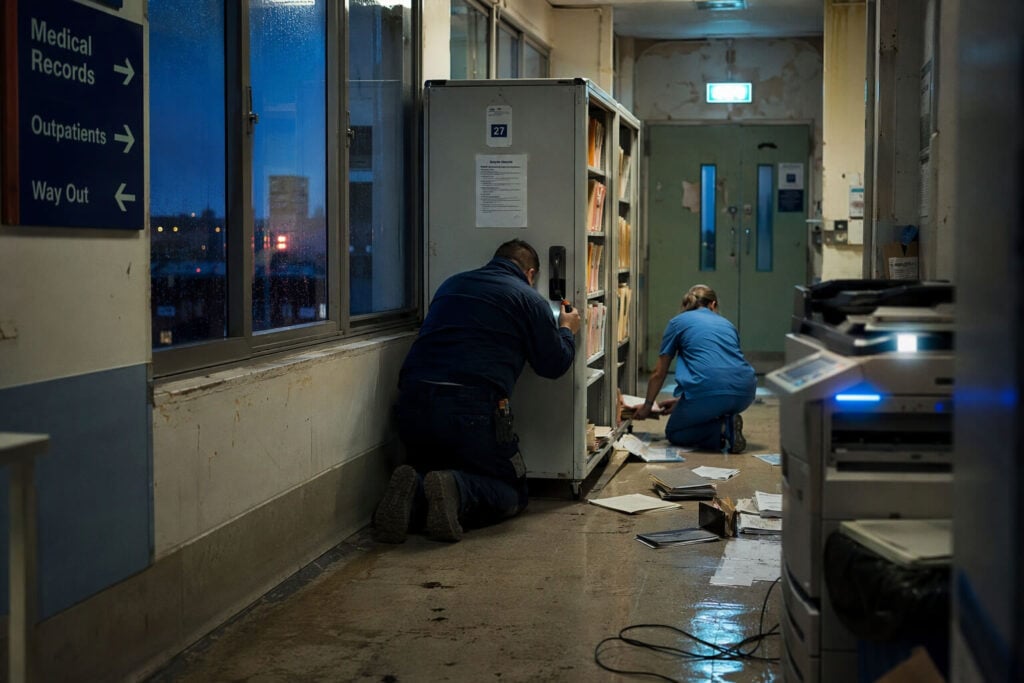
The hospital data breach at Addenbrooke’s Hospital involved staff improperly viewing a patient’s medical record without a legitimate clinical reason. Three employees were dismissed, while two received police community resolutions requiring them to write apology letters to the patient’s family.
The outcome became public on 19 November 2026, although the unauthorised access dated back to at least 4 January 2024. The case concerns insider misuse of legitimate access rather than an external cyber attack or a software vulnerability.
What happened in the hospital data breach
Cambridge University Hospitals NHS Foundation Trust confirmed that three members of staff had inappropriately accessed the medical record of Gemma Sabatino, who received treatment at Addenbrooke’s Hospital. Her family discovered that people with no clinical connection to her care had viewed notes and photographs in the record.
One apology letter acknowledged that the staff member accessed Sabatino’s records outside authorised working hours on 4 January 2024. This indicates that the individual was able to sign in using existing access but viewed information when there was no justified work related reason to do so.
The available evidence does not suggest that credentials were stolen or that attackers bypassed authentication. There is also no indication of malware, privilege escalation, lateral movement or exploitation of a technical weakness. Instead, the hospital data breach resulted from staff misusing access that had been granted for legitimate duties.
Earlier reporting in March 2025 included allegations that explicit surgical images were shared through WhatsApp. Those reports also alleged that records had been opened by staff who had no clinical justification for doing so. The later investigation confirmed inappropriate access, but publicly available statements do not provide a complete account of what data was shared or identify every recipient.
Hospital data breach timeline and investigation
The case developed over almost three years, from Sabatino’s first treatment at Addenbrooke’s to the public disclosure of the police outcomes. Important points in the hospital data breach timeline include:
- November 2023: Sabatino was first treated at Addenbrooke’s Hospital during a mental health crisis, according to her family’s account.
- 4 January 2024: One staff member accessed the medical record outside authorised working hours, as acknowledged in a subsequent apology letter.
- February 2025: Police interviewed three people under caution. The investigation considered whether the unauthorised access amounted to an offence under the Computer Misuse Act.
- 25 and 26 March 2025: Local reports described allegations that staff had accessed records without clinical justification and that surgical images had been shared through WhatsApp.
- 13 June 2025: Gemma Sabatino died aged 36.
- May 2026: Her family received written apology letters from two individuals following police community resolutions.
- 18 and 19 November 2026: The police outcomes, apology letters and dismissal of three staff were disclosed in public reporting.
The family described the letters received in May 2026 as insincere. Copies of the letters were reviewed as part of the reporting that brought the outcome into the public domain.
How staff accessed the medical record
Cambridge University Hospitals uses the Epic electronic patient record platform for inpatient and outpatient records, alongside the Epic MyChart patient portal. The reporting does not explicitly identify which application was used during this hospital data breach, so it cannot be stated conclusively that the inappropriate access occurred through Epic.
However, the trust’s published information confirms that Epic forms part of its clinical record environment. There is no specific software version associated with the incident, and no affected version or security patch has been announced because the case does not involve a product vulnerability.
Misuse of authorised credentials
The individuals appear to have used legitimate staff credentials to view a record outside the requirements of their roles. In practical terms, this is different from an attacker breaking into a hospital network. Authentication may have worked as designed, but the people who signed in did not have a valid care or operational reason to view the information.
Electronic patient record systems commonly maintain audit information showing which user opened a record, when access occurred and which areas were viewed. Cambridge University Hospitals has not published the precise role based permissions, audit rules or exceptional access processes that applied to these staff members.
The incident demonstrates the limits of relying on authorised access alone. A user can have permission to enter a system while still breaching policy, confidentiality requirements or the law by opening a particular record.
No indicators of external compromise
No technical indicators of compromise have been published. There are no reported malicious domains, IP addresses, file hashes or malware samples because this was not identified as an external intrusion.
There is also no proof of concept or wider exploitation campaign connected with the hospital data breach. The relevant threat was curiosity driven or otherwise unjustified insider access, not exploitation of Epic, MyChart or another healthcare product.
Police outcomes and staff dismissals
Police investigated three people under the Computer Misuse Act. Two individuals received community resolutions requiring written apologies to Sabatino’s family, while no further action was taken against the third person.
A community resolution is an informal, out of court disposal and does not result in a criminal record. It can include an agreed action intended to address the harm caused. In this case, that action included the two apology letters delivered to the family.
Separately, Cambridge University Hospitals conducted its own internal process. The trust confirmed that all three staff members were dismissed for inappropriately accessing the patient’s medical record. Employment action and the police process therefore produced different, but parallel, outcomes.
The trust apologised unreservedly to the family. It also said that it had strengthened processes for identifying and investigating breaches and would take robust action where staff accessed records without justification.
Why this insider breach matters
The hospital data breach shows that highly sensitive information can be exposed without ransomware, phishing or exploitation of an unpatched system. Medical notes and surgical images are particularly private, and viewing them without justification can cause significant distress even if the information is not published more widely.
It also underlines why organisations must distinguish between successful login activity and appropriate access. A valid account is not evidence that every record opened by that account was necessary for the user’s work.
Actions for organisations handling sensitive records
Organisations processing medical or similarly sensitive personal data should respond to the specific insider risk illustrated by this case. Relevant measures include:
- Restricting record access according to role, team and genuine operational need.
- Alerting on access outside working hours or to records unrelated to a user’s assigned work.
- Reviewing audit logs promptly when a patient or employee raises a concern.
- Controlling the downloading, photographing and sharing of sensitive images through messaging applications.
- Maintaining a clear process for disciplinary action, evidence preservation, regulatory assessment and police engagement.
These controls cannot prevent every deliberate misuse, but they can make unjustified access easier to detect and investigate. The central lesson from this hospital data breach is that access to sensitive records must remain accountable after a user has successfully signed in.
Originally reported by BBC.


