





The Loire hospital breach has resulted in a EUR500,000 penalty from France’s data protection regulator. The CNIL announced the fine on 3 September 2026, citing insufficient measures to protect patient data and information about some patients’ relatives.
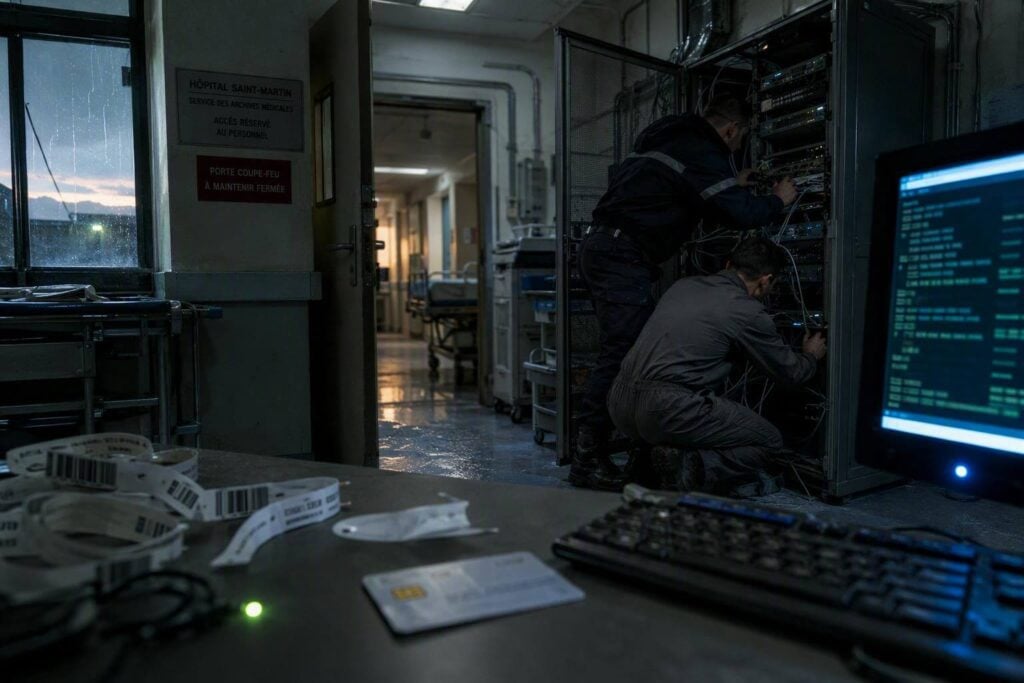
The enforcement action follows an intrusion during summer 2025, when an attacker managed to connect to the Loire Private Hospital’s electronic patient record system. The case places the security of highly sensitive medical information, and the controls surrounding access to that information, at the centre of the CNIL’s decision.
What happened in the Loire hospital breach?
During summer 2025, an attacker gained access to the electronic patient record environment operated by the Loire Private Hospital. An electronic patient record, commonly abbreviated to EPR, can contain information used by healthcare staff to document and manage a patient’s treatment.
The available report describes the attacker as having successfully connected to the hospital’s EPR. This wording confirms unauthorised access to a system holding health data, rather than merely an unsuccessful attempt against the hospital’s network.
The Loire hospital breach affected data belonging to patients and some of their relatives. The inclusion of relatives is significant because healthcare records may contain family contact details or other information connected to a patient’s care. The report does not specify the individual data fields exposed, the number of people affected, or whether every record in the system was accessible.
No EPR supplier, software product, version number, or named vulnerability has been identified in the published account. It is therefore not possible to attribute the intrusion to a particular software flaw or to determine whether a security update would have prevented the attack.
How the attacker obtained access
The confirmed technical detail is that the attacker managed to connect to the electronic patient record system. The report does not say whether this involved stolen credentials, a compromised account, an exposed remote access service, a software vulnerability, or another route.
It also does not identify whether the attacker had a standard user account, obtained privileged access, or moved into the EPR after first compromising a different hospital system. Those distinctions matter during an investigation, but they should not be assumed where the regulator’s reported findings do not provide them.
Similarly, there is no confirmed information about how long the attacker retained access, what searches or actions were performed, or whether information was downloaded. The Loire hospital breach should therefore be understood as confirmed unauthorised access to the EPR, with several technical and operational details remaining undisclosed in the available report.
CNIL findings and the EUR500,000 penalty
On 3 September 2026, the CNIL imposed a EUR500,000 fine on the Loire Private Hospital. The regulator concluded that the hospital had not taken appropriate measures to ensure the security of data relating to its patients and some of their relatives.
The decision links the enforcement outcome directly to the protection applied to sensitive personal information. Health data requires particularly careful handling because unauthorised access can expose details about an individual’s medical circumstances, care, treatment, or relationship with a healthcare provider.
The fine is not described simply as a consequence of being attacked. Instead, the reported basis is the hospital’s failure to implement appropriate security measures. This distinction is important because a successful cyber attack does not automatically establish a data protection failure. Regulatory scrutiny considers whether the organisation’s safeguards were appropriate for the data and risk involved.
The available summary does not list each security deficiency identified by the CNIL. It does, however, establish the central finding: security around the electronic patient record and its sensitive information was not adequate. Organisations should avoid inferring specific missing controls unless those details are set out in the regulator’s full decision.
Timeline of the enforcement case
- During summer 2025, an attacker connected to the Loire Private Hospital’s electronic patient record system.
- The unauthorised access involved data concerning hospital patients and some of their relatives.
- On 3 September 2026, the CNIL announced a EUR500,000 fine against the hospital.
- The penalty was based on a failure to take appropriate measures to secure the affected personal data.
The dates show that the regulatory outcome followed the intrusion rather than being announced immediately after it. The published account does not provide intermediate dates for discovery, containment, notification, investigation, or formal proceedings, so a more detailed sequence cannot be reliably established.
Current status of the Loire hospital breach
The current public development is the CNIL’s enforcement announcement of 3 September 2026. The available report does not state that the attacker still has access to the hospital’s systems, nor does it describe an ongoing campaign targeting the same EPR technology.
There is also no identified vulnerability, malware family, threat group, or extortion operation associated with the Loire hospital breach. As a result, organisations cannot use a named indicator or product version from this case to check whether they face the same technical exposure.
The absence of those details does not reduce the seriousness of the confirmed incident. It means the case is currently most useful as a regulatory example of the consequences that can follow when access to sensitive systems is not protected by measures proportionate to the risk.
Why the Loire hospital breach matters
The case demonstrates that regulatory attention extends beyond the immediate victim organisation. Data about relatives was also involved, showing how an incident affecting one operational system can expose information about people who are not receiving treatment themselves.
For UK organisations, the decision is relevant because GDPR security principles similarly require safeguards appropriate to the nature and risk of the personal data being processed. Health information is especially sensitive, but the same risk-based approach applies to other high-impact records.
The EUR500,000 fine also reinforces that electronic records should be treated as critical data repositories. Access controls and monitoring must reflect the potential harm if an unauthorised person reaches the system.
Actions organisations should take
Organisations operating EPR platforms or other sensitive record systems should use this event to review the controls closest to those systems. The review should focus on demonstrable protection rather than assumptions that a system is safe because access is limited to authorised staff.
- Confirm that every EPR account is assigned to an identifiable user and has only the access required for that role.
- Review authentication and remote connection controls for routes that can reach sensitive records.
- Check whether logs can reveal unusual connections, account activity, or access outside expected patterns.
- Test procedures for disabling compromised accounts and investigating which records were accessed.
- Document why the selected controls are appropriate for the sensitivity and scale of the information held.
These steps are directly relevant to the facts disclosed in the Loire hospital breach. Where technical details remain unavailable, organisations should concentrate on whether they can prevent, detect, investigate, and evidence unauthorised connections to their own sensitive systems.
Originally reported by databreaches.net.

