





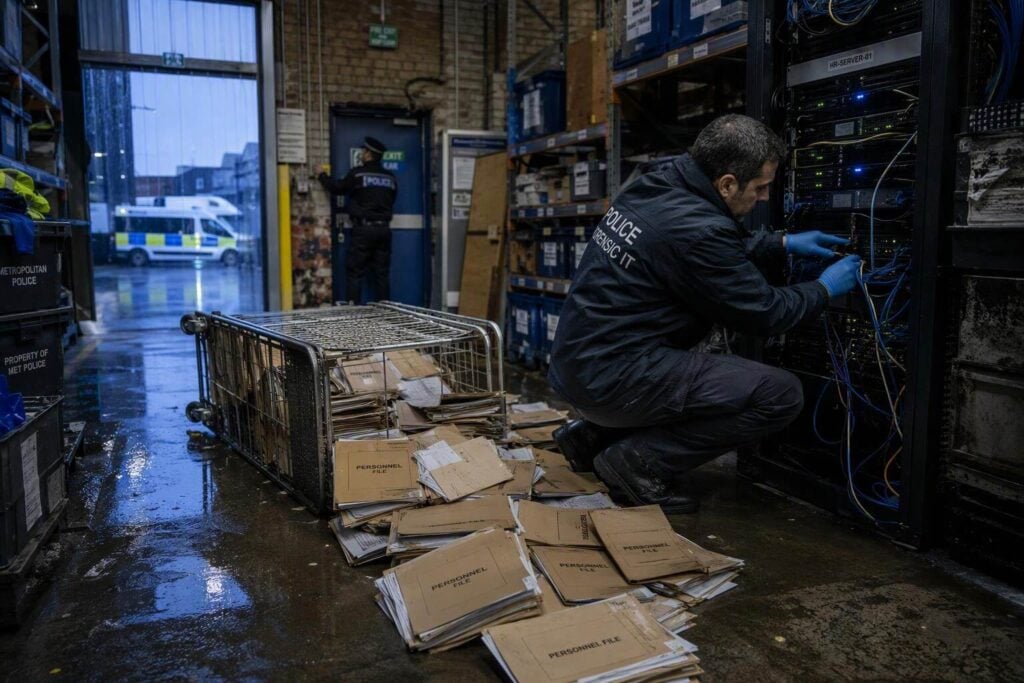
A police cyber attack may have allowed staff information to be accessed or compromised, according to a report published on 25 September 2026. The limited disclosure points to a potentially serious personnel data incident, but it does not confirm that information was stolen.
The affected UK police force has not been identified in the available report. Important technical details, including the initial point of entry, affected systems and number of people involved, have also not been disclosed.
What happened in the police cyber attack?
The police force said the cyber attack could have led to staff information being “accessed or compromised”. This wording indicates that its investigation had identified a credible risk to personnel information, while stopping short of confirming unauthorised access, extraction or publication.
The distinction is important. Information can be considered potentially compromised when an attacker gains access to a system or account capable of reaching it, even if investigators have not yet established whether individual files were viewed, copied or altered.
Alternatively, the phrase may reflect uncertainty during an active forensic investigation. Security teams often need to examine authentication records, device activity, network logs and data transfers before determining precisely what an intruder did.
No specific categories of staff information were listed in the available source material. It is therefore not known whether the potentially affected records contain names, contact details, employment information, payroll data, identity documents, operational information or other sensitive content.
The report concerns staff information rather than information belonging to members of the public. There is no disclosed evidence in the available report that criminal case files, intelligence records, evidence systems or public-facing police services were affected.
Who may be affected by the police cyber attack?
The people potentially affected are members of staff associated with the police force. However, the report does not specify whether this means police officers, civilian employees, contractors, former personnel or a combination of these groups.
No figure has been published for the number of records or individuals potentially involved. It is also unclear whether the affected information was held directly by the force or processed through an external supplier, managed service provider or cloud platform.
These gaps mean the potential impact cannot yet be measured reliably. A small collection of internal contact records would create a different risk from a large personnel database containing financial, identity or employment information.
Products, services and versions
No affected software product, hardware device, online service or version has been named. The available report does not associate the police cyber attack with a known vulnerability, a particular vendor or a specific technology platform.
There is also no confirmation that a third-party supplier was involved. Supplier compromise is one possible route into personnel systems, but it should not be treated as the cause of this incident without supporting evidence.
Organisations should therefore be cautious about claims that connect the event to a particular security flaw or criminal group. Attribution requires technical evidence, and none has been made public in the source information.
How the police cyber attack may have worked
The attack method has not been disclosed. There is no confirmed information about phishing, stolen credentials, malware, ransomware, exploitation of an internet-facing system or misuse of legitimate remote access tools.
Similarly, the police force has not publicly described which systems were reached or how long an attacker may have had access. The available report does not establish whether the incident began with a compromised employee account, an unpatched application, a supplier connection or another route.
The force’s statement suggests investigators were assessing access to staff information. That assessment would normally depend on whether reliable records exist to show which accounts authenticated, what permissions they held, which files or databases they accessed and whether unusual volumes of data left the environment.
At this stage, the following details remain unconfirmed:
- The identity of the attacker or any suspected threat group.
- The system, application or supplier first affected.
- The type and volume of staff information at risk.
- Whether data was viewed, downloaded, changed or deleted.
- Whether the attack disrupted police operations or public services.
- Whether a ransom demand or extortion threat was made.
The lack of public technical detail does not mean that these issues are absent. It means conclusions cannot be drawn from the information released by 25 September 2026.
Police cyber attack timeline and exploitation status
The report was published on 25 September 2026. No date has been provided for the initial intrusion, its discovery, containment activity or the start of the investigation, so a fuller incident timeline cannot yet be established.
Current exploitation status is also unclear. The report does not say whether the attacker retained access when the incident was disclosed, whether affected accounts had been disabled or whether vulnerable systems had been isolated.
There is no public confirmation that stolen staff data has appeared online or been offered for sale. There is also no confirmation of active ransomware deployment, data encryption or extortion communications connected with the police cyber attack.
Further findings may depend on the completion of forensic work. Investigators will need to separate confirmed activity from potential exposure before the force can accurately notify affected people and explain the scope of the event.
Why this incident matters
Police personnel information can create risks beyond ordinary privacy loss. Depending on the fields involved, exposed records could support convincing impersonation attempts, targeted phishing, account recovery fraud or attempts to identify individuals in sensitive roles.
However, those outcomes remain potential risks rather than confirmed consequences of this incident. The immediate significance is that a police force has acknowledged a possible compromise of staff information, while the nature and scale of that compromise remain unresolved.
What organisations should do now
Organisations do not have enough technical information to apply a product-specific fix in response to this police cyber attack. Instead, security teams should use the event as a prompt to verify controls around systems holding personnel records, particularly where access is provided to suppliers or remote administrators.
- Review privileged and supplier access to HR and personnel platforms.
- Confirm that authentication, file access and data transfer logs are retained and searchable.
- Investigate unusual downloads, account activity and permission changes.
- Prepare targeted notifications based on confirmed data exposure, not assumptions.
These actions are directly relevant because establishing who accessed staff information, and what they did with it, will determine the true impact. Until the force releases further evidence, claims about affected products, attack methods or stolen data should be treated cautiously.
Originally reported by bbc.co.uk.


