




A Wallstreet ransomware claim named Bristol City Council as an alleged victim on 27 October 2026. However, the leak-site entry contained no evidence to demonstrate that the council had been compromised.
Multiple monitoring services recorded the listing, but their reports confirm only that the claim appeared on the threat actor’s site. As of 27 October 2026, Bristol City Council had not publicly acknowledged an incident attributed to Wallstreet.
Wallstreet ransomware claim remains unverified
The Wallstreet ransomware group added Bristol City Council to its Tor-based data leak site on 27 October 2026. Automated monitoring by HookPhish and Quasar Cybertech’s QPulse recorded the listing at approximately 12:08 UTC, providing the earliest identified public timestamp for the claim.
Other breach and ransomware tracking services, including RecentBreaches, Breachsense and Ransomnews, subsequently displayed the same allegation. These records provide independent confirmation that Wallstreet published the victim name, but they do not verify an intrusion into council systems.
The listing was unusually limited in detail. Wallstreet did not publish data samples, screenshots, file listings, ransom notes or images that could substantiate its claim. It also provided no description of the alleged attack or explanation of which council systems were supposedly affected.
No ransom demand or deadline was publicly disclosed. The actor did not state how much data it claimed to have obtained, whether any files had been encrypted, or whether it had communicated with the council.
The absence of evidence does not prove that no incident occurred, but it prevents independent assessment of the allegation. The appropriate status is therefore an unconfirmed attacker claim, rather than a verified Bristol City Council ransomware breach.
Timeline of the Bristol City Council cyber reports
The Wallstreet ransomware listing appeared against the background of a separate cyber incident affecting Bristol City Council’s education services. Publicly available information does not establish a connection between the two matters.
-
21 September 2026: Bristol City Council detected suspicious activity affecting its Trading with Schools service. The activity was subsequently identified as a cyber attack.
-
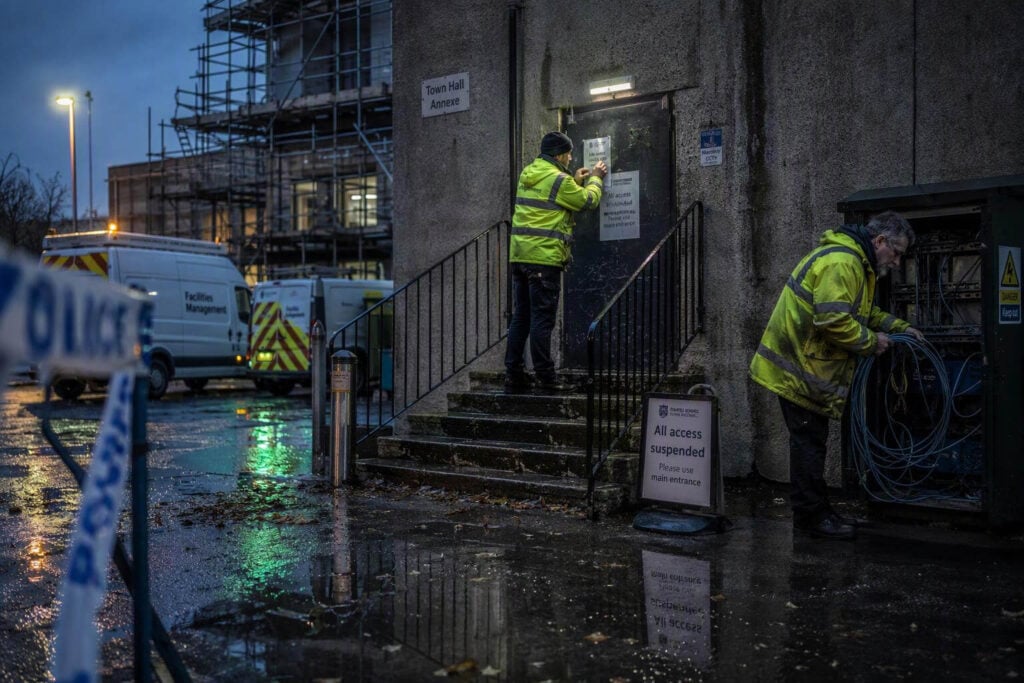
25 September 2026: The affected platform was shut down. Internet access was suspended across approximately 80 to 87 schools while investigations continued.
-
Mid October 2026: The council and local media reported a targeted breach at Southville Primary School in which records were exported. Bristol City Council, specialist cyber security teams and the Regional Organised Crime Unit were involved in the investigation.
-
27 October 2026: Wallstreet listed Bristol City Council on its leak site. Trackers recorded the claim from approximately 12:08 UTC, but no supporting material was published.
Neither council communications nor local reporting attributed the Trading with Schools incident or the Southville Primary School breach to Wallstreet. Treating the earlier disruption as confirmation of the later leak-site claim would therefore go beyond the available evidence.
No technical evidence supports the ransomware claim
The Wallstreet ransomware post contained no information about how attackers might have entered the council’s environment. There is no published account of phishing, stolen credentials, exploitation of an internet-facing service or access through a supplier.
No malware family, encryption process, persistence method, command and control infrastructure or data exfiltration tool has been identified in connection with the listing. Wallstreet also disclosed no information about lateral movement between systems or attempts to disable security controls.
Open-source profiles generally describe Wallstreet as an extortion operator with a Tor leak site and a double-extortion model. In that model, an attacker may steal information and threaten publication, potentially alongside encryption. This general description is not evidence that either activity occurred at Bristol City Council.
Affected products, versions and indicators
No affected products, software versions or platforms have been named for the alleged Wallstreet incident. The separate education network disruption involved the Trading with Schools service and school internet connectivity, but public reports did not identify specific technology products or versions.
No indicators of compromise have been released for the Wallstreet ransomware claim. There are no published malicious IP addresses, domains, file hashes, file paths or ransom note names that organisations can use to search their systems.
A public proof of concept is not applicable because the claim does not concern a disclosed software vulnerability. No exploit or incident-specific tooling has been shared. This lack of technical material means defenders cannot currently validate the allegation through actor-specific detection rules.
Who is affected by the Wallstreet listing?
The only organisation named in the leak-site entry is Bristol City Council. Although the council provides housing, education, social care, transport, waste, recycling, council tax and benefits services, there is no public evidence that these services were disrupted by Wallstreet.
It is also not possible to conclude that residents, employees, schools, suppliers or service users had information exposed through the alleged incident. The actor has not identified any categories of data, and the council has not confirmed a Wallstreet-attributed compromise.
The earlier Southville Primary School disclosure did involve exported records, according to local reporting. That confirmed detail belongs to the separate education incident and should not be presented as evidence supporting Wallstreet’s claim.
Confidence in the core allegation remains low. Confidence is higher that the listing itself existed because several independent trackers observed it, but all ultimately rely on the attacker’s original assertion.
Why the unverified claim still matters
Leak-site listings can create confusion even when they are unsupported. Extortion groups benefit from publicity and may use prominent names to increase pressure, attract attention or make an operation appear more active.
Recent reporting about fabricated or inflated victim lists from other extortion brands demonstrates why attacker-controlled sources require verification. That reporting does not prove that Wallstreet’s listing is false, but it reinforces the need to distinguish publication of a claim from confirmation of a breach.
The publicity may also be reused in phishing or social engineering. Messages could refer to the Bristol City Council allegation to make urgent requests for payments, documents, credentials or supplier information appear credible.
What UK organisations should do now
Organisations connected to Bristol City Council or local government supply chains should monitor official communications rather than relying on leak-site mirrors. Any request that cites the Wallstreet ransomware story should be confirmed through a previously established contact method.
-
Brief finance, procurement and service desk teams about the unverified claim and the possibility of related impersonation attempts.
-
Verify unexpected requests for payment, account changes, credentials or sensitive documents through trusted channels.
-
Review logs for unusual access involving council-facing accounts or shared services, while recognising that no Wallstreet-specific indicators are available.
-
Preserve suspicious emails and report credible evidence through established incident response procedures.
Until Bristol City Council confirms an attributed incident or verifiable evidence emerges, the Wallstreet ransomware listing should remain classified as an allegation. Organisations should stay alert without treating the actor’s unsupported post as proof of compromise.
Originally reported by redpacketsecurity.com.


