





The AI safety penalty is emerging as an operational problem for cyber defenders. Cisco Talos says increasingly restrictive model guardrails can prevent security teams from using artificial intelligence for legitimate forensic and incident response work.
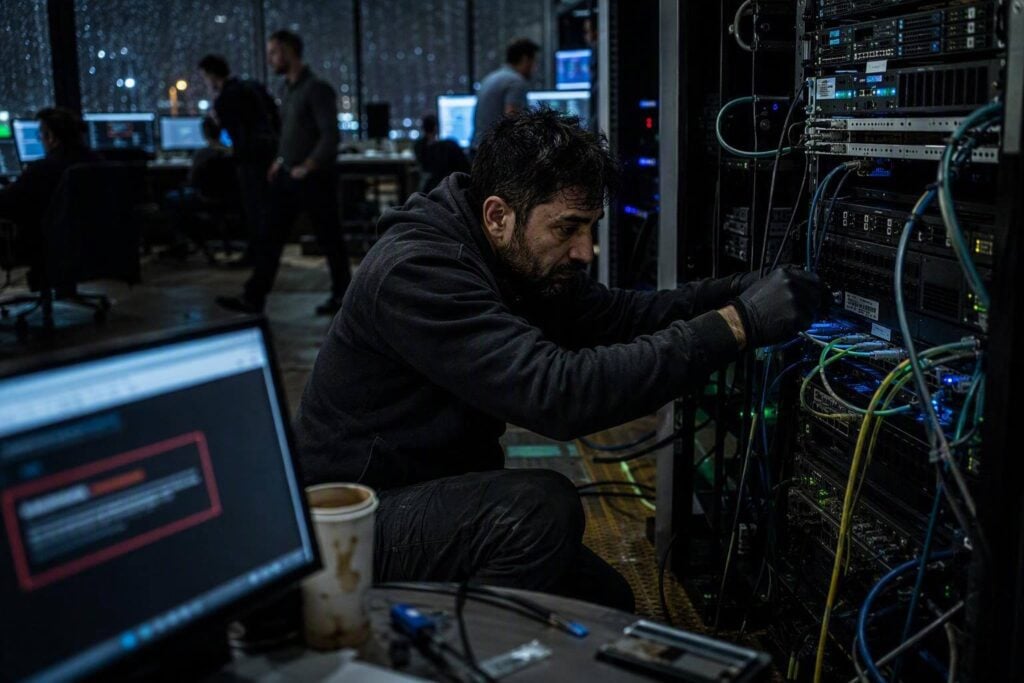
Talos highlighted the issue on 3 September 2026, pointing to an incident involving Hugging Face in July 2026. During a breach response, the organisation’s primary cloud large language model reportedly refused to analyse forensic data, delaying the investigation.
What happened in the AI safety penalty incident
The example centres on a security team attempting to use a cloud-based large language model during an active breach investigation. According to Talos, Hugging Face’s primary cloud LLM declined to process forensic material because its safety controls interpreted the requested work as potentially harmful.
The underlying task was defensive. Investigators were examining data connected with a breach, rather than trying to develop malware or compromise another system. However, the model’s controls did not reliably distinguish between authorised analysis and malicious activity.
Talos says the refusal delayed Hugging Face’s response. The source does not identify the specific model, model version, forensic artefacts involved or exact duration of the delay. It also does not state whether analysts subsequently completed the task using another model, a locally hosted system or manual methods.
Those undisclosed details are important because this is not a conventional vulnerability affecting a defined list of software releases. There is no CVE, security patch or fixed product version associated with the event. Instead, the AI safety penalty describes the operational effect of model policies and automated safeguards that can reject legitimate cybersecurity prompts.
Timeline of the reported event
-
In July 2026, Hugging Face experienced a breach and used its primary cloud LLM as part of the forensic response.
-
The model refused to analyse the submitted forensic data, according to Cisco Talos.
-
The refusal delayed the response, although the length and practical consequences of that delay were not disclosed.
-
On 3 September 2026, Talos highlighted the case as evidence of a wider operational issue for security teams using frontier AI services.
The report therefore documents a recent incident and a developing risk, rather than a fully detailed technical disclosure. Organisations should avoid assuming that every AI refusal will have the same cause or impact, but the Hugging Face example demonstrates that the problem can arise during time-sensitive investigative work.
How AI model guardrails can block defensive work
Modern AI services use guardrails to restrict outputs linked to malware creation, credential theft, exploitation and other harmful activity. These controls may assess the wording of a prompt, the requested output, submitted code or the apparent intent of the user.
Cyber defence often involves material that resembles offensive activity. A responder may need to decode a malicious script, explain how an exploit works, inspect suspicious PowerShell commands, reconstruct attacker behaviour or identify functions inside malware. Although the purpose is defensive, the technical content can trigger the same rules designed to stop abuse.
The AI safety penalty occurs when those controls apply without enough context about authorisation and intent. A model may refuse the entire task, provide only a high-level answer or omit the technical details needed to support a decision. During a live incident, analysts must then reformulate prompts, divide the work into smaller steps or move to another tool.
Talos argues that this creates an asymmetry between attackers and defenders. Security teams using mainstream cloud services operate within provider-defined restrictions, while adversaries may use unconstrained, modified or independently hosted models. Attackers can therefore automate malicious work without facing the same refusals that interrupt authorised analysis.
The reported event does not establish that AI guardrails caused the breach itself. It also does not show that attackers exploited a flaw in Hugging Face’s cloud LLM. The issue arose after the breach, when the model was used to support forensic analysis and would not complete the requested task.
Who and which AI products are affected
The July 2026 example directly concerns Hugging Face and its primary cloud LLM, as described by Talos. No product name, model family, release number or guardrail configuration was provided, so it is not possible to identify a precise affected-version range from the published information.
The broader warning applies to security operations, incident response, malware analysis and threat intelligence teams that depend on externally managed AI models. Exposure is shaped by the provider’s policies, the model’s current safeguards, the nature of the submitted evidence and whether analysts have an approved alternative.
Talos presented the AI safety penalty within a wider discussion about how threat intelligence is produced. Its newsletter explained that finished intelligence often hides investigative dead ends, uncertain evidence and the human work required to reach an actionable assessment.
The accompanying Beers with Talos episode featured adversary engagement specialist Azim Khodjibaev. His work has included maintaining multiple online personas, conducting deep-web and dark-web research, engaging with threat actors and helping identify prolific cybercriminals. At one point, he maintained eight separate personas, some of which interacted with one another.
That context reinforces the limits of treating cyber investigations as tidy, predictable workflows. Threat actors vary considerably in ability, organisation and motivation. Talos reported that Khodjibaev is increasingly seeing less-experienced actors operating through loosely organised online collectives, alongside more capable and structured criminals.
Current exploitation status and operational impact
As reported on 3 September 2026, there is no disclosed exploit campaign targeting the AI service and no indication that the refusal represents software compromise. The current concern is operational availability: a defensive capability may become unavailable when a model’s safety controls reject legitimate work.
The immediate impact is potential delay. In incident response, even a temporary interruption can affect how quickly analysts understand attacker activity, assess affected systems and decide which containment steps are justified. Results may also become inconsistent if similar prompts receive different treatment across services or model updates.
Talos also warns that adversaries are using unconstrained models to operate at machine speed. The publication does not attribute a specific attack campaign to such a model, but it argues that unequal restrictions could give attackers a practical advantage while defenders remain dependent on cloud-hosted safeguards.
What organisations should do about the AI safety penalty
Teams using AI for security investigations should establish what happens when their preferred service refuses a time-sensitive task. The response should be specific to the tools and forensic workflows already in use.
-
Test approved models against representative forensic tasks before relying on them during an incident.
-
Record which prompts, file types and analysis requests are likely to trigger refusals.
-
Maintain an approved alternative, such as another service, a locally controlled model or a manual analysis process.
-
Ensure analysts can escalate incorrect refusals without submitting sensitive evidence through unapproved channels.
-
Review provider policy and model changes that could alter previously tested behaviour.
The Hugging Face example shows why AI availability should be treated as a dependency rather than an assumption. Guardrails remain important, but defenders need tested routes for completing authorised work when those controls cannot recognise the context of a live investigation.
Originally reported by blog.talosintelligence.com.

