






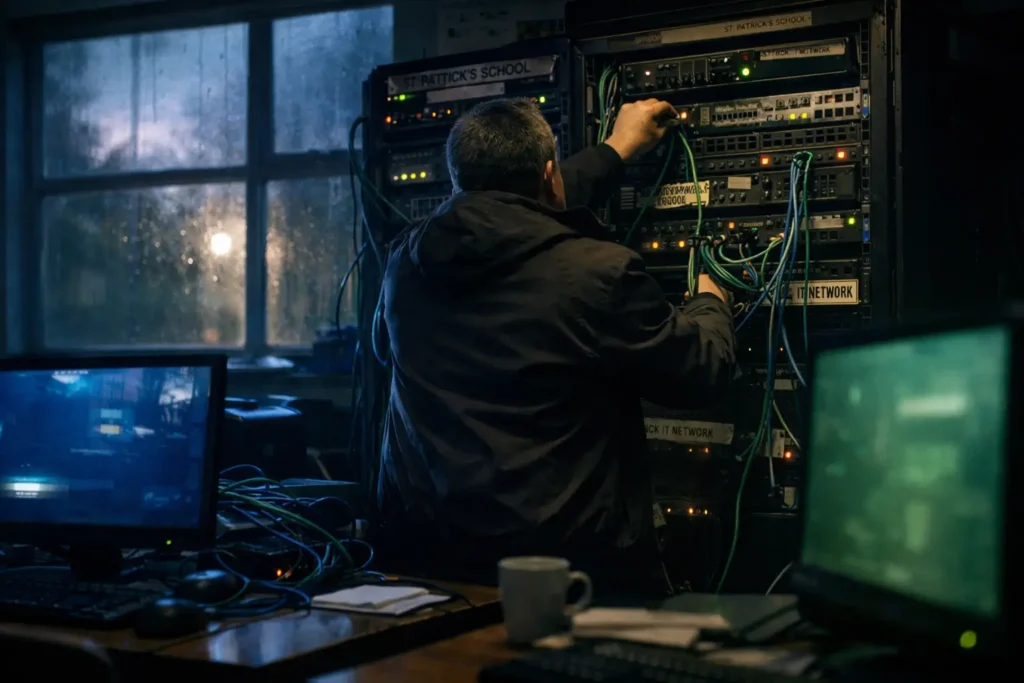
Understanding the C2K Schools Cyber Attack
The C2K schools cyber attack has raised fresh concerns for parents and educational organisations. The focus keyword, C2K schools cyber attack, is central to this incident, which highlights the risks faced by managed ICT services in schools. Recently, a warning was issued to parents after a cyber attack targeted C2K, the managed ICT service provider for Northern Ireland schools.
Attackers potentially accessed sensitive information, putting students, parents, and staff at risk of scams or data exposure. This event demonstrates how cyber threats can affect educational institutions and their wider communities, underscoring the need for robust security measures.
The Impact of the C2K Schools Cyber Attack
Potential Data Exposure and Scams
The C2K schools cyber attack has significant consequences for data privacy and security. Attackers may have accessed personal details such as names, email addresses, and contact information. This data could be used for phishing scams targeting families and staff, where cybercriminals pose as trusted organisations or individuals to trick recipients into sharing further sensitive information.
- Increased risk of phishing emails targeting parents and staff
- Potential for identity theft or financial scams
- Disruption of school operations and communications
- Loss of trust in educational technology providers
Third-Party and Managed Service Provider (MSP) Risk
This incident highlights the risks associated with third-party suppliers and managed service providers. Educational organisations rely on external companies like C2K to deliver essential ICT services. If these providers are compromised, the security of all connected institutions is at risk.
Organisations must be aware of:
- How supplier access is granted and managed
- The potential for shared credentials to be exploited
- The importance of enforcing security protocols across all partners
Why the C2K Schools Cyber Attack Matters
Broader Implications for Education and Cyber Security
The C2K schools cyber attack is not an isolated event. Similar incidents have affected schools and public sector organisations across the UK. With increasing reliance on digital platforms for learning and administration, the risks are growing.
Parents and staff often lack the technical knowledge to spot sophisticated phishing attempts, making them vulnerable. A breach at a managed service provider can ripple across dozens or hundreds of institutions, magnifying the impact.
Regulatory and Reputation Concerns
Schools and educational bodies have a duty to protect personal data under laws such as the UK General Data Protection Regulation (GDPR). A breach can lead to regulatory scrutiny, fines, and reputational damage. Even if the attack was not directly against a school, the fallout affects families and communities.
How Organisations Should Respond to a Schools Cyber Attack
Review Supplier Access and Security Controls
Organisations should take proactive steps to reduce risk following incidents like the C2K schools cyber attack. Review all third-party access, especially for managed service providers. Ensure that access privileges are limited to what is necessary and regularly audited.
- Conduct a thorough review of supplier access and permissions
- Enforce multi-factor authentication (MFA) for all accounts
- Reset shared credentials and ensure unique passwords are used
- Monitor for unusual login activity or attempts to bypass security controls
Brief Users on Phishing and Data Protection
Parents, staff, and students should be informed about the risks of phishing following the C2K schools cyber attack. Education is key to preventing further incidents. Share guidance on how to recognise suspicious emails and what to do if they receive one.
- Provide clear instructions on spotting phishing attempts
- Encourage users to report suspicious messages to IT support
- Remind users not to click on links or download attachments from unknown sources
Establish Incident Response and Communication Plans
Organisations should have a clear incident response plan in place. This includes communication strategies for informing stakeholders about cyber incidents. Timely, transparent updates can help maintain trust and minimise confusion.
- Prepare template messages for staff, parents, and students
- Coordinate with managed service providers for joint responses
- Report incidents to relevant authorities, such as the Information Commissioner’s Office (ICO)
Continuous Improvement of Cyber Security Practices
The C2K schools cyber attack shows the importance of ongoing improvement in cyber security. Regularly assess your organisation’s defences, including training, technical controls, and supplier relationships. Invest in cyber security awareness for all staff and users.
- Schedule periodic training sessions on cyber security topics
- Perform vulnerability assessments and penetration testing
- Update software and systems promptly to patch known weaknesses
Conclusion: Lessons from the C2K Schools Cyber Attack
The C2K schools cyber attack is a reminder for educational organisations and their partners to prioritise cyber security. Reviewing supplier access, enforcing robust authentication, and educating users are essential steps to reduce risk. By learning from this incident, organisations can strengthen their defences and protect their communities from future threats.
Originally reported by Unknown.


