






GTA 6 hacker Arion Kurtaj has pleaded guilty to cyber offences connected to attacks on Rockstar Games, Uber, Revolut and BT/EE. The 21-year-old entered the pleas at Woolwich Crown Court on 16 November 2026.
The case concerns real-world intrusions attributed to the Lapsus$ group, including the release of 90 Grand Theft Auto VI development clips. Sentencing is scheduled for 23 November 2026 at the same court.
GTA 6 hacker admits Rockstar and Uber attacks
UK prosecutors identified Kurtaj as a Lapsus$ member who conducted attacks while aged 16 and 17. He used the online alias TeaPotUberHacker during the Rockstar incident and attempted to pressure the company by threatening to release source code.
The guilty pleas cover intrusions affecting four major organisations. Each incident involved unauthorised access, but the systems, techniques and resulting harm differed:
- Rockstar Games suffered the theft and publication of 90 unfinished GTA VI development clips.
- BT/EE experienced unauthorised access to programming interfaces and a subsequent increase in SIM swaps.
- Revolut had information belonging to thousands of customers compromised.
- Uber suffered access to internal systems, along with the exfiltration and deletion of data and accounts.
The Crown Prosecution Service announced the pleas on 16 November 2026. At the time of writing, sentencing remains pending and there has been no later court update.
How the GTA 6 hacker breached Rockstar
The Rockstar intrusion took place while Kurtaj was on bail in September 2022. He had been placed in a hotel for his protection after threats from other criminals, and restrictions had been imposed on his access to computing devices.
Despite not having his personal computer, Kurtaj used a mobile phone, the hotel’s connectivity and an Amazon Fire Stick connected to a television. Earlier court reporting also described the use of a Bluetooth keyboard and mouse to reach cloud-based services.
The Fire Stick provided a convenient route to online resources, but there is no indication that Kurtaj exploited a vulnerability in Amazon hardware. The GTA 6 hacker case instead demonstrates how an inexpensive consumer device can be repurposed as an access terminal when cloud services and valid accounts remain reachable.
Slack, Confluence and stolen development material
During the Rockstar attack, the intruder gained access to internal Slack and Confluence environments. These collaboration platforms can contain conversations, project details, links, credentials and technical documentation that help an attacker locate more valuable systems.
Approximately 90 videos showing unfinished GTA VI gameplay were taken. The footage, amounting to nearly an hour of development material, appeared online on 18 September 2022, including through GTAForums.com.
Using the TeaPotUberHacker name, the attacker demanded that Rockstar contact him and threatened to publish source code. Rockstar publicly confirmed on 19 September 2022 that it had experienced a network intrusion in which an unauthorised party downloaded confidential information.
The leaked footage revealed unfinished environments, gameplay systems and a female playable character before Rockstar intended to disclose those details. The company said during earlier court proceedings that its response cost $5 million and required thousands of staff hours.
Wider Lapsus$ intrusions covered by the plea
The guilty plea extends beyond the Rockstar breach. Prosecutors said Kurtaj was also involved in attacks against telecommunications, financial technology and transport businesses.
BT/EE and SIM swaps
Between August and November 2021, unauthorised remote access was obtained to BT/EE programming interfaces. Prosecutors linked this activity to a spike in SIM swaps involving customers’ mobile numbers in early November 2021.
A SIM swap transfers a victim’s number to a device controlled by an attacker. This can allow interception of calls and text messages, including authentication codes used to protect email, banking and other online accounts. The particular platforms and software versions accessed at BT/EE have not been disclosed.
Uber account compromise and MFA fatigue
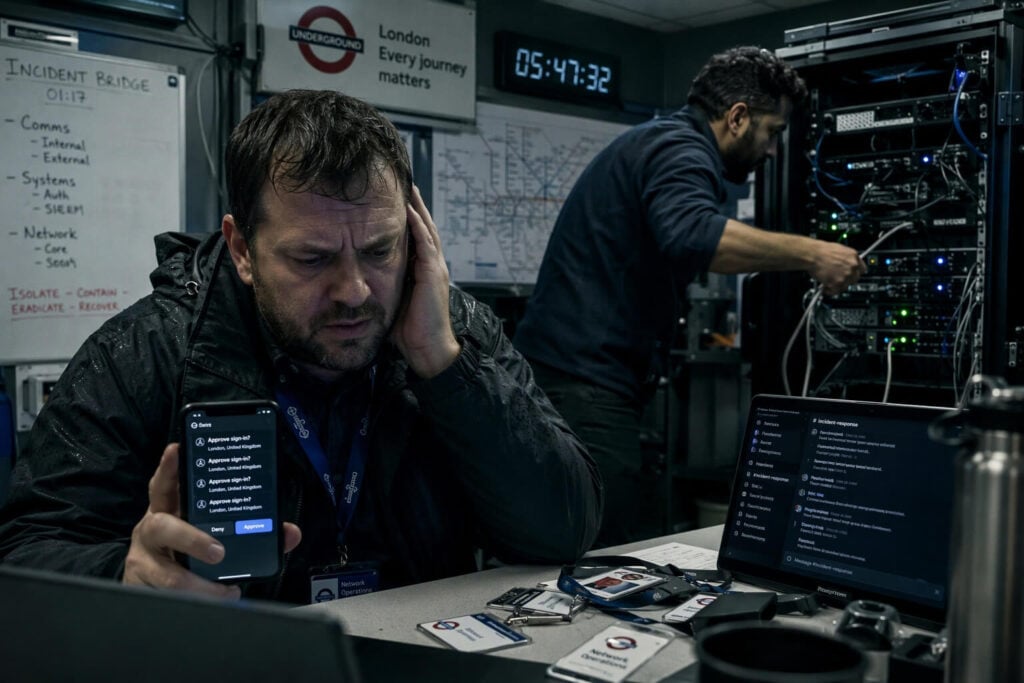
The Uber incident began on 15 September 2022 with the compromise of an external contractor’s account. Uber said the attacker likely obtained the contractor’s password and repeatedly generated multi-factor authentication prompts until access was approved.
This technique, commonly called MFA fatigue or push bombing, relies on confusion or frustration rather than a software flaw. Once authenticated, the attacker moved into internal administrative tools and Slack, where a lewd image was sent to employees.
Data and accounts were exfiltrated or deleted from Uber’s systems. Prosecutors stated that the company’s losses exceeded $2.8 million. Uber subsequently connected the activity to Lapsus$.
Revolut customer information
The attacks also compromised information held by Revolut. Its 2022 disclosure described a targeted cyberattack affecting data associated with roughly 50,000 customers, although the specific products and software versions involved were not identified.
No authoritative IP addresses, file hashes or other technical indicators have been published for the four incidents. The TeaPotUberHacker alias and public posts connected with the Rockstar leak remain the main open-source artefacts associated with the activity.
Court timeline and current exploitation status
The GTA 6 hacker had previously been considered unfit to stand trial. A trial of facts determined that he had committed the acts, without asking the jury to decide whether he had the required criminal intent, and an indefinite hospital order was imposed in December 2023.
After a later medical assessment found him fit to plead, media reported on 17 July 2026 that he had been moved from a secure hospital to prison ahead of further proceedings. His guilty pleas on 16 November 2026 mark the latest confirmed stage of the case.
This was confirmed exploitation in the wild, not a proof of concept or a single unpatched vulnerability. Data was stolen and released, internal services were disrupted, and extortion threats were made. The case is separate from the Rockstar analytics data breach reported in April 2026, which involved ShinyHunters and a third-party provider rather than GTA VI development footage.
What organisations should do after the GTA 6 hacker case
The incidents show how stolen identities and collaboration platforms can provide access to highly sensitive material without exploiting a conventional software vulnerability. Organisations using contractors, cloud services and SaaS tools should prioritise controls that address the techniques demonstrated in these attacks.
- Replace simple push approval with phishing-resistant authentication or number matching, and investigate repeated MFA requests.
- Restrict contractor accounts to necessary systems, devices, locations and working periods.
- Search Slack, Confluence and similar platforms for exposed passwords, API keys and infrastructure details.
- Monitor unusual downloads, bulk searches and access to development repositories from new devices.
- Apply strong authentication, access controls and logging to internal APIs that can initiate SIM swaps or other sensitive changes.
The Fire Stick attracted attention because it was an unusual device, but identity compromise and excessive internal access were the more important security issues. The GTA 6 hacker case shows that device restrictions alone are insufficient if accounts, cloud tools and sensitive collaboration data remain accessible.
Originally reported by cybersecuritynews.com.

