



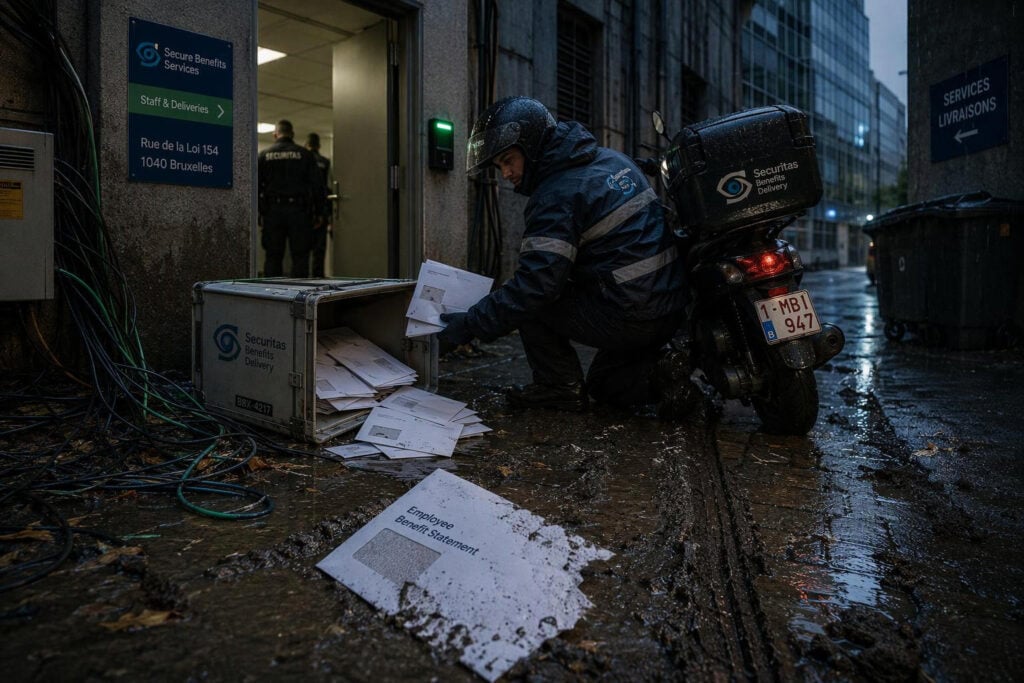


The possible Pluxee Belgium breach may have exposed customers’ names, email addresses and telephone numbers. Payment systems remain operational, but cardholders have been warned to stay alert for phishing.
What happened in the Pluxee Belgium breach?
Pluxee Belgium detected malicious activity by unauthorised individuals on one of its servers on Monday 2 November 2026. The employee benefits and payment services provider said it quickly secured the affected systems after identifying the activity.
On Wednesday 4 November 2026, Pluxee emailed cardholders to explain that a limited amount of user account information may have been viewed. The potentially affected information consists of names, email addresses and telephone numbers.
The company has not confirmed that every notified customer’s information was accessed or extracted. Public reporting therefore describes the event as a possible Pluxee Belgium breach, while the investigation seeks to establish the exact scope of the unauthorised access.
Pluxee has not disclosed how many people could be affected. It has also not identified the server’s function, the duration of the access or whether the attacker successfully removed information from its environment.
Payment systems and cards remain operational
Pluxee said it had found no evidence that the integrity of its payment system was affected. No suspicious transactions had been observed as of 4 November 2026, and customers were told that they could continue using their cards normally.
This distinction is important. The currently identified risk concerns contact information associated with user accounts, rather than payment processing, PINs or card transactions. There is no reported evidence that PINs or passwords were exposed.
However, contact details can still be valuable to criminals. A name combined with an email address or telephone number could help an attacker create a convincing message that appears to relate to a Pluxee account, card or employee benefit.
Timeline of the Pluxee Belgium breach investigation
The known timeline covers the initial detection, containment and notification. The investigation remained ongoing when the incident became public on 4 November 2026.
-
2 November 2026: Pluxee Belgium detected malicious activity involving unauthorised individuals on one server. The company moved quickly to secure the affected systems.
-
4 November 2026, early morning: Belgian media reported the customer notification. Reports published at 06:06 CET and 06:35 CET described the possible exposure of names, email addresses and telephone numbers.
-
4 November 2026, daytime: Further Dutch and French-language reports repeated the details in Pluxee’s email, including its phishing warning and assurance that cards remained usable.
-
4 November 2026, evening: A report published at 18:29 CET confirmed that Pluxee had informed some Belgian customers about the malicious activity and possible viewing of limited account data.
No later public update establishing the number of affected accounts, the attacker’s identity or the initial route into the server had been identified as of 4 November 2026. Pluxee’s notification remained the central source of information about the incident.
Which Pluxee services and customers are affected?
The incident concerns Pluxee Belgium cardholder accounts. Pluxee notified some Belgian customers, but it has not published the criteria used to identify recipients or said whether every notified person had data accessed.
No specific application, platform, software version or card product has been named. The company has described malicious activity on one server within its Belgian environment, rather than announcing a vulnerability affecting a defined software release.
The information that may have been accessed is currently limited to:
-
Customer names.
-
Email addresses.
-
Telephone numbers.
There is currently no reported evidence that the possible Pluxee Belgium breach compromised the underlying payment system. The absence of suspicious transactions also supports Pluxee’s advice that cards can continue to be used, although customers should remain attentive to future notifications.
How the server incident may have occurred
Only limited technical information has been released. Pluxee has not disclosed the initial access vector, the weakness that may have been exploited, how long the unauthorised individuals were present or whether they established persistence.
The event is an active security incident rather than a published software vulnerability. No vulnerability identifier, affected version list, exploit code or proof of concept has been released. Organisations should therefore avoid assuming that the incident resulted from a particular product flaw.
Unauthorised activity occurred in a live environment, but the extent of exploitation remains unclear. It is not publicly known whether information was merely viewable, was queried by the intruder or was extracted from the server.
No threat actor has claimed responsibility, and Pluxee has not attributed the activity to a named criminal group. There are also no published indicators of compromise, such as malicious IP addresses, domains, file hashes or server paths, that other defenders could use for direct detection.
Why phishing is the immediate concern
Pluxee’s customer guidance focuses on unexpected emails, text messages and telephone calls. The company specifically reminded cardholders that it will never ask them to provide a PIN or password.
This warning reflects the main known risk from the possible contact data exposure. Criminals could impersonate Pluxee and claim that a card must be reactivated, an account requires verification or a suspicious transaction must be reversed.
A fraudulent message could appear more credible if it includes the recipient’s real name or arrives through a known telephone number or email address. There is no confirmation that such campaigns are underway, but the available data could support targeted social engineering if it was obtained by an attacker.
Why the Pluxee Belgium breach matters to UK SMEs
UK SMEs may have exposure if they employ personnel in Belgium or use Pluxee for cross-border employee benefits. Their security and HR teams should recognise that the reported incident concerns Belgian cardholder contact details, not a confirmed compromise of all Pluxee services.
The most immediate organisational risk is a convincing phishing attempt sent to an employee. Attackers may refer to the public incident to create urgency, even if they do not possess data taken from Pluxee.
Actions for organisations and cardholders
Organisations with relevant employees should circulate a concise warning about communications claiming to come from Pluxee. Any request to reset credentials, disclose a PIN or password, approve an account change or follow an unexpected link should be independently verified.
-
Use Pluxee’s official website or established contact details rather than links and numbers in unexpected messages.
-
Report suspected phishing to internal IT or security teams so related messages can be investigated and blocked.
-
Do not disclose PINs, passwords or authentication codes by email, SMS or telephone.
-
Continue monitoring Pluxee notifications for confirmed findings about the scope of the incident.
Cards can continue to be used normally based on Pluxee’s guidance. The position may change as the investigation develops, so affected organisations should distinguish verified company updates from opportunistic messages exploiting publicity around the Pluxee Belgium breach.
Originally reported by The Brussels Times.


