





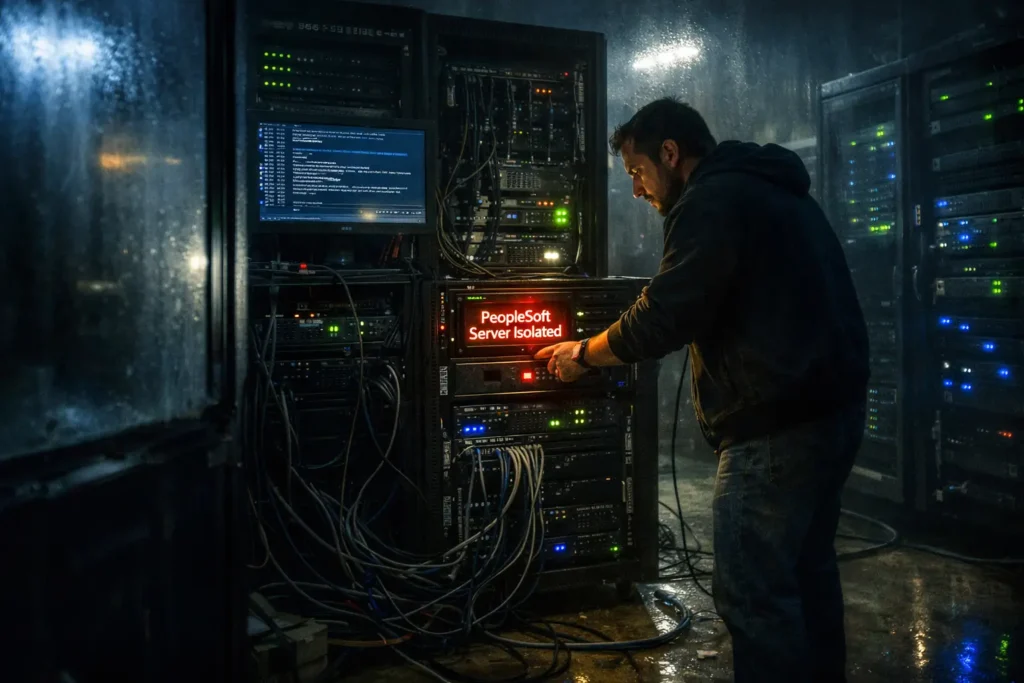
Oracle PeopleSoft servers hacked: What happened?
Oracle PeopleSoft servers hacked by ShinyHunters have exposed sensitive data in recent attacks. ShinyHunters, a notorious cybercriminal group, targeted vulnerable PeopleSoft deployments, exploiting weaknesses to steal confidential information. The incident has raised significant concerns among organisations using PeopleSoft for their business operations.
Understanding Oracle PeopleSoft and its role
Oracle PeopleSoft is a widely used enterprise resource planning (ERP) solution, supporting critical business functions such as HR, finance, and supply chain management. Many organisations rely on PeopleSoft to manage sensitive employee and corporate data. This makes PeopleSoft servers attractive targets for cybercriminals seeking valuable information.
ShinyHunters’ tactics in the data theft attacks
ShinyHunters exploited exposed PeopleSoft servers, often accessible from the internet, to gain unauthorised access. Once inside, they extracted data and may have attempted to sell or leak it online. The group is known for targeting large systems with apparent vulnerabilities, including outdated software or weak authentication.
- Scanning for internet-exposed PeopleSoft instances
- Exploiting unpatched vulnerabilities and weak access controls
- Extracting sensitive data from compromised databases
- Potentially offering stolen data for sale on underground forums
Why Oracle PeopleSoft data theft matters for organisations
The Oracle PeopleSoft servers hacked by ShinyHunters demonstrate how critical business systems face substantial risks from cyber threats. The impact of such breaches can be wide-reaching, affecting organisations across sectors.
Business and reputational consequences
Data stolen from PeopleSoft servers can include personal details, financial records, and HR information. Exposure of this data may lead to regulatory fines, loss of customer trust, and reputational damage. Organisations are required to report breaches under laws such as GDPR and may face scrutiny from regulators and stakeholders.
Operational disruption and compliance risks
Compromised PeopleSoft systems can disrupt daily operations, especially when used for payroll or financial management. Recovery from such incidents often requires significant resources and may lead to downtime. Compliance risks are heightened, as organisations must ensure data protection and incident response measures are effective.
Growing threat landscape targeting ERP systems
The Oracle PeopleSoft servers hacked incident reflects a growing trend of cybercriminals targeting ERP platforms. As these systems house sensitive data and business processes, attackers increasingly view them as high-value targets. Organisations must stay vigilant and adapt their security strategies to protect critical infrastructure.
Practical steps for securing Oracle PeopleSoft deployments
Organisations concerned about PeopleSoft servers hacked by ShinyHunters should take immediate action to reduce the risk of data theft and unauthorised access. Implementing robust security measures is essential for protecting ERP systems.
Reviewing internet exposure and access controls
- Audit PeopleSoft deployments to ensure they are not unnecessarily exposed to the internet
- Restrict access to authorised personnel using strong authentication methods
- Remove legacy or unused interfaces that may provide entry points for attackers
Applying current patches and software updates
- Maintain up-to-date PeopleSoft software and apply vendor patches promptly
- Monitor Oracle security advisories for new vulnerabilities affecting PeopleSoft
- Automate patch management where possible to reduce delays
Enforcing multi-factor authentication (MFA)
- Implement MFA for all administrative and user accounts accessing PeopleSoft
- Regularly review authentication policies and require strong passwords
Strengthening monitoring and detection
- Deploy security monitoring tools to detect suspicious activity on PeopleSoft servers
- Set up alerts for unauthorised access attempts or unusual data transfers
- Conduct regular security reviews and penetration tests on ERP systems
Incident response and recovery planning
- Develop and test incident response plans for ERP-related breaches
- Ensure backup and recovery processes are in place for critical data
- Train staff to recognise and report potential security incidents
Conclusion: Addressing the PeopleSoft servers hacked threat
The Oracle PeopleSoft servers hacked by ShinyHunters highlight the urgency of securing ERP systems against evolving cyber threats. Organisations must prioritise PeopleSoft security by auditing deployments, applying updates, enforcing MFA, and monitoring for suspicious activity. Proactive steps will help reduce risk and safeguard sensitive business data from cybercriminals.
Key actions for organisations
- Assess PeopleSoft server exposure and restrict access
- Apply all relevant security patches without delay
- Implement multi-factor authentication for users and admins
- Monitor for signs of unauthorised activity and respond quickly
By taking these measures, organisations can strengthen their defence against attacks similar to those carried out by ShinyHunters. Staying informed about emerging threats and maintaining a vigilant security posture is essential for protecting critical ERP infrastructure.
Originally reported by Unknown.


