



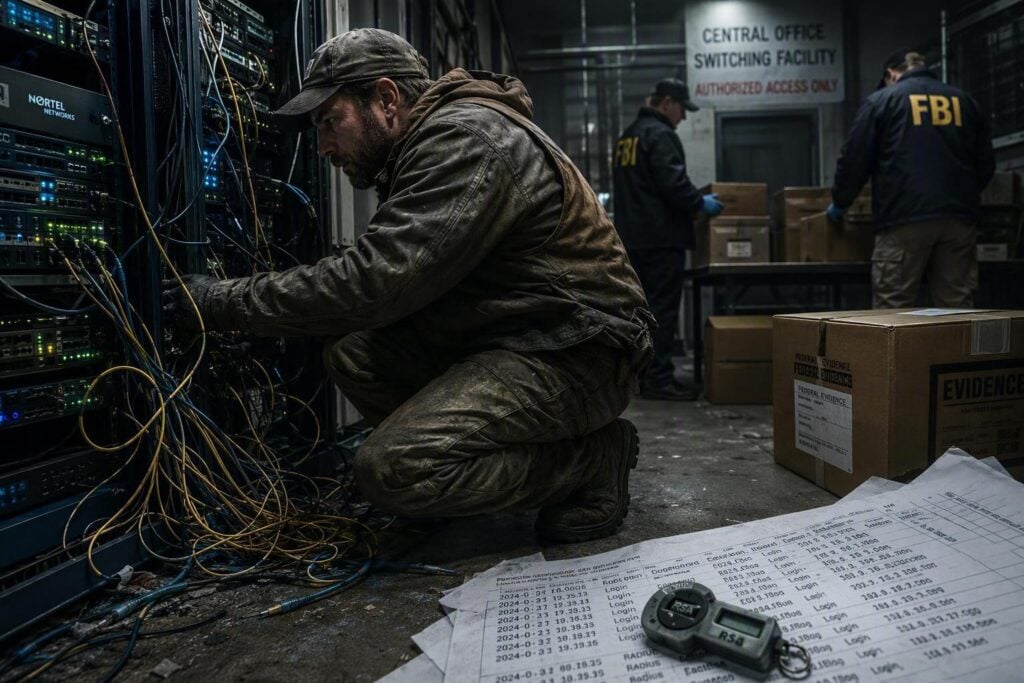


Microsoft has linked Storm-2570 ransomware activity to confirmed intrusions involving four different ransomware families. Despite the changing payloads, the affiliate repeatedly followed the same blueprint to control networks, steal data and prepare systems for encryption.
The findings shift attention away from the ransomware name displayed during an incident and towards the operator behind it. Microsoft has tracked Storm-2570 since April 2025, with affected organisations identified across several countries and economically important sectors.
Storm-2570 ransomware attacks span multiple countries
Storm-2570 is the designation Microsoft uses for the ransomware affiliate associated with this activity. An affiliate is an operator that conducts intrusions and may deploy ransomware supplied through one or more criminal arrangements, rather than necessarily developing the encryption software itself.
Microsoft has connected the group to confirmed intrusions in the United States, Canada, the United Kingdom, Spain, the Netherlands and Puerto Rico. Victims have included organisations in healthcare, education, energy and manufacturing, showing that the activity is not confined to one country or type of business.
The report does not provide a total victim count or identify individual affected organisations. It also does not indicate that the campaign has ended. The current picture is therefore one of confirmed, geographically dispersed activity attributed through common operational methods.
Four separate ransomware families have appeared at the end of Storm-2570 incidents. The supplied report does not name those families, but the important finding is that changing malware did not mean the attacks were being conducted by unrelated operators.
Storm-2570 ransomware timeline and known scope
Microsoft has tracked Storm-2570 since April 2025. The findings were reported on 25 September 2026, providing a view of activity observed across an extended period rather than a single isolated intrusion.
During that tracking period, investigators identified a recurring sequence leading from network compromise to data theft and preparations for encryption. The use of multiple ransomware families could have made individual incidents appear separate when viewed only through the final malicious file or ransom demand.
Microsoft instead correlated the underlying behaviour. The repeated techniques used to take control, access information and stage encryption provided a more durable basis for attribution than the ransomware brand deployed at the final stage.
What remains unknown about initial access
Microsoft has not established how Storm-2570 first enters victim networks. This is a significant boundary in the available evidence because the initial access route could determine which preventive controls are most relevant.
No exploited vulnerability, CVE, software product or affected product version is identified in the supplied report. Organisations should therefore avoid interpreting the disclosure as a conventional vulnerability alert that can be resolved by applying one vendor patch.
The absence of a confirmed entry path does not undermine the observed post-compromise pattern. It does mean that claims about phishing, stolen remote access credentials, exposed services or a particular software flaw would go beyond the findings currently available.
How the repeated attack blueprint works
The Storm-2570 ransomware activity is notable because the operator appears to preserve its operating model while changing the malware used at the end. Microsoft describes a consistent progression centred on gaining control of an environment, stealing data and preparing systems for encryption.
Based on the reported findings, the attack blueprint can be understood as four broad stages:
- An initial network compromise occurs, although Microsoft has not confirmed the access method.
- The affiliate establishes sufficient control over the victim environment to advance the intrusion.
- Data is accessed and stolen before the encryption stage.
- Systems are prepared for encryption using one of several possible ransomware families.
This sequence indicates that encryption is not the whole incident. By the time ransomware is deployed, the attacker may already have obtained control and removed information from the organisation. Recovery planning must therefore account for both operational disruption and a potential data breach.
The use of four ransomware families also illustrates the flexibility available to an affiliate. A payload may change because of availability, criminal partnerships or operational choice, while the people conducting the intrusion retain familiar procedures. The report does not specify why Storm-2570 changed families, so any particular explanation remains unconfirmed.
For defenders, this distinction matters during investigation. Detection rules focused only on one ransomware executable, file extension or ransom note could miss related activity when the operator switches payload. Behaviour observed earlier in the intrusion may offer more consistent evidence.
Current exploitation status
This is not a theoretical attack technique or a proof of concept. Microsoft has associated Storm-2570 ransomware operations with confirmed intrusions affecting organisations in multiple countries and sectors.
However, the report does not identify a specific vulnerability being actively exploited, disclose the number of ongoing incidents or state whether every observed intrusion reached encryption. The clearest current assessment is that the affiliate has demonstrated a repeatable operational blueprint across real attacks, while its initial access route remains unresolved.
Why the Storm-2570 findings matter
The findings show why ransomware attribution based solely on the final payload can produce an incomplete picture. Two incidents involving different ransomware families may still share the same affiliate, operating process and defensive opportunities.
For organisations in the named countries and sectors, the report provides relevant threat context rather than evidence that every organisation is being targeted. Healthcare, education, energy and manufacturing teams should compare internal incident data with the reported sequence of network control, data theft and encryption preparation.
The international scope also means that Storm-2570 ransomware cannot be treated as a threat restricted to one regional market. Confirmed activity includes the UK as well as North American and European locations.
What organisations should do now
Because no initial access method, vulnerable product or affected version has been confirmed, organisations should focus first on detecting the behaviours Microsoft has linked to the affiliate. Incident reviews should not stop after identifying a ransomware family.
- Review security alerts for signs that an intruder gained or expanded control before encryption activity appeared.
- Investigate unusual access to sensitive information and possible data removal alongside system recovery work.
- Preserve endpoint, identity, network and server evidence so related activity can be correlated across the full incident.
- Ensure response plans address data theft and regulatory assessment, not only restoration of encrypted systems.
- Update threat hunting assumptions so a change in ransomware family does not automatically imply a different operator.
Teams should also watch for further Microsoft reporting that clarifies the initial access route, named ransomware families or more precise indicators. Until those details are available, defensive decisions should remain grounded in the confirmed cross-family operating pattern rather than unsupported assumptions about a particular vulnerability.
Originally reported by cybersecuritynews.com.

