



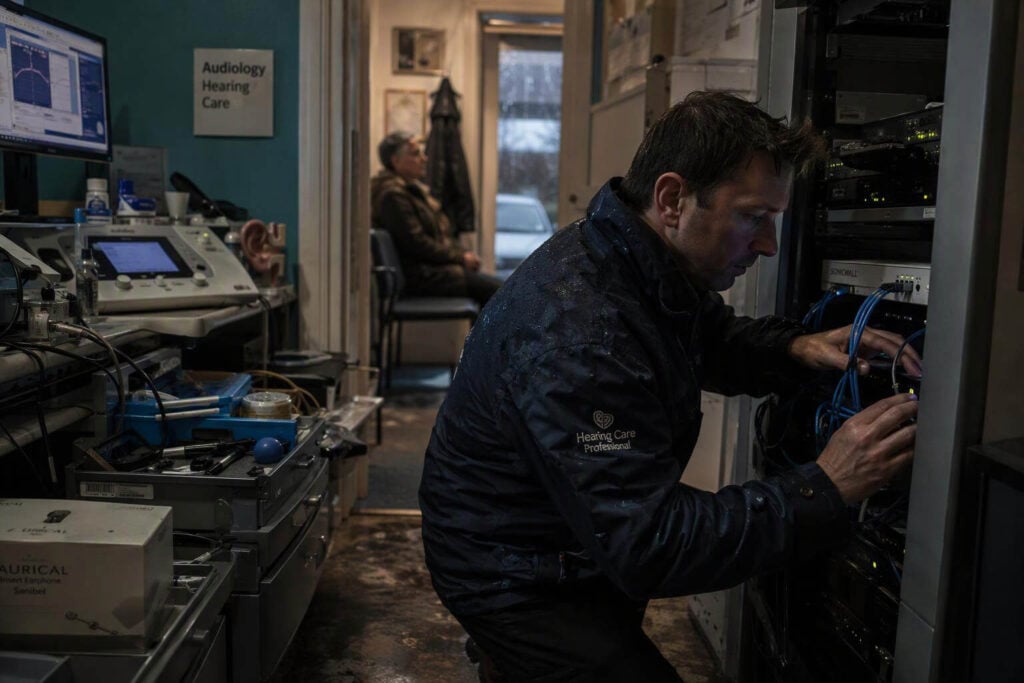


The WS Audiology breach disrupted digital services used by hearing aid wearers and hearing care professionals. Widex and Signia hearing aids remained operational, but supporting apps, fitting tools and remote care services were taken offline during containment.
What happened in the WS Audiology breach?
WS Audiology, the parent company of Widex and Signia, first disclosed the incident on 26 October 2026. The company said unauthorised parties had accessed its customer relationship management environment and certain operational systems.
WS Audiology responded by restricting access to selected systems while it investigated and contained the intrusion. It also proactively disconnected some internal and customer-facing services, creating interruptions for patients, clinicians and other hearing care professionals.
The company stressed that its core business operations continued, although with some disruption. Its e-commerce sites remained able to process orders, and the hearing aids themselves were not affected by the incident.
On 30 October 2026, WS Audiology clarified that the incident related to its own IT environment. A company spokesperson also said the security threat was not caused by its cloud-based software, even though several cloud-connected services were deliberately disconnected as a precaution.
Widex and Signia services affected by the breach
The WS Audiology breach primarily affected the software and service layers surrounding its hearing aids. These systems support device fitting, personalised controls and communication between hearing aid wearers and their clinicians.
Widex Compass Cloud
Widex Compass Cloud is used by hearing care professionals to fit and fine-tune compatible hearing aids. WS Audiology took the platform offline as a precaution during the initial containment work.
By 30 October 2026, Compass Cloud was available again. This allowed professionals to resume fittings for products including Widex Allure and Allure AI. No particular Compass Cloud software version was identified as vulnerable, and the company said the cloud software itself was not the source of the threat.
Widex MOMENT app
The Widex MOMENT app, available for iOS and Android, was among the services most visibly affected. The app gives wearers access to listening programmes, sound adjustments and other personalised controls.
Some users reported that their hearing aids continued to amplify sound normally but that they could not access preferred settings through the app. WS Audiology expected the service to return over the weekend following its 30 October update, although forum users continued to describe difficulties on 1 November 2026.
Those reports are anecdotal rather than an official service status. As of 2 November 2026, no newer public WS Audiology update had confirmed that all MOMENT app functionality was fully restored. No affected iOS or Android app version was specified.
Signia TeleCare
Signia TeleCare, a remote support capability integrated with the Signia app, was also taken offline. The service enables hearing care professionals to provide assistance and make certain remote adjustments without an in-person appointment.
On 30 October, WS Audiology expected TeleCare to be reinstated early the following week. The company did not identify a specific Signia app version as affected or vulnerable.
- Widex Compass Cloud was restored by 30 October 2026.
- Widex MOMENT app functionality was disrupted, with some user issues reported on 1 November.
- Signia TeleCare was taken offline and scheduled for phased restoration.
- Widex and Signia hearing aid hardware continued to work.
- WS Audiology e-commerce services continued processing orders.
WS Audiology breach timeline
On 26 October 2026, WS Audiology issued its initial disclosure. It confirmed unauthorised access to its CRM environment and certain operational systems, alongside temporary restrictions introduced to contain the incident.
On 29 October, Dutch hearing care trade reporting described problems affecting some Widex app services. It also reported that Widex Compass Cloud had returned online.
On 30 October, WS Audiology published a further update explaining that selected IT systems had been proactively taken offline. Restoration was proceeding in phases and according to operational priority, while core business activities continued with some interruptions.
Trade publications confirmed the return of Compass Cloud for Widex Allure and Allure AI fittings. At that stage, the MOMENT app was expected to return shortly, while Signia TeleCare was scheduled to follow early the next week.
On 1 November, some forum participants continued to report MOMENT app problems. By 2 November, there had been no further official update confirming complete restoration across every affected service.
How the WS Audiology intrusion occurred
WS Audiology has not disclosed how attackers entered its environment. There is no public information identifying an exploited vulnerability, stolen credential, authentication bypass, phishing message or other initial access technique.
The company has also not described whether the intruders moved between systems after obtaining access. Its reference to both the CRM environment and operational systems confirms that more than one area was involved, but it does not establish the full scope of the compromise.
No ransomware group or other threat actor has claimed or been publicly linked to the WS Audiology breach. There is also no confirmed evidence of ransomware deployment, file encryption or data theft from this incident.
No indicators of compromise, such as malicious IP addresses, domains, file hashes or file paths, had been published by 2 November 2026. This is an active security incident rather than a disclosed product vulnerability, so there is no public proof-of-concept exploit or software patch for customers to apply.
Why this incident matters to hearing care providers
The event shows how an incident affecting central business systems can interrupt clinical workflows without compromising the medical devices themselves. Hearing aids continued to provide sound, but users could lose access to presets and app controls, while professionals temporarily lost fitting and remote support capabilities.
For UK audiology clinics and smaller hearing care providers, the immediate concern is service availability. App or portal disruption can delay adjustments, increase support calls and require appointments to be handled differently until vendor systems return.
What organisations should do now
Organisations using the Widex or Signia ecosystem should monitor official WS Audiology service updates and confirm which tools are available before appointments. Staff should avoid describing the incident as ransomware or a product vulnerability unless WS Audiology publishes evidence supporting that conclusion.
- Check access to Compass Cloud, MOMENT and Signia TeleCare before relying on them for scheduled care.
- Prepare a clear process for assisting patients whose hearing aids work but whose app controls remain unavailable.
- Record delayed fittings or remote support sessions so they can be prioritised after restoration.
- Review contingency procedures for future vendor platform outages, including alternative contact and appointment arrangements.
The phased recovery reduced the impact of the WS Audiology breach, with Compass Cloud restored first. However, the absence of technical findings or a final restoration notice means organisations should continue following vendor updates.
Originally reported by cybersecuritynews.com.


