




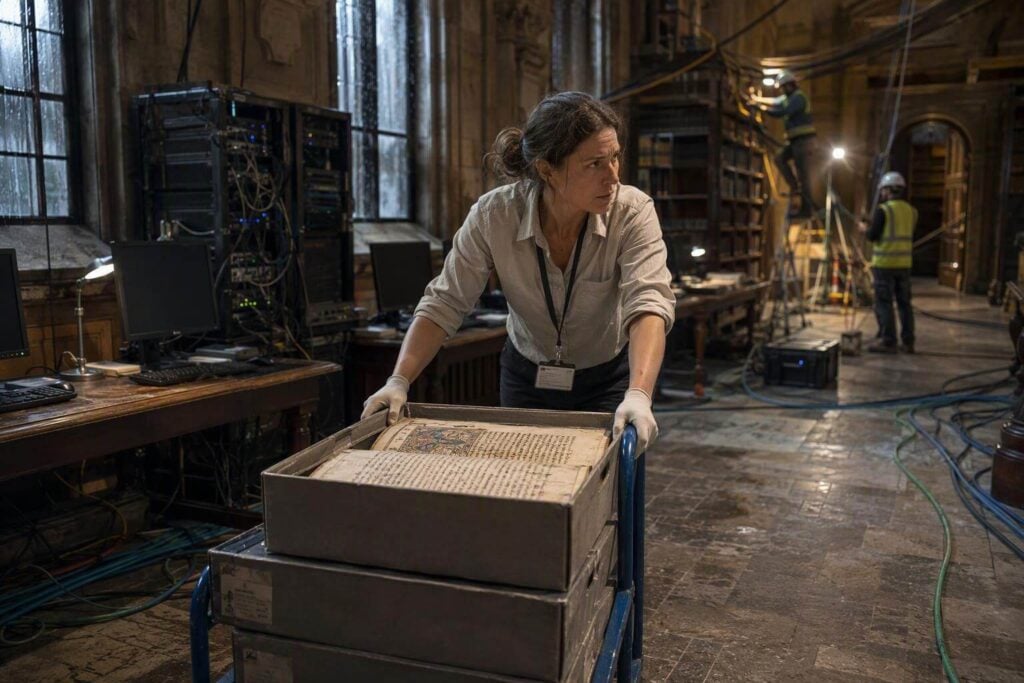
The British Library cyber attack remains an active recovery issue for one of the UK’s major cultural institutions. On 22 September 2026, the Museums Association reported that new leadership had been announced while work to recover from the incident continued.
The development shows that the consequences of a serious cyber incident can extend well beyond the initial technical response. In this case, leadership and organisational recovery remain closely connected, although the latest report does not identify a new attack, fresh data exposure or renewed disruption.
British Library cyber attack recovery enters a new phase
The central development is the appointment of new leadership while the British Library continues its cyber attack recovery. The available report does not name the incoming leaders or provide appointment dates, but it directly links the leadership transition with the institution’s continuing response to the incident.
This indicates that recovery is not being treated solely as an information technology project. Leadership will need to oversee the restoration of services, organisational priorities, risk decisions and communication with the people and organisations that depend on the Library.
The report describes the British Library as continuing its recovery, meaning the incident has not yet been presented as fully resolved. However, it does not specify which systems remain unavailable, which services have been restored or whether a final recovery date has been set.
Who is affected by the continuing recovery
The British Library is a major UK cultural institution, so the effects of the recovery process may extend across its professional and public user base. Relevant groups include Library employees, researchers, readers, partner institutions and people using its physical or digital services.
The source does not provide a current list of unavailable services or quantify how many people remain affected. It also does not say that all users are experiencing disruption. The confirmed point is narrower: institutional recovery from the British Library cyber attack is continuing as leadership changes are introduced.
That distinction matters because recovery can involve significant work even when some public services have resumed. Behind the scenes, teams may still need to rebuild systems, review security controls, validate information and decide how previously connected services should operate. The latest article does not confirm which of these activities are currently taking place at the Library.
What is known about the attack and its status
The 22 September 2026 report characterises the event as a significant cyber attack but provides no new technical description of the intrusion. It does not identify the attacker, the initial access route, the malware involved or any specific vulnerability used to compromise the institution.
No affected software products, suppliers or version numbers are named. There is also no reference to a Common Vulnerabilities and Exposures identifier, security advisory or patch connected with the incident. Organisations should therefore avoid interpreting the report as evidence of a newly disclosed vulnerability affecting a particular technology.
The available information establishes the following points:
- A significant cyber attack affected the British Library.
- Recovery work was still continuing when the leadership development was reported on 22 September 2026.
- New leadership had been announced while that recovery remained under way.
- The report does not disclose a new attack technique, affected product or vulnerable software version.
- No fresh exploitation campaign or renewed compromise is identified in the article.
Current exploitation status
There is no indication in the supplied report that the British Library cyber attack represents an ongoing campaign currently targeting other cultural institutions. Nor does it confirm that the original attacker retains access to British Library systems.
The continuing use of the word recovery should not be confused with confirmation of continuing hostile activity. Recovery can remain in progress after an attacker has been removed, particularly when an organisation must restore complex services, verify data and rebuild confidence in affected systems.
Equally, the report does not formally state that every system has been secured or that the incident response phase is closed. Its focus is the leadership change and the prolonged institutional recovery, rather than a technical update about containment or eradication.
Timeline of the latest British Library update
The source material provides only one confirmed calendar date. On 22 September 2026, the Museums Association published its report about new leadership and the continuing British Library cyber attack recovery.
The report does not establish when the leadership decision was made, when the new appointments take effect or when the underlying attack was first detected. It also supplies no dated milestones for containment, service restoration or completion of the recovery programme.
As a result, a detailed technical chronology cannot be reliably constructed from this update alone. The key sequence is that a significant attack occurred, recovery began, that recovery continued for an extended period, and leadership changes were subsequently announced while the work remained ongoing.
Why the British Library cyber attack still matters
The latest development demonstrates that cyber incidents can become long-running organisational events. Restoring servers or individual applications may be only one part of the process. Decision-making, governance, service priorities and public accountability may continue to require attention after the immediate emergency has passed.
For boards and senior executives, the event also illustrates why recovery should have defined ownership at leadership level. A serious incident can create competing demands involving security, operations, finances, staff capacity and access to services. Leadership continuity and clear authority are therefore relevant to the pace and direction of recovery.
The absence of a new technical warning is also important. This report should not be treated as a vulnerability alert for a named product. Its significance lies in the continuing impact of the original British Library cyber attack and the leadership arrangements being introduced during recovery.
Actions organisations should take from this event
Organisations should use the British Library update to review whether their own recovery arrangements extend beyond initial incident containment. The review should concentrate on decisions that become important during a prolonged restoration programme.
- Assign an executive owner for long-term cyber recovery, not only the emergency response.
- Document how leadership changes would affect authority, reporting and risk acceptance during an incident.
- Define how essential services will be prioritised if full restoration takes longer than expected.
- Maintain clear records of restored systems, outstanding dependencies and accepted temporary risks.
- Prepare factual updates that distinguish confirmed disruption, continuing recovery and active attacker activity.
These steps are directly relevant because the latest report concerns governance during continuing recovery, rather than a newly published exploit. Any further technical conclusions should wait for confirmed information from the British Library or an authoritative security advisory.
Originally reported by Museums Association.

