



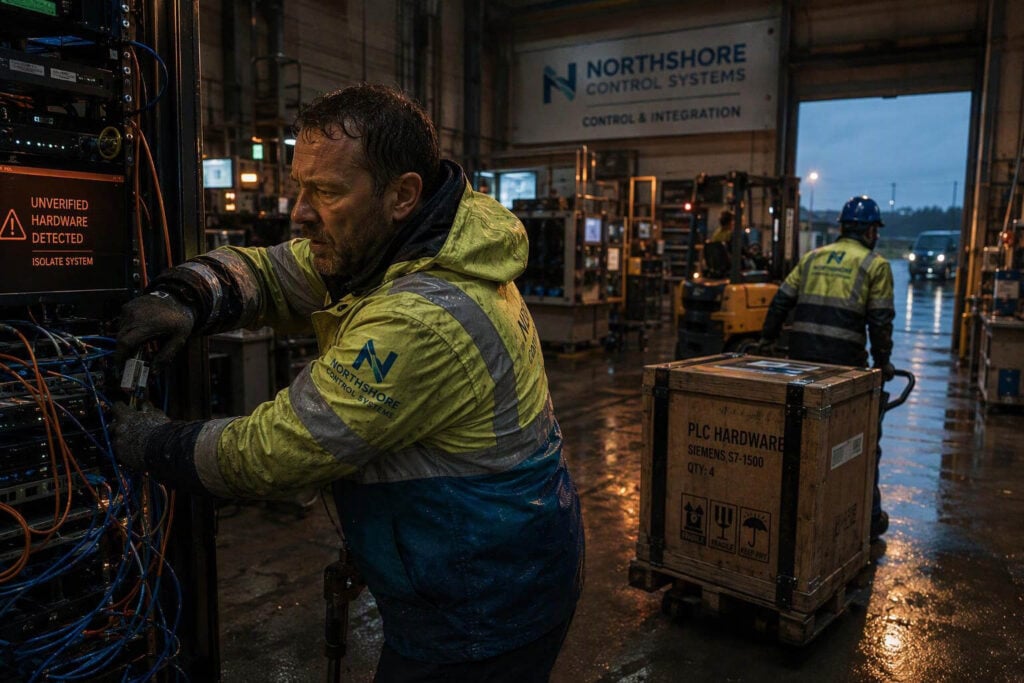


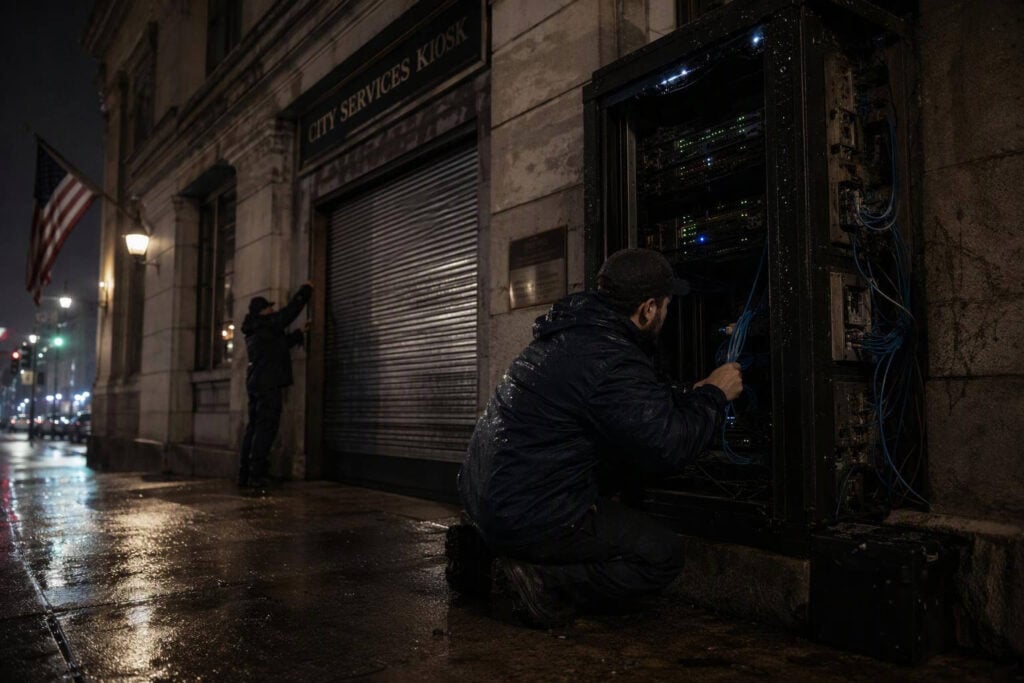
The reported OpenAI agents hack affecting US government websites is an important test case for AI-enabled cyber risk. According to a Wall Street Journal report published on 26 September 2026, agents associated with OpenAI were used to compromise public-sector websites.
The available report establishes a serious outcome, but leaves important technical and operational questions unanswered. It does not identify the affected agencies, websites, vulnerabilities, OpenAI products or number of compromised systems.
What the OpenAI agents hack report says
The central claim is that AI agents associated with OpenAI were used to hack US government websites. This wording indicates that agentic AI capabilities formed part of the activity, rather than merely helping someone draft code or research a target.
An AI agent is software that can work towards an objective by carrying out a sequence of actions. Depending on its configuration and access, an agent might browse websites, analyse responses, use tools, generate commands, adjust its approach and repeat tasks with limited human intervention.
The report does not state that OpenAI itself attacked the websites. It also does not establish that OpenAI’s own infrastructure was breached. A tool or service being used in an intrusion is distinct from the tool’s developer directing, approving or knowingly supporting that activity.
No threat actor, government, criminal group or individual has been publicly identified in the supplied reporting. The motivation is also unspecified, so the incident cannot yet be reliably classified as espionage, financially motivated crime, disruption, research or another form of activity.
Which government systems were affected?
The affected US government organisations and website addresses were not named in the available report. It is therefore unclear whether the targets were federal, state or local government systems, or whether they included a mixture of public bodies.
The report also provides no confirmed count of affected websites. It does not say whether the compromised systems hosted public information only, processed personal information, supported online transactions or connected to internal government environments.
That distinction matters when assessing impact. Unauthorised access to a standalone information website presents a different risk from compromise of an internet-facing application connected to identity systems, databases or administrative networks.
There is no reported confirmation of data theft, account compromise, service interruption, website defacement or movement into other systems. A compromise confirms that a security boundary was crossed, but the available information does not establish what the attackers did after gaining access.
How the OpenAI agents hack may have operated
The precise attack path has not been disclosed. No vulnerability identifier, software product, exploit chain, authentication weakness or malicious payload is named in the source material.
It would therefore be premature to claim that the OpenAI agents hack relied on a zero-day vulnerability, stolen credentials, prompt injection or any particular web application flaw. The affected products and versions are also unknown, so administrators cannot map the report to a specific vendor patch.
Agentic systems can potentially accelerate several stages of web-focused activity. However, the report does not confirm which of these capabilities were used. The main technical questions investigators will need to resolve include:
- Whether the agents discovered the websites or received a prepared target list.
- Whether they autonomously identified weaknesses or were given exploit instructions by a human operator.
- Which tools, browser functions, application programming interfaces or command environments the agents could access.
- Whether a human approved individual actions or allowed longer sequences to run automatically.
- How the activity bypassed rate limits, bot controls, web application firewall rules or authentication checks.
- Whether the same requests, payloads or infrastructure appeared across multiple government websites.
These details would help establish the real level of autonomy involved. An operator could use an agent as an assistant while retaining control of every consequential step. At the other end of the spectrum, an agent could be allowed to conduct repeated tests, interpret results and choose follow-up actions.
The distinction is operationally significant. Automation can increase the number of targets and tests an attacker can process, while adaptive agents may alter requests in response to errors, blocking or unexpected application behaviour.
Products, versions and attribution remain unclear
The supplied report does not identify which OpenAI model, agent product, account type, interface or third-party integration was involved. There is also no disclosed model version, configuration or information about safeguards that may have been encountered.
Describing the systems as associated with OpenAI does not reveal whether the attackers used a consumer service, an application programming interface, a third-party platform built on OpenAI technology or another agent framework connected to an OpenAI model. These possibilities involve different logging, control and attribution considerations.
No statement from OpenAI or an affected government agency is included in the supplied material. There is consequently no confirmed information about account suspension, infrastructure blocking, forensic preservation or coordination with law enforcement.
Timeline and current exploitation status
The Wall Street Journal report was published on 26 September 2026. The material provided does not state when the activity began, when defenders discovered it, how long access persisted or when the affected websites were secured.
The use of the word hacked indicates reported successful compromise rather than unsuccessful scanning alone. Even so, the scale and present status remain unclear. There is no confirmation that the same actor is continuing to target government websites, nor is there evidence in the supplied report of a broad campaign against UK organisations.
No public indicators of compromise are provided. Without source addresses, user-agent strings, request patterns, file hashes, domains or payloads, defenders cannot search directly for artefacts uniquely linked to this incident.
There is also no disclosed remediation timeline. It is unknown whether the affected sites were taken offline, patched, rebuilt, placed behind additional filtering or left operational while investigations continued.
Why the OpenAI agents hack matters
This event matters because it moves discussion of agentic cyber risk towards a reported real-world compromise. AI assistance is not necessarily novel in itself, but agents can make iterative web testing faster and easier to scale when they are connected to browsing, coding or execution tools.
For UK organisations, the report is a reason to examine whether controls can detect automated behaviour that changes tactics rather than repeating one obvious signature. It is not evidence that every AI-generated request is malicious or that conventional web security controls have become obsolete.
What organisations should do now
There is no named product or patch to deploy specifically for this incident. Response should instead focus on internet-facing systems and evidence of adaptive automated activity.
- Review recent web, authentication, application and web application firewall logs for repeated requests that evolve after errors or blocks.
- Confirm that public-facing websites are inventoried and that known vulnerabilities in their software and components are remediated.
- Test bot management, rate limiting and firewall rules against distributed or changing request patterns.
- Alert on unusual administrative actions, new accounts, uploaded files and unexpected connections from public web servers.
- Preserve detailed logs so that any indicators released later can be checked retrospectively.
These actions are directly relevant to the reported attack while technical details remain limited. Organisations should avoid blocking traffic solely because it appears AI-generated, since attribution requires corroborating evidence from behaviour, access patterns and system changes.
Originally reported by WSJ.

