





Jaguar Land Rover (JLR), the UK automotive giant, is still grappling with the aftermath of a significant cyber attack, with its recovery efforts now further complicated by supply chain disruptions in the Middle East. The JLR cyber attack and its ongoing impact underscore the growing risks faced by manufacturers from both digital threats and global operational dependencies.
Overview of the JLR Cyber Attack and Recovery Efforts
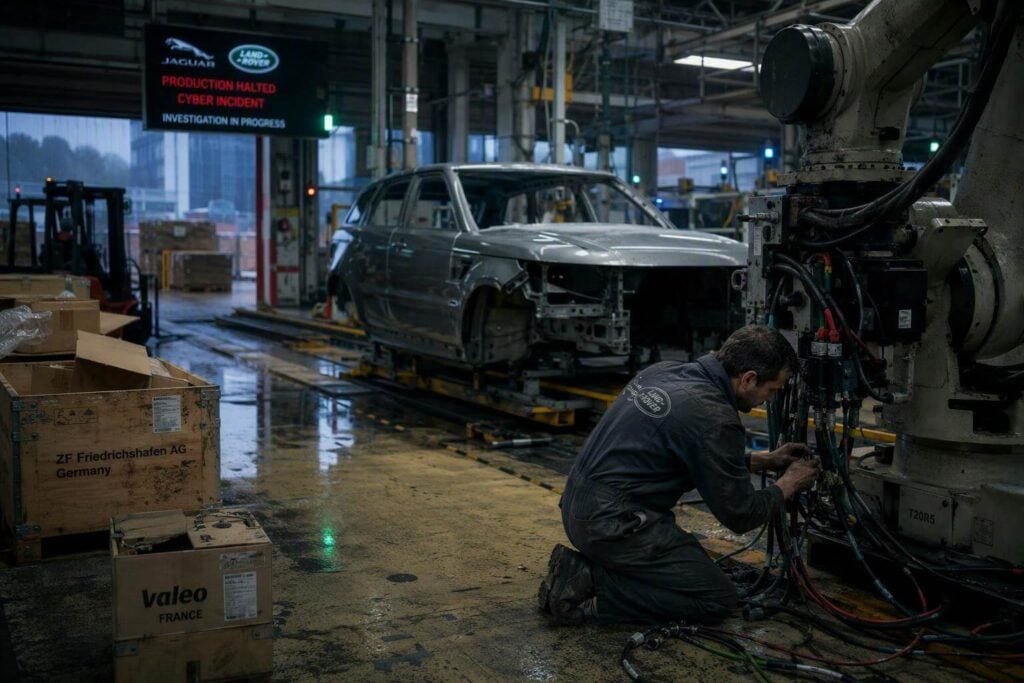
The original cyber attack on JLR, reported in September 2025, targeted the company’s IT infrastructure and caused widespread operational disruption. The incident affected production lines, internal communications and supply chain processes. As a result, JLR experienced delays in vehicle manufacturing and distribution, with knock-on effects for customers and partners.
While JLR has not officially disclosed the exact nature of the cyber attack, industry sources suggest it was likely a ransomware incident. Such attacks typically involve threat actors gaining unauthorised access to corporate networks, encrypting critical data and demanding payment for decryption. The automotive sector has seen a rise in these types of attacks, given the complexity and interconnectivity of modern manufacturing systems.
JLR’s initial response involved shutting down affected systems, isolating compromised networks and engaging cybersecurity experts to assess the breach. Over the weeks following the attack, the company began restoring operations, prioritising critical systems needed to resume production and manage supply chains. However, the process proved challenging, highlighting the intricate web of dependencies within a global manufacturer.
Middle East Supply Chain Disruption Compounds Recovery Challenges
In recent days, JLR’s recovery from the cyber attack has faced new hurdles due to disruptions in its Middle East supply chain. According to recent reports, shipping delays and logistical bottlenecks in the region have slowed the delivery of essential components needed for vehicle assembly. This has further delayed the normalisation of operations at JLR’s UK and international plants.
The Middle East is a critical hub for automotive supply chains, with key ports and logistics providers supporting the movement of parts and finished vehicles. Any disruption in this region, whether due to geopolitical tensions or local incidents, can have cascading effects on manufacturers reliant on just-in-time delivery models.
- Timeline: The initial cyber attack occurred in 31 August 2025, impacting JLR’s digital and physical operations.
- Current Status: As of August 2026, JLR is still recovering, with progress hampered by Middle East shipping issues.
- Impacted Areas: Vehicle production, supply chain coordination, and customer deliveries remain affected.
- Products/Systems: The attack targeted JLR’s core IT infrastructure and supply chain management systems.
The combination of cyber attack disruption and supply chain fragility illustrates how digital and physical risks can converge, particularly in sectors with global operational footprints.
How the Attack and Disruption Unfolded
While full technical details of the JLR cyber attack have not been made public, typical incidents of this nature exploit vulnerabilities in remote access systems, unpatched software or through phishing emails targeting employees. Once inside, attackers often move laterally across networks, seeking out systems that manage production schedules, logistics, and sensitive intellectual property.
The initial wave of disruption forced JLR to halt or slow production at several facilities. Recovery required not only restoring IT systems from backups but also ensuring that no persistence or backdoors remained within the environment. This process is time-consuming and requires extensive forensic investigation.
With operations already strained, the additional supply chain disruption in the Middle East has compounded the problem. Delays in parts shipments have left assembly lines idle, even as IT systems come back online. This dual impact has meant that JLR’s recovery is proceeding more slowly than initially anticipated.
- 31 August 2025: Cyber attack strikes JLR’s IT infrastructure.
- Subsequent weeks: Systems taken offline, incident response initiated.
- Late September 2025: Gradual restoration of operations, but production remains below normal.
- Earlier in 2026: Middle East supply chain disruption slows further recovery.
As of the latest updates, JLR is working with logistics partners to resolve shipping delays, while continuing to reinforce its IT security and supply chain resilience.
Why This Matters for the Automotive Sector
The JLR cyber attack and subsequent supply chain disruption highlight two key risks for automotive manufacturers. First, the increasing frequency and sophistication of cyber attacks on critical infrastructure and production systems can have immediate, far-reaching consequences. Second, the global nature of supply chains means that incidents in one region can rapidly affect operations worldwide.
For JLR, the incident has resulted in production delays, missed delivery deadlines and potential financial losses. More broadly, it serves as a warning to other manufacturers about the need for coordinated cyber and supply chain risk management strategies.
What Organisations Should Do Next
Organisations in the automotive sector should closely monitor their exposure to both cyber threats and supply chain vulnerabilities. It is essential to:
- Review incident response and business continuity plans.
- Assess reliance on critical suppliers in volatile regions.
- Ensure robust monitoring of IT infrastructure and third-party risks.
Staying informed and prepared can help reduce the operational impact of future incidents.
Originally reported by The Independent.

