





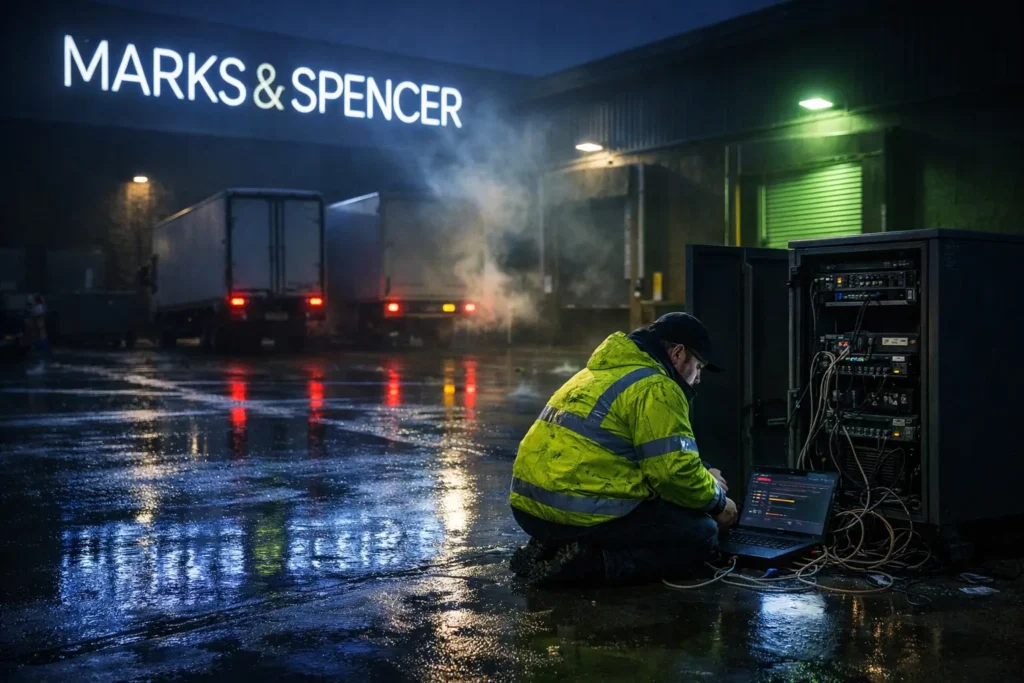
Marks & Spencer Cyber Attack: What Happened?
The Marks & Spencer cyber attack has put retail cybersecurity in the spotlight. This incident, reported by Yahoo Finance UK, involved unauthorised access to systems at the well-known British retailer. While specific details are scarce, it is clear that the attack has raised concerns among UK businesses, particularly those in the retail sector.
Retailers are frequent targets for cyber criminals due to the volume of customer data they handle and their high public profile. Attacks like these often aim to steal sensitive information, disrupt services or exploit vulnerabilities for financial gain. In the case of Marks & Spencer, the breach underscores the need for robust defences against increasingly sophisticated threats.
Why Retail Cyber Attacks Matter for UK Businesses
Cyber attacks on high-profile brands such as Marks & Spencer can have far-reaching consequences. The focus keyword, ‘Marks & Spencer cyber attack,’ not only draws attention to this specific incident but also signals broader risks for the retail sector.
Customer Trust and Business Reputation
When a well-known retailer suffers a cyber attack, customer trust is immediately put at risk. People rely on retailers to safeguard their personal and payment information. A breach may lead to reputational damage, reduced sales and loss of customer loyalty.
Increased Phishing and Credential Threats
High-profile incidents often trigger a wave of phishing campaigns and credential theft attempts. Cyber criminals exploit the publicity surrounding the attack to trick customers into revealing login details or other sensitive information. This amplifies the threat beyond the immediate victim, affecting customers and even partner organisations.
Regulatory and Financial Impact
UK retailers must comply with strict data protection regulations, including the General Data Protection Regulation (GDPR). A cyber attack can result in investigations, fines and costly remediation efforts. Failure to protect data adequately may also lead to legal action and compensation claims.
- Damage to reputation and customer trust
- Increase in phishing and social engineering attacks
- Potential regulatory fines and legal consequences
- Operational disruption and lost revenue
Common Cyber Threats Facing Retailers
The Marks & Spencer cyber attack is a reminder of the diverse threats facing retail organisations. Understanding these risks is crucial for building effective defences.
Phishing Attacks
Phishing remains one of the most common methods used by cyber criminals. Attackers send fraudulent emails or messages to employees and customers, seeking to steal credentials or inject malware. Retailers must educate staff and customers about recognising suspicious communications.
Credential Theft and Account Takeover
Retail systems often require users to log in with usernames and passwords. Weak or reused credentials can be exploited in large-scale attacks, leading to unauthorised access and fraud. Protecting these accounts with strong passwords and multi-factor authentication is vital.
Ransomware and Data Breaches
Ransomware attacks can lock down essential systems, demanding payment for their release. Data breaches, meanwhile, can expose sensitive customer information. Both threats have become more frequent and costly in recent years.
- Phishing and social engineering schemes
- Credential stuffing and brute-force attacks
- Ransomware targeting point-of-sale systems
- Data breaches affecting customer records
How Organisations Can Protect Against Cyber Threats
The Marks & Spencer cyber attack emphasises the importance of proactive security measures. UK businesses, especially in retail, should prioritise the following steps to safeguard their operations and customer data.
Implement Robust Access Controls
Limit access to sensitive systems and data using role-based permissions. Enforce strong password policies and require multi-factor authentication for all users, including staff and suppliers.
Educate Employees and Customers
Security awareness training helps employees recognise phishing attempts and avoid risky behaviours. Providing guidance for customers on safe browsing and identifying scams can also reduce the risk of exploitation following a publicised attack.
Regularly Update and Patch Systems
Cyber criminals often exploit outdated software and unpatched vulnerabilities. Maintain a schedule for applying security updates to operating systems, applications and third-party tools.
Monitor for Suspicious Activity
Use security monitoring tools to detect unusual activity, such as unauthorised logins or large data transfers. Early detection can prevent an attack from escalating and minimise damage.
Prepare an Incident Response Plan
Every organisation should have a clear plan for responding to cyber incidents. This includes identifying key contacts, outlining investigation procedures and communicating with stakeholders. Testing the plan regularly ensures everyone knows their role in a crisis.
- Enforce multi-factor authentication and strong passwords
- Provide regular security training to staff
- Patch systems and software promptly
- Monitor networks for signs of compromise
- Develop and test incident response plans
Conclusion: Lessons from the Marks & Spencer Cyber Attack
The Marks & Spencer cyber attack is a timely reminder for UK retailers and other organisations to strengthen their cybersecurity strategies. Protecting customer data and business operations requires a combination of technical controls, staff education and clear response procedures.
With threats evolving rapidly, businesses must stay alert and adapt their defences accordingly. The focus keyword, ‘Marks & Spencer cyber attack,’ highlights the need for ongoing vigilance and investment in cybersecurity best practices. By learning from incidents like this, organisations can better protect themselves and their customers from future attacks.
Originally reported by Unknown.


