




The Decathlon data breach has exposed personal and order information belonging to customers of decathlon.fr. The incident originated at an external delivery service provider, rather than Decathlon’s payment or password systems.
Decathlon confirmed the breach on 24 November 2026, two days after the malicious access occurred. By then, four datasets attributed to the retailer had already appeared on a cybercrime forum, creating an immediate risk of targeted delivery scams and other social engineering.
What happened in the Decathlon data breach?
Decathlon said an attacker gained unauthorised access to an external service provider involved in deliveries on 22 November 2026. The compromised access was subsequently blocked, but customer contact, delivery and online order data had already been obtained.
The incident primarily concerns customers who placed orders through decathlon.fr, particularly orders involving home delivery. Reports indicate that records in the exposed material date back to 2021, with the newest entries recorded as recently as 21 and 22 November 2026.
No specific software platform, vulnerable product or affected version has been publicly identified. Decathlon has also not named the external provider, so it remains unclear whether the intrusion involved stolen credentials, an exposed account, a software vulnerability or another access method.
Four files appeared on a cybercrime forum
The breach first became public on 23 November 2026, when a threat actor using the alias 4me1 posted four claimed Decathlon files on PwnForums. One early account placed the forum post at approximately 03:00 that day, with further reports appearing at 06:42 and 12:51.
The published archive reportedly contained separate files covering contact and delivery records, order lines, parcel tracking information and customer reviews. Multiple observers were able to examine or mirror the material, meaning publication of the data itself is confirmed, even though some totals vary between analyses.
An independent examination identified 163,646 contact and delivery records, including approximately 137,550 distinct email addresses. It also found 255,011 order line entries. Other reports describe the breach as affecting more than 130,000 email addresses and a similar number of telephone numbers, while some refer more broadly to about 163,000 customer records.
These figures are not necessarily contradictory. A single customer can have several orders or order lines, while duplicate contact details may appear across multiple delivery records. The most useful distinction is therefore between unique email addresses, individual contact or delivery records and the larger number of order line entries.
What customer information was exposed?
The Decathlon data breach involved more than a simple marketing list. Analyses of the archive describe records containing names, postal addresses, telephone numbers, email addresses, order references and delivery information.
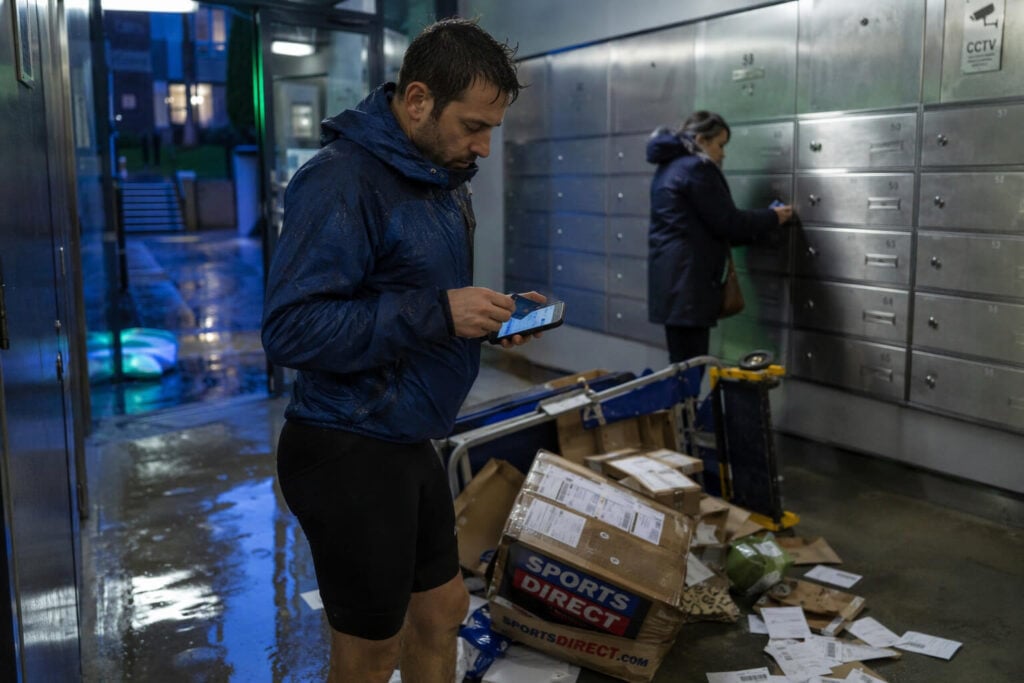
Some records reportedly included planned delivery dates, parcel tracking details and practical instructions supplied to couriers. Examples of the exposed fields include building access information, whether an address has a lift and notes intended to help complete a delivery.
The reported files contained:
- Customer names, email addresses and telephone numbers.
- Postal and delivery addresses linked to online orders.
- Order references and individual order line information.
- Planned delivery dates and parcel tracking details.
- Access instructions, lift information and notes for couriers.
- Smaller sets of customer review information.
Decathlon has stressed that passwords and banking or payment data were not affected. There is currently no credible evidence that the retailer’s core account authentication systems or payment environment were breached as part of this incident.
That limitation is important, but it does not make the exposed information harmless. Genuine order references, addresses and delivery instructions can make a fraudulent message appear highly convincing. A criminal could refer to a real purchase or expected delivery before asking the recipient to pay a small redelivery fee, follow a link or disclose further information.
Decathlon data breach timeline
22 November 2026
According to Decathlon’s statement, malicious access occurred at an external provider used for deliveries. The available reporting does not establish how long the intruder retained access or precisely when the files were extracted.
23 November 2026
The actor known as 4me1 posted four datasets claimed to contain Decathlon customer and order information on a cybercrime forum. Security researchers and media organisations began examining the archive and reporting record counts before Decathlon had publicly confirmed the incident.
24 November 2026
Decathlon confirmed that personal data associated with online orders had been accessed through an external service provider. The company said the relevant access had been blocked, passwords and banking data were unaffected, and affected customers would receive email notifications.
Reports also state that Decathlon intends to notify France’s data protection authority, the CNIL. The available information does not specify when every affected customer will be contacted or whether additional investigation could change the reported totals.
Current exploitation and customer risk
The confirmed exploitation in this case is the unauthorised access and subsequent publication of customer data. No official technical indicators of compromise, such as malicious IP addresses, domains, file hashes, malware names or file paths, had been released by Decathlon or law enforcement at the time of confirmation.
There is also no confirmed evidence that attackers have used the exposed passwords, because Decathlon says passwords were not included. However, the detailed delivery data creates a significant risk of phishing, smishing and telephone scams built around genuine customer information.
Customers should be particularly cautious of messages claiming that a Decathlon parcel requires an additional payment, address confirmation or urgent rescheduling. A message may contain accurate details and still be fraudulent if those details came from the Decathlon data breach.
Any notification should be checked through the retailer’s official website or established customer service channels. Recipients should avoid using links or telephone numbers supplied in unexpected delivery messages.
What the incident means for organisations
The breach demonstrates how sensitive information can be exposed through a logistics partner even when a retailer’s central payment and password systems remain unaffected. Organisations outsourcing fulfilment still retain customer, regulatory and reputational consequences when providers process detailed order data on their behalf.
Online retailers and UK SMEs using delivery integrations should review exactly which customer fields their providers can access. Immediate priorities connected to this event include:
- Restricting delivery partners to the minimum data required to fulfil each order.
- Reviewing privileged and contractor access, including timely account revocation.
- Checking contractual requirements for rapid incident reporting and evidence preservation.
- Preparing support teams for delivery themed scams that reference genuine order details.
- Warning staff and customers not to trust a message solely because it contains accurate personal information.
Organisations should also monitor for impersonation of Decathlon and major delivery brands. Although the confirmed records relate to decathlon.fr, criminals can reuse familiar branding and delivery themes against recipients elsewhere, including in the UK.
The investigation may yet clarify the provider involved and the precise intrusion method. For now, the key facts are that delivery related customer data was accessed on 22 November, published the following day and confirmed by Decathlon on 24 November 2026.
Originally reported by Cybernews.


