




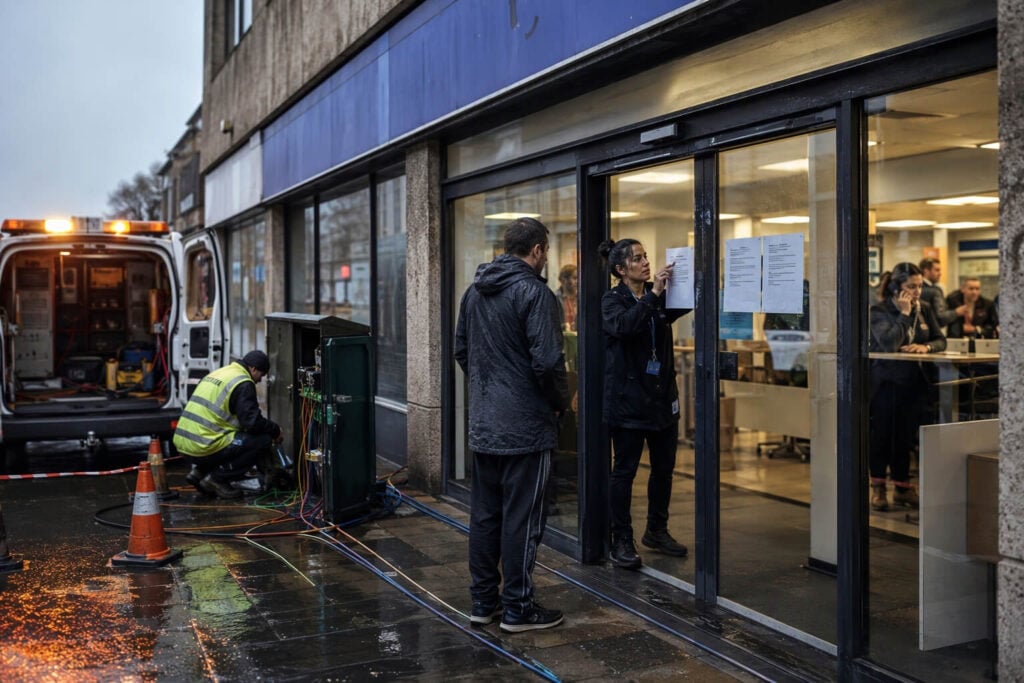
The DWP cyber incident disrupted access to several major public services on 27 November 2026. The department took affected online systems offline as a precaution while government cyber security specialists investigated.
Universal Credit, pension and Personal Independence Payment services were among those reportedly unavailable. However, the Department for Work and Pensions said regular benefit and pension payments would continue as normal.
What happened in the DWP cyber incident?
The Department for Work and Pensions identified a cyber incident affecting its systems and responded by withdrawing some online services. Its official notice described this as a precaution intended to protect systems and users while the incident was investigated.
The DWP said it was working closely with the National Cyber Security Centre and the Government Cyber Coordination Centre. These organisations provide technical expertise and coordination during significant cyber incidents involving government bodies and essential public services.
Some news headlines characterised the event as a cyber attack. However, the official description remained a cyber incident, and neither the DWP nor the National Cyber Security Centre had confirmed that an attack, ransomware infection or data breach had occurred by the end of 27 November 2026.
This distinction is important. Taking systems offline can be a containment measure following confirmed malicious activity, but it can also be a precaution while investigators determine whether systems have been compromised.
Services affected by the DWP cyber incident
The DWP did not publish a complete technical inventory of affected platforms. It also did not identify particular software products, versions or system configurations connected to the disruption.
Media reports based on service availability and official updates indicated that the following public-facing services were unavailable:
- Universal Credit applications and account sign-in.
- Pension application services.
- Personal Independence Payment application services.
- The Tell Us Once service, which allows people to report a death to multiple government organisations.
- Job search functions delivered through DWP platforms.
A disruption notice was also reported on the Universal Credit sign-in page. People attempting to manage claims, submit information or start applications may therefore have been unable to complete time-sensitive tasks online.
The department advised users to try again later if a service was unavailable. It separately confirmed that regular benefit and pension payments were unaffected and would be made as normal, reducing immediate concern that the outage would interrupt scheduled payments.
Timeline of the DWP service disruption
Initial reports on 27 November 2026
The earliest verified public report appeared at 08:28 on 27 November 2026. It said the DWP had taken some services offline after identifying a cyber incident.
At 08:38, reporting based on Press Association material corroborated the incident. This coverage confirmed that online services had been withdrawn while also emphasising that benefit and pension payments were not affected.
Official confirmation and government response
During the morning, the DWP published an official notice on GOV.UK. It confirmed the precautionary action and said work was under way with the National Cyber Security Centre and the Government Cyber Coordination Centre to investigate the DWP cyber incident and restore services.
Reuters and several UK news organisations subsequently reported the statement. Further coverage identified examples of unavailable services, including Universal Credit sign-in, applications for pensions and Personal Independence Payment, Tell Us Once and DWP job search facilities.
Status at the end of 27 November
By the end of 27 November 2026, no full restoration timetable had been published. The official position remained that some services were offline as a precaution, investigations were continuing and regular payments would proceed normally.
There was also no detailed public impact assessment explaining how many people had encountered disruption, which internal systems were involved or whether every unavailable portal was affected by the same underlying issue.
What is known about the technical cause?
Very little technical information about the DWP cyber incident had been released. The DWP and National Cyber Security Centre had not disclosed an intrusion method, attack vector, exploited vulnerability, malware family or affected infrastructure.
No threat actor had been named, and no credible public claim of responsibility had been identified. There was also no confirmation of ransomware, data theft, unauthorised access or manipulation of claimant information.
No indicators of compromise had been published for organisations to search for in their own systems. Similarly, the incident was not connected publicly to a particular software vulnerability, so there was no relevant proof of concept, security update or affected product version for organisations to assess.
The precautionary withdrawal of online services is therefore the clearest confirmed operational impact. It limits public access but can help investigators preserve evidence, isolate potentially affected infrastructure and reduce opportunities for further activity while the scope is established.
Current exploitation and data breach status
There was no confirmed information showing that a known vulnerability was being exploited in the wild as part of this event. Public reporting established service disruption, but it did not establish whether an external attacker had successfully entered DWP systems.
There was also no official evidence that personal, financial or benefits data had been accessed. Claims that the DWP cyber incident involved ransomware or a large-scale data breach would therefore go beyond the information released on 27 November 2026.
Why the DWP disruption matters to organisations
Businesses and charities may depend on DWP platforms for recruitment, employment support or administrative processes. Employees may also need access to Universal Credit, pension or disability benefit services, making prolonged disruption a potential workforce concern.
Public uncertainty also creates an opportunity for phishing. Criminals may imitate DWP notices and claim that users must verify an account, protect a payment or re-enter bank information because of the outage.
How organisations should respond
Organisations should identify any immediate processes that depend on unavailable DWP services and record tasks that may need to be completed when access returns. Staff handling recruitment, payroll queries or employee support should use official GOV.UK pages to check availability.
Relevant teams should also be alert to DWP-themed messages. The department specifically warned that it would not send messages asking people to provide bank details or click links.
- Do not follow links in unsolicited messages about benefits or pensions.
- Access DWP services by navigating directly through GOV.UK.
- Verify urgent requests using independently obtained contact details.
- Report suspicious messages through established internal security channels.
- Wait for official updates before drawing conclusions about data exposure or the cause.
Until further findings are published, organisations should treat the confirmed outage and phishing risk seriously while avoiding unsupported assumptions about the nature of the DWP cyber incident.
Originally reported by Yahoo News UK.


